2023 NRC Written Exam
Overview
- Exam: SALEM 2023 NRC Exam (21-01 ILOT) - Rev. 1
- RO Questions: 75
- SRO-Only Questions: 25
RO Questions
Q1 — RCS Low Flow / P-7 and P-8 Logic
EPE 7 EA2.08 (3.0)
Given:
• Salem Unit 2 is at 25% reactor power.
• The RO reports the following flow indications on 21 RC loop:
- Channel 1 - 89%
- Channel 2 - 89%
- Channel 3 - 92%
Which of the following describes the expected response?
• Salem Unit 2 is at 25% reactor power.
• The RO reports the following flow indications on 21 RC loop:
- Channel 1 - 89%
- Channel 2 - 89%
- Channel 3 - 92%
Which of the following describes the expected response?
A. Per the Alarm Response Procedure, manually trip the reactor, stop 21 RCP, and enter 2-EOP-TRIP-1, Reactor Trip or Safety Injection.
B. RC flows are degraded but above the RPS setpoint for low RCS flow; power operation may continue.
C. Automatic reactor trip based on 2/3 low flow channels on one RC loop with power greater than P-7; perform immediate actions per 2-EOP-TRIP-1, Reactor Trip or Safety Injection.
D. Automatic reactor trip based on 1/3 low flow channels on one RC loop with power greater than P-7; perform immediate actions per 2-EOP-TRIP-1, Reactor Trip or Safety Injection.
▶ Show Answer & Explanation
✓ A. Correct. Two out of three channels less than or equal to 90% of design loop flow indicates degraded RCP. Since reactor power is above P-7 (10%) and below P-8 (36%), no automatic reactor trip will occur with a loss of only one RC loop low flows. However, per S2.OP-AR.ZZ-0004 for OHA D-28, RCP BKR OPEN/FLO LO, with a degraded RCP flow, the RCP must be stopped, the reactor manually tripped, and enter 2-EOP-TRIP-1 since Tech Specs does not allow for three loop operation in Mode 1.
✗ B. Incorrect. While RC flows are degraded, the Alarm Response Procedure requires the RCP to be stopped and the reactor manually tripped. Power operation may not continue with degraded RCP flow since Tech Specs does not allow three loop operation in Mode 1.
✗ C. Incorrect. An automatic reactor trip on low flow requires 2/3 low flow channels, but P-8 (36%) must be exceeded for an automatic trip on loss of a single loop. Power is only 25%, which is below P-8. No automatic trip occurs; instead a manual trip is required per the ARP.
✗ D. Incorrect. The low flow trip logic requires 2/3 channels, not 1/3. Additionally, power is below P-8, so no automatic trip on loss of a single loop would occur regardless of the coincidence logic.
Ref: Logic drawing 221054, simplified ESF-2, S2.OP-AR.ZZ-0004 (R29) | LO: NOS05RXPROT-15, Obj 12.a | Source: New | Cognitive: Fundamental/Memory
Connections
- Related systems: RPS/SSPS, RCPs
- Related procedures: S2.OP-AR.ZZ-0004 — Alarm Response Procedure, EOP-TRIP-1 — Reactor Trip or Safety Injection
- Related exam: 2023 NRC Written Exam
Q2 — Small Break LOCA / RCS Heat Removal Methods
EPE 9 EK1.03 (4.0)
Given:
• A small break LOCA and a Loss of ALL Offsite Power occurred on Salem Unit 2
• SG pressures are 1015 psig and stable
• RCS pressure is 1600 psig and slowly lowering
• Highest CET temperature is 590°F and lowering
• RCS T-Hot temperatures are 554°F and lowering
• RCS T-Cold temperatures are 548°F and stable
• 2B 4KV Vital Bus is locked out on Bus Differential
What is the primary method for RCS heat removal for current plant conditions?
• A small break LOCA and a Loss of ALL Offsite Power occurred on Salem Unit 2
• SG pressures are 1015 psig and stable
• RCS pressure is 1600 psig and slowly lowering
• Highest CET temperature is 590°F and lowering
• RCS T-Hot temperatures are 554°F and lowering
• RCS T-Cold temperatures are 548°F and stable
• 2B 4KV Vital Bus is locked out on Bus Differential
What is the primary method for RCS heat removal for current plant conditions?
A. Forced RCS Cooling
B. Natural Circulation
C. Reflux Boiling
D. ECCS Injection and Break flow
▶ Show Answer & Explanation
✗ A. Incorrect. Forced cooling requires RCPs running, which are unavailable due to Loss of All Offsite Power.
✓ B. Correct. Natural circulation conditions are met based on the following parameters: (1) subcooling > 0°F — RCS pressure at 1600 psig has a saturation temperature of approx. 606°F, hottest CET is 590°F, therefore subcooling is approx. 606 - 590 = 16°F of subcooling, (2) SG pressures are stable and lowering, (3) RCS T-Hots are stable or dropping, (4) CETs are lowering, and (5) RCS T-colds are at saturation temp for SG pressure. SG pressure is 1015 psig (pre-set pressure for MS110s) which is a saturated temp from the outlet of the SGs of approx. 548°F. Therefore per 2-EOP-LOCA-2 step 19.1 conditions for Natural Circulation are met and will be the RCS heat removal method.
✗ C. Incorrect. Reflux boiling occurs when natural circulation has been lost and steam is condensed on SG tubes. Current conditions show T-hot > T-cold with stable/lowering parameters, indicating natural circulation is still established.
✗ D. Incorrect. Only one Charging Pump is running and no SI pumps based on RCS pressure above the shutoff head (1540 psig), therefore ECCS injection flow and break flow are insufficient for RCS heat removal.
Ref: 2-EOP-LOCA-2 (R42), ASME Steam Tables (year 2000) | LO: NOS05LOCA02-06, Obj 5 | Source: Modified - Callaway 2017 NRC RO8 | Cognitive: Comprehension/Analysis
Connections
- Related systems: RCS, ECCS, Steam Generator & Blowdown
- Related procedures: EOP-LOCA-2 — Post LOCA Cooldown and Depressurization
- Related exam: 2023 NRC Written Exam
Q3 — CVCS / CV71 Seal Backpressure Control
APE 22 AA1.05 (3.3)
Given:
• Salem Unit 1 is experiencing a RCS leak inside containment.
• The crew is performing S1.OP-AB.RC-0001, Reactor Coolant System Leak.
• 11 charging pump is in service.
• The RO is attempting to stabilize PZR level by adjusting charging flow using the 1CV55, CHARGING FLOW CONTROL VALVE, and 1CV71, CHG HDR PCV.
Which of the following completes the below statement? When 1CV71 is throttled ...
• Salem Unit 1 is experiencing a RCS leak inside containment.
• The crew is performing S1.OP-AB.RC-0001, Reactor Coolant System Leak.
• 11 charging pump is in service.
• The RO is attempting to stabilize PZR level by adjusting charging flow using the 1CV55, CHARGING FLOW CONTROL VALVE, and 1CV71, CHG HDR PCV.
Which of the following completes the below statement? When 1CV71 is throttled ...
A. open, seal injection rises and charging flow rises.
B. open, seal injection flow lowers and charging flow lowers.
C. closed, seal injection flow rises and charging flow lowers.
D. closed, seal injection lowers and charging flow rises.
▶ Show Answer & Explanation
✗ A. Incorrect. Throttling CV71 open would lower backpressure to the seal injection lines, resulting in lower seal injection flow and higher charging flow — the opposite of what this choice states.
✗ B. Incorrect. Throttling CV71 open would lower backpressure, but seal injection flow would lower and charging flow would rise, not both lower.
✓ C. Correct. When the 1CV71 is closed, then backpressure to the seal injection lines will rise resulting in rising RCP seal injection flows and allowing less charging flow to the non-regen HX, thereby lowering charging flow to the RCS. 1CV71 acts as a backpressure control valve that affects both charging and seal injection flows.
✗ D. Incorrect. Throttling CV71 closed raises backpressure, which raises seal injection flow — it does not lower it. Additionally, charging flow would lower, not rise.
Ref: S1.OP-AB.RC-0001 (R18), CVCS one-line dwg | LO: NOS05CVCS00-18, Obj 4 | Source: Bank - Byron 2017 NRC RO4 | Cognitive: Comprehension/Analysis
Connections
- Related systems: CVCS, RCPs
- Related procedures: AB.RC-0001 — Reactor Coolant System Leak
- Related exam: 2023 NRC Written Exam
Q4 — CCW / Thermal Barrier Rupture Indications
APE 26 G2.1.19 (3.9)
Given:
• Salem Unit 2 is at 100% power
• The operating crew suspects an RCP Thermal Barrier rupture.
Which of the following indications would provide corroborating evidence for this condition?
1. 2R17 A/B, Component Cooling Radiation Monitors, in Warning
2. PZR level rising
3. CCW Surge Tank level rising
4. Charging flow lowering
5. 2CC131, RCP Thermal Barrier Valve, goes closed
• Salem Unit 2 is at 100% power
• The operating crew suspects an RCP Thermal Barrier rupture.
Which of the following indications would provide corroborating evidence for this condition?
1. 2R17 A/B, Component Cooling Radiation Monitors, in Warning
2. PZR level rising
3. CCW Surge Tank level rising
4. Charging flow lowering
5. 2CC131, RCP Thermal Barrier Valve, goes closed
A. 1 and 3 Only
B. 2 and 4 Only
C. 2, 4, and 5 Only
D. 1, 3, and 5 Only
▶ Show Answer & Explanation
✗ A. Incorrect. While indications 1 and 3 are correct, this choice is missing indication 5 (2CC131 goes closed on high CCW flow to the Thermal Barrier).
✗ B. Incorrect. PZR level would NOT rise — RCS is leaking OUT to the CCW system. Charging flow would NOT lower as a direct indication of thermal barrier rupture.
✗ C. Incorrect. PZR level would NOT rise and charging flow would NOT lower. While 2CC131 closing is correct, indications 2 and 4 are not valid corroborating evidence for a thermal barrier rupture.
✓ D. Correct. A Thermal Barrier leak will cause CCW surge tank to rise as RCS will be leaking into the CCW system, RCS in-leakage will also be identified as a rise in the 2R17 A or B radiation monitors that monitors activity in the CCW system, and the 2CC131 valve will also close on high CCW flow to the Thermal Barrier due to a thermal barrier leak. Choices 1, 3, and 5 are the correct indications. PZR level would NOT rise (RCS is leaking OUT to CCW). Charging flow would NOT lower.
Ref: S2.OP-AB.CC-0001 (R20) | LO: NOS05CCW000-16, Obj 4.c | Source: New | Cognitive: Comprehension/Analysis
Connections
- Related systems: CCW, RCPs
- Related procedures: AB.CC-0001 — Loss of Component Cooling Water
- Related exam: 2023 NRC Written Exam
Q5 — PZR Pressure Channel Fails High / OT Delta-T Effect
APE 27 AA2.11 (4.0)
Given:
• Salem Unit 2 is at 100% power
• PZR Pressure controlling channel fails HIGH
Based on the conditions above, the (1) reactor trip setpoint on the unaffected RCS loops will (2).
• Salem Unit 2 is at 100% power
• PZR Pressure controlling channel fails HIGH
Based on the conditions above, the (1) reactor trip setpoint on the unaffected RCS loops will (2).
A. (1) OT Delta-T (2) lower
B. (1) OT Delta-T (2) rise
C. (1) OP Delta-T (2) rise
D. (1) OP Delta-T (2) lower
▶ Show Answer & Explanation
✓ A. Correct. The failed PZR pressure controlling channel will result in PZR pressure lowering. The lowering PZR pressure is one input into OT Delta-T to determine its trip setpoint. As RCS pressure lowers, the OT Delta-T setpoint will lower. With no operator action, the PZR pressure will continue to rapidly lower until the OT Delta-T reactor trip setpoint is reached first (per S2.OP-AB.PZR-0001 bases section for Attachment 1). Note: OP Delta-T does NOT have a pressure input.
✗ B. Incorrect. While OT Delta-T is the correct trip function (it does have a pressure input), the setpoint would lower, not rise. As PZR pressure lowers due to the controlling channel failing high, the OT Delta-T setpoint decreases.
✗ C. Incorrect. OP Delta-T does NOT have a pressure input. Changes in PZR pressure do not affect the OP Delta-T trip setpoint.
✗ D. Incorrect. OP Delta-T does NOT have a pressure input. Changes in PZR pressure do not affect the OP Delta-T trip setpoint.
Ref: S2.OP-AB.PZR-0001 (R20) | LO: NOS05ABPZR1-05, Obj 2 | Source: Bank - Salem | Cognitive: Comprehension/Analysis
Connections
- Related systems: Pressurizer & PRT, RPS/SSPS
- Related procedures: AB.PZR-0001 — Pressurizer Pressure Control Malfunction
- Related exam: 2023 NRC Written Exam
Q6 — Conduct of Operations / RO Leaving ATC Area
EPE 38 G2.1.3 (3.7)
Given:
• Salem Unit 2 is experiencing a Steam Generator Tube Rupture
• The crew is performing actions per 2-EOP-SGTR-1, Steam Generator Tube Rupture
• The CRS, RO, and BOP operators are the only licensed operators in the control room
• The RO needs to go to the Control Equipment Room (back rack area) to perform an action
Per OP-AA-101-111, Roles and Responsibilities of On-Shift Personnel, which of the following describes the requirements for this activity?
• Salem Unit 2 is experiencing a Steam Generator Tube Rupture
• The crew is performing actions per 2-EOP-SGTR-1, Steam Generator Tube Rupture
• The CRS, RO, and BOP operators are the only licensed operators in the control room
• The RO needs to go to the Control Equipment Room (back rack area) to perform an action
Per OP-AA-101-111, Roles and Responsibilities of On-Shift Personnel, which of the following describes the requirements for this activity?
A. must be relieved by a licensed operator other than the on-shift Unit 2 BOP operator.
B. may leave as long as the on-shift Unit 2 BOP operator remains "At the Controls" area.
C. may leave without being relieved by another licensed operator with CRS permission ONLY.
D. must be relieved by another licensed operator and a full turnover must be performed.
▶ Show Answer & Explanation
✗ A. Incorrect. The requirement is that at least one RO remains in the ATC area, not that a specific relief must occur by a non-BOP licensed operator.
✓ B. Correct. Per OP-AA-101-111, at least one RO must be in the "At The Controls" (ATC) area (or inner-horseshoe) at all times during Modes 1-6, except for the time period required to acknowledge the receipt of an alarm outside this area or to perform actions required for safe plant operation. The BOP operator remaining in the ATC area satisfies this requirement.
✗ C. Incorrect. CRS permission alone is not sufficient — the requirement is that at least one licensed RO must remain in the ATC area. The BOP remaining in the ATC area satisfies this requirement regardless of CRS permission.
✗ D. Incorrect. A full turnover is not required for a brief departure from the ATC area. The requirement is simply that at least one licensed RO remains at the controls.
Ref: OP-AA-101-111 (R11) | LO: NOS05CONDOP-15, Obj 2.f and 2.g | Source: New | Cognitive: Fundamental/Memory
Connections
- Related procedures: OP-AA-101-111 — Roles and Responsibilities of On-Shift Personnel
- Related tech specs: TS 6.0 — Administrative Controls
- Related exam: 2023 NRC Written Exam
Q7 — PZR Backup Heater Power Supplies
W E12 EK2.03 (3.2)
Given:
• Salem Unit 2 is at 100% power
• A reactor trip and Safety Injection occur due to the rapid depressurization of all steam generators.
• 2H and 2E 4KV Group Buses fail to auto transfer and are now de-energized
• The crew is performing actions in 2-EOP-LOSC-2
Which of the following describes the current status of the PZR Backup Heaters?
• Salem Unit 2 is at 100% power
• A reactor trip and Safety Injection occur due to the rapid depressurization of all steam generators.
• 2H and 2E 4KV Group Buses fail to auto transfer and are now de-energized
• The crew is performing actions in 2-EOP-LOSC-2
Which of the following describes the current status of the PZR Backup Heaters?
A. ONLY 21 Backup Group is available, 22 Backup Group can be locally transferred to an emergency backup source.
B. ONLY 22 Backup Group is available, 21 Backup Group can be locally transferred to an emergency backup source.
C. NEITHER 21 or 22 Backup Groups are available, Backup Groups can be locally transferred to an emergency backup source.
D. BOTH 21 and 22 Backup Groups are available, Backup Groups will automatically transfer to an emergency backup source.
▶ Show Answer & Explanation
✓ A. Correct. The preferred or normal power source for the PZR Heater Backup Groups is: Group 1 (21) - 2G and Group 2 (22) - 2E 4KV Group Buses. The PZR Heaters can be manually transferred to the emergency backup source: Group 1 (21) from 2C and Group 2 (22) from 2A 460V vital bus. With 2H and 2E unavailable, only PZR Heater Group 1 (21) remains available from 2G Group Bus. Group 2 (22) is unavailable but can be locally transferred to the emergency backup power. Transfer is manual, not automatic.
✗ B. Incorrect. Group 2 (22) is powered from 2E, which is de-energized. Group 1 (21) is powered from 2G, which is still available. This choice reverses the availability.
✗ C. Incorrect. Group 1 (21) is still available from 2G Group Bus, which has not failed. Only 2H and 2E are de-energized.
✗ D. Incorrect. Group 2 (22) is not available since 2E is de-energized. Additionally, the transfer to emergency backup source is manual (local), not automatic.
Ref: 2-EOP-LOSC-2 (R41) | LO: NOS05PZRPL-12, Obj 5.b | Source: New | Cognitive: Fundamental/Memory
Connections
- Related systems: Pressurizer & PRT, 500KV
- Related procedures: EOP-LOSC-2 — Uncontrolled Depressurization of All Steam Generators
- Related exam: 2023 NRC Written Exam
Q8 — FW Heater High Level / Effect on Reactor Power
APE 54 G2.2.44 (4.2)
Given:
• Unit 2 is at 100% Power
• OHA G-22, FW HTR IN VLV TRIP & LVL HI, is Alarming
• PO reports high level in 21A Low Pressure Feedwater Heater
1. Based on the above condition, (1) CN22(s), Low Pressure FW Heater Inlet Valve, will be closed.
2. Actual reactor thermal power will be (2).
• Unit 2 is at 100% Power
• OHA G-22, FW HTR IN VLV TRIP & LVL HI, is Alarming
• PO reports high level in 21A Low Pressure Feedwater Heater
1. Based on the above condition, (1) CN22(s), Low Pressure FW Heater Inlet Valve, will be closed.
2. Actual reactor thermal power will be (2).
A. (1) ALL (2) higher
B. (1) ALL (2) lower
C. (1) Only the 21 (2) lower
D. (1) Only the 21 (2) higher
▶ Show Answer & Explanation
✗ A. Incorrect. High level in only the 21A LP FW heater will close only the associated 21CN22, not all three strings. The power effect is correct (higher) but the valve closure scope is wrong.
✗ B. Incorrect. Not all CN22 valves close, and actual reactor thermal power will be higher (not lower) due to cooler feedwater entering the reactor causing a positive MTC effect.
✗ C. Incorrect. Only the 21CN22 valve closing is correct, but actual reactor thermal power will be higher, not lower. Cooler feedwater from the bypassed heater string raises reactor power due to positive MTC.
✓ D. Correct. High water level in 21A Low Pressure feedwater heater will only close the associated 21CN22 inlet valve (not all three strings). Based on one LP FW heater string out of service, colder feedwater will enter the reactor. The cooler FW will have the effect of raising reactor thermal power (positive MTC effect from cooler moderator) and also provide some shielding to the PR NIS, resulting in the actual NI reactor power indication being lower than actual. Reactor power should be determined based on RCS delta-Ts and turbine load should be reduced to prevent exceeding reactor thermal power limits.
Ref: S2.OP-AR.ZZ-0007 (R67) | LO: NOS05ABCN01-07, Obj 3 | Source: New | Cognitive: Comprehension/Analysis
Connections
- Related systems: Feed & Condensate, Rx Vessel & Internals
- Related exam: 2023 NRC Written Exam
Q9 — Station Battery Capacity During SBO
EPE 55 K3.01 (4.1)
Which of the following describes the capacity of the station batteries during a station blackout?
Note: 2-EOP-LOPA-1, Loss of ALL AC Power
Note: 2-EOP-LOPA-1, Loss of ALL AC Power
A. 2 hours assuming 2-EOP-LOPA-1 load shedding.
B. 2 hours during worst case loading (no 2-EOP-LOPA-1 load shed)
C. 6 hours during worst case loading (no 2-EOP-LOPA-1 load shed)
D. 6 hours assuming 2-EOP-LOPA-1 load shedding.
▶ Show Answer & Explanation
✗ A. Incorrect. With load shedding per EOP-LOPA-1, battery life extends to 4 hours, not 2 hours. The 2-hour capacity is without load shedding.
✓ B. Correct. The 125 VDC vital batteries are designed to have adequate capacity to supply its Station Blackout (SBO) coping and restoration loads during the four (4) hour SBO coping duration with manual stripping of some non-essential loads (ref. section 7.2.2.3 in VTD 314204). The batteries are rated for two (2) hours of operation following a Loss of All AC Power without load shed. With load shedding per EOP-LOPA-1, battery life extends to 4 hours. Loss of All AC Power is not a Design Basis Accident (DBA).
✗ C. Incorrect. Battery capacity during worst case loading (no load shed) is 2 hours, not 6 hours.
✗ D. Incorrect. With load shedding, battery life extends to 4 hours, not 6 hours.
Ref: S2.OP-AB.LOOP-0001 (R32), PSBP 314204 (SBO calculation), FSAR Sect 8.1.4.1 | LO: NOS05DC ELEC-11, Obj 2 | Source: Bank - Beaver Valley 2017 NRC RO11 | Cognitive: Fundamental/Memory
Connections
- Related systems: DC Power
- Related procedures: AB.LOOP-0001 — Loss of All Offsite Power
- Related exam: 2023 NRC Written Exam
Q10 — RCP Seal Injection / Seal Inlet Temperature Limit
APE 56 AK3.02 (4.1)
Given:
• Salem Unit 2 experienced a Loss of Off-Site Power
• The crew is performing S2.OP-AB.LOOP-0001
• ALL Charging Pumps on Unit 2 are unavailable
• 13 Charging Pump from Unit 1 is being aligned to supply charging flow to Unit 2
• Power to the 4KV Group Buses have been restored
• RCP seal inlet temperatures: 21 RCP - 227°F, 22 RCP - 220°F, 23 RCP - 219°F, 24 RCP - 221°F
Based on the above conditions, restoring seal injection flow to the RCPs (1) permitted. The reason for checking RCP seal inlet temperatures is to prevent (2).
• Salem Unit 2 experienced a Loss of Off-Site Power
• The crew is performing S2.OP-AB.LOOP-0001
• ALL Charging Pumps on Unit 2 are unavailable
• 13 Charging Pump from Unit 1 is being aligned to supply charging flow to Unit 2
• Power to the 4KV Group Buses have been restored
• RCP seal inlet temperatures: 21 RCP - 227°F, 22 RCP - 220°F, 23 RCP - 219°F, 24 RCP - 221°F
Based on the above conditions, restoring seal injection flow to the RCPs (1) permitted. The reason for checking RCP seal inlet temperatures is to prevent (2).
A. (1) is NOT (2) actuation of the Safe Shutdown seal
B. (1) is (2) actuation of the Safe Shutdown seal
C. (1) is (2) damage to #1 seal
D. (1) is NOT (2) damage to #1 seal
▶ Show Answer & Explanation
✗ A. Incorrect. While seal injection is NOT permitted (correct for part 1), the reason is to prevent damage to the #1 seal from thermal shock, not to prevent actuation of the Safe Shutdown seal. Safe Shutdown Seal actuation is monitored by seal OUTLET temperature (limit 190°F), not seal inlet temperature.
✗ B. Incorrect. Seal injection is NOT permitted (part 1 is wrong). Also, the reason for checking seal inlet temperature is to prevent #1 seal damage, not Safe Shutdown seal actuation.
✗ C. Incorrect. While preventing damage to #1 seal is the correct reason (part 2), seal injection is NOT permitted since 21 RCP seal inlet temperature is 227°F, which exceeds the 225°F limit.
✓ D. Correct. Per S2.OP-AB.LOOP-0001, Attachment 10, if ANY one of the RCP seal inlet temperatures is ≥ 225°F, then restoring seal injection flow to the RCPs is NOT permitted. Based on 21 RCP seal inlet temperature of 227°F (≥ 225°F), seal injection must be isolated prior to starting 13 charging pump. The reason is to prevent thermal shock from restoring cold seal injection water and damage to the RCP #1 seal. Note: Safe Shutdown Seal actuation is monitored by seal OUTLET temperature (limit 190°F), not seal inlet temperature.
Ref: S2.OP-AB.LOOP-0001 (R34) | LO: NOS05ABLOP1-09, Obj 2 | Source: Bank - Salem | Cognitive: Comprehension/Analysis
Connections
- Related systems: RCPs, CVCS
- Related procedures: AB.LOOP-0001 — Loss of All Offsite Power
- Related exam: 2023 NRC Written Exam
Q11 — Loss of Vital Instrument Bus / NI Channel Response
APE 57 AK2.08 (4.1)
Given:
• Unit 1 at 8% power, startup
• 1B Vital Instrument Bus de-energizes
What is the effect on the nuclear instrumentation and reactor trip status?
• Unit 1 at 8% power, startup
• 1B Vital Instrument Bus de-energizes
What is the effect on the nuclear instrumentation and reactor trip status?
A. No trip, NI channels fail low
B. No trip, below P-10
C. Trip on 1/2 IR channel bi-stable
D. Trip on 1/2 SR channel bi-stable
▶ Show Answer & Explanation
✓ C. Correct. When 1B vital instrument bus de-energizes, 2N32 (SR), 2N36 (IR), 2N42 (PR) lose power, monitors fail low. Bi-stables trip to SSPS. Above P-6 but below P-10, reactor trips on 1/2 IR channel high flux bi-stables tripped. SR blocked above P-6, PR needs 2/4 (only 1 affected).
✗ A. NI channels do fail low, but bi-stables also trip sending signal to SSPS. A reactor trip will occur.
✗ B. IR high flux is blocked at P-10, not P-6. Below P-10 the IR trip is active, so 1/2 IR bi-stables tripped will cause a reactor trip.
✗ D. SR channels are blocked above P-6. At 8% power the unit is above P-6, so SR trip function is blocked.
Ref: 221052, 221053 | LO: NOS05EXCORE-14, Obj 12.b | Source: Modified Bank - Byron Oct 2019 NRC RO55 | Cognitive: Comprehension/Analysis
Connections
- Related systems: RPS/SSPS, 500KV
- Related exam: 2023 NRC Written Exam
Q12 — Loss of 125VDC / EDG Starting
APE 58 AK3.01 (4.0)
Given:
• Unit 2 lost 2A 125 VDC bus
• Then SI actuation occurs
What is the effect on the 2A EDG?
• Unit 2 lost 2A 125 VDC bus
• Then SI actuation occurs
What is the effect on the 2A EDG?
A. EDG will NOT start, start circuit from DC power
B. EDG will NOT start, SEC has no power for diesel start relay
C. EDG will start, SSPS directly starts EDG with redundant DC
D. EDG will start, start circuit from vital instrument power
▶ Show Answer & Explanation
✓ A. Correct. EDG starting circuits are supplied from 125 VDC power. With no DC power, EDG cannot start automatically from SI/SEC or remotely.
✗ B. SEC relays are supplied by vital instrument power, not DC. But the EDG start circuit itself needs DC power, so the conclusion (EDG will not start) is correct but the reason is wrong.
✗ C. SSPS sends SI to SECs, SECs send start to EDG start circuitry which is DC powered. No redundant DC supply for the 2A EDG start circuit.
✗ D. EDG start circuit requires DC power, not vital instrument power.
Ref: NOS05EDG000-15 | LO: NOS05EDG000-15, Obj 14.c | Source: New | Cognitive: Fundamental/Memory
Connections
- Related systems: DC Power, EDGs
- Related exam: 2023 NRC Written Exam
Q13 — R13 Radiation Monitors / CFCU SW Pathway
APE 62 AK2.08 (3.0)
Given:
• Question about 2R13 radiation monitors design
The 2R13 radiation monitors detect radioactivity from which components, discharging to which system?
• Question about 2R13 radiation monitors design
The 2R13 radiation monitors detect radioactivity from which components, discharging to which system?
A. CFCUs, Unit 1 CW
B. CFCUs, Unit 2 CW
C. CCW HXs, Unit 2 CW
D. CCW HXs, Unit 1 CW
▶ Show Answer & Explanation
✓ A. Correct. R13s monitor CFCU SW discharge for radioactivity from containment into SW. CFCUs SW flow discharges into the OPPOSITE unit's Circulating Water system. Unit 2 CFCUs discharge to Unit 1 CW.
✗ B. CFCUs discharge to the opposite unit's CW, not the same unit. Unit 2 CFCU SW discharges to Unit 1 CW, not Unit 2 CW.
✗ C. R13s monitor CFCUs, not CCW HXs.
✗ D. R13s monitor CFCUs, not CCW HXs.
Ref: S2.OP-SO.RM-0001, ODCM 3.3.8 | LO: NOS05RMS000-20, Obj 3.i | Source: New | Cognitive: Comprehension/Analysis
Connections
- Related systems: Service Water, CFCUs
- Related procedures: S2.OP-SO.RM-0001 — Radiation Monitoring System Operation
- Related exam: 2023 NRC Written Exam
Q14 — Control Air / PORV Accumulators and Spray Valves
APE 65 AA1.03 (3.1)
Given:
• Unit 2 reactor trip + SI
• Instrument air to containment isolated
• PORVs cycling on accumulators
• Then air restored
What is the effect on PORV accumulators and pressurizer spray valves?
• Unit 2 reactor trip + SI
• Instrument air to containment isolated
• PORVs cycling on accumulators
• Then air restored
What is the effect on PORV accumulators and pressurizer spray valves?
A. Accumulators will realign, spray will NOT reopen
B. Accumulators will NOT realign, spray will NOT reopen
C. Accumulators will NOT realign, spray will reopen
D. Accumulators will realign, spray will reopen
▶ Show Answer & Explanation
✓ D. Correct. PORV air accumulators automatically isolate and realign to normal containment control air when pressure restored (>90 psig normal, <85 psig accumulator). Master Pressure Controller will have demand to open spray valves, so both spray valves reopen when air restored.
✗ A. Spray valves will reopen when air restored due to Master Pressure Controller demand. Accumulator realignment is correct but spray valve effect is wrong.
✗ B. Accumulators automatically realign when air pressure is restored, no manual action required. Spray valves will also reopen.
✗ C. Accumulators automatically realign when containment air pressure is restored. Spray valve effect is correct but accumulator effect is wrong.
Ref: NOS05CONAIR-13 | LO: NOS05CONAIR-13, Obj 4.b | Source: New | Cognitive: Comprehension/Analysis
Connections
- Related systems: Pressurizer & PRT, CAV
- Related exam: 2023 NRC Written Exam
Q15 — Grid Disturbance / Unit Trip Effects on MVARs
APE 77 AA2.05 (3.7)
Given:
• Both units at 100%
• Unit 1 350 MVARs OUT
• Unit 2 200 MVARs OUT
• Unit 1 trips
What is the effect on grid voltage and Unit 2 MVARs?
• Both units at 100%
• Unit 1 350 MVARs OUT
• Unit 2 200 MVARs OUT
• Unit 1 trips
What is the effect on grid voltage and Unit 2 MVARs?
A. Grid voltage rise, MVARs rise
B. Grid voltage rise, MVARs lower
C. Grid voltage lower, MVARs lower
D. Grid voltage lower, MVARs rise
▶ Show Answer & Explanation
✓ D. Correct. Loss of a Salem unit causes 500KV switchyard voltage to lower (below 493 KV or by 2%). As grid voltage lowers, generating units share reactive load, Unit 2 MVARs rise to compensate for the lost reactive support.
✗ A. Grid voltage lowers on loss of a large generating unit, it does not rise.
✗ B. Grid voltage lowers, not rises. MVARs rise, not lower.
✗ C. Grid voltage correctly lowers, but MVARs rise not lower — remaining units compensate for lost reactive support.
Ref: S2.OP-AB.GRID-0001 (R23) | LO: NOS05ABGRID-13, Obj 3.b | Source: Modified - Salem 2022 NRC RO17 | Cognitive: Comprehension/Analysis
Connections
- Related systems: 500KV, Main Turbine
- Related procedures: AB.GRID-0001 — Grid Disturbance
- Related exam: 2023 NRC Written Exam
Q16 — LOCA Outside Containment / SI Pump Leak Isolation
W E04 EA1.04 (3.8)
Given:
• LOCA per EOP-LOCA-6
• All ECCS pumps running
• Suspected SI pump cold leg discharge leak
• RCS 1700 psig steady
What indicates a leak and which valve isolates it?
• LOCA per EOP-LOCA-6
• All ECCS pumps running
• Suspected SI pump cold leg discharge leak
• RCS 1700 psig steady
What indicates a leak and which valve isolates it?
A. SI flows 200 gpm, close 2SJ135
B. SI flows 200 gpm, close 21/22 SJ49
C. SI pressure 1700 psig, close 21/22 SJ49
D. SI pressure 1700 psig, close 2SJ135
▶ Show Answer & Explanation
✓ A. Correct. RCS at 1700 psig is above SI pump shutoff head (1520 psig). Flow indicated on SI pumps means a leak exists on cold leg(s). Per EOP-LOCA-6 step 2, 2SJ135 Cold Leg Discharge Valve is closed to isolate SI pump cold leg leak.
✗ B. SJ49s are used to isolate RHR cold legs, not SI cold legs. Flow is the correct indicator but the isolation valve is wrong.
✗ C. SJ49s isolate RHR cold legs, not SI cold legs. SI pump discharge pressure alone does not confirm a leak — flow is the indicator since RCS pressure is above shutoff head.
✗ D. SI pump discharge pressure alone does not confirm a leak — flow is the indicator since RCS pressure is above shutoff head. 2SJ135 is the correct valve but the wrong confirming indication.
Ref: 2-EOP-LOCA-6 (R41) & bases | LO: NOS05LOCA06-05, Obj 5 | Source: New | Cognitive: Comprehension/Analysis
Connections
- Related systems: ECCS
- Related procedures: EOP-LOCA-6 — LOCA Outside Containment
- Related exam: 2023 NRC Written Exam
Q17 — Loss of Emergency Recirc / Upper Head Voiding
W E11 EK1.07 (3.7)
Given:
• LOCA, all RCPs stopped
• Loss of emergency recirc
• Crew in EOP-LOCA-5
• RCS depressurization in progress
Is upper head voiding expected and what should be monitored?
• LOCA, all RCPs stopped
• Loss of emergency recirc
• Crew in EOP-LOCA-5
• RCS depressurization in progress
Is upper head voiding expected and what should be monitored?
A. Voiding IS expected, monitor CETs
B. Voiding IS expected, monitor PZR level
C. Voiding is NOT expected, monitor PZR level
D. Voiding is NOT expected, monitor CETs
▶ Show Answer & Explanation
✓ B. Correct. Per EOP-LOCA-5 step 23, during RCS depressurization upper head voiding CAN be expected. Hotter liquid in upper head flashes to steam, displaces water into PZR causing rapidly rising PZR level. Monitor PZR level to stop depressurization before going solid.
✗ A. CETs may increase but EOP-LOCA-5 specifically directs monitoring PZR level for this condition, not CETs.
✗ C. Upper head voiding IS expected during RCS depressurization with no RCPs running. The monitoring parameter (PZR level) is correct but the voiding expectation is wrong.
✗ D. Upper head voiding IS expected during RCS depressurization with no RCPs running.
Ref: 2-EOP-LOCA-5 (R43) | LO: NOS05LOCA05-06, Obj 6 | Source: New | Cognitive: Comprehension/Analysis
Connections
- Related systems: RCS, ECCS
- Related procedures: EOP-LOCA-5 — Loss of Emergency Coolant Recirculation
- Related exam: 2023 NRC Written Exam
Q18 — Loss of Secondary Heat Sink / MSLI on High Steam Flow
W E05 EK1.09 (3.6)
Given:
• Unit 2 lost all feedwater, performing EOP-FRHS-1
• SI manually actuated and reset
• 24 SG selected for depressurization
• MSLI on all SGs except 24
• 22MS167 failed to close
• Depressurization rate set too HIGH
What happens and how does the crew continue depressurization?
• Unit 2 lost all feedwater, performing EOP-FRHS-1
• SI manually actuated and reset
• 24 SG selected for depressurization
• MSLI on all SGs except 24
• 22MS167 failed to close
• Depressurization rate set too HIGH
What happens and how does the crew continue depressurization?
A. No effect, MSLI signals blocked when SI reset
B. Hi steam line diff pressure causes MSLI, use atmospheric dumps
C. Hi steam flow with Lo-Lo Tavg causes MSLI, use atmospheric dumps
D. Lo-Lo Tavg (P-12) closes steam dumps, bypass Tavg pushbuttons to continue
▶ Show Answer & Explanation
✓ C. Correct. 100% steam dump causes high steam flows and Lo-Lo Tavg (P-12). P-12 closes steam dumps AND high steam flow with P-12 actuates MSLI closing all MSIVs. No steam dumps available. Continue depressurization via MS10s (atmospheric dumps). MSLI signals for high steam flow CANNOT be blocked.
✗ A. Manually actuating and resetting SI does NOT block MSLI signals. MSLI for high steam flow cannot be blocked.
✗ B. High steamline differential pressure causes SI, not MSLI. The correct MSLI signal is high steam flow coincident with Lo-Lo Tavg.
✗ D. P-12 does close steam dumps, but MSLI also actuates on high steam flow with Lo-Lo Tavg. MSLI signals cannot be blocked or bypassed with pushbuttons.
Ref: 2-EOP-FRHS-1 (R41) | LO: NOS05FRHS00-05, Obj 6.a | Source: New | Cognitive: Comprehension/Analysis
Connections
- Related systems: Main Steam, RPS/SSPS
- Related procedures: EOP-FRHS-1 — Response to Loss of Secondary Heat Sink
- Related exam: 2023 NRC Written Exam
Q19 — EOP-TRIP-2 / Inadequate Rapid Boration Flow
APE 24 AA2.12 (3.5)
Given:
• Unit 2 reactor trip, crew in EOP-TRIP-2
• 3 control rods not fully inserted
• Rapid boration via BAT pump
• 2CV175 fully open
• Flowmeter reads 20 gpm
What is the required action?
• Unit 2 reactor trip, crew in EOP-TRIP-2
• 3 control rods not fully inserted
• Rapid boration via BAT pump
• 2CV175 fully open
• Flowmeter reads 20 gpm
What is the required action?
A. Continue rapid boration until required boron achieved
B. Stop BAT pump, realign charging suction to RWST, maintain charging >87 gpm
C. Establish rapid boration via cold leg injection from RWST and BIT valves
D. Locally open 2CV174 to bypass blender, open 2CV172 for max boron, maintain charging >87 gpm
▶ Show Answer & Explanation
✓ B. Correct. Per EOP-TRIP-2 step 4, adequate rapid boration flow through 2CV175 is 36 gpm. Indicated 20 gpm is inadequate. EOP-TRIP-2 directs: stop BAT pump, realign charging suction from RWST, and maintain charging flow greater than 87 gpm.
✗ A. Rapid boration flow should be 36 gpm; 20 gpm is inadequate. Continuing with inadequate flow does not meet the procedure requirements.
✗ C. This action is from EOP-FRSM-1 (subcriticality response), not EOP-TRIP-2.
✗ D. This action is for emergency borating from the field during control room evacuation, not EOP-TRIP-2.
Ref: 2-EOP-TRIP-2 (R41) | LO: NOS05TRP002-08, Obj 5 | Source: Bank - Byron 2019 NRC RO21 | Cognitive: Comprehension/Analysis
Connections
- Related systems: CVCS
- Related procedures: EOP-TRIP-2 — Reactor Trip Response
- Related exam: 2023 NRC Written Exam
Q20 — Condenser Backpressure / Effect on Turbine
APE 51 AK1.02 (3.7)
Given:
• Unit 1 at 100%
• All circulators in service
• Condenser backpressure rising
What is the confirming indication and operational concern?
• Unit 1 at 100%
• All circulators in service
• Condenser backpressure rising
What is the confirming indication and operational concern?
A. Rising condenser diff temp, damage to LP turbine
B. Rising condenser diff temp, condensate pump cavitation
C. Lowering generator MWe, condensate pump cavitation
D. Lowering generator MWe, damage to LP turbine
▶ Show Answer & Explanation
✓ D. Correct. Rising backpressure makes LP turbines less efficient, resulting in lowering generator MWe output. Operational concern is overpressurization and damage to the main condenser/LP turbine.
✗ A. Condenser diff temp is not the best confirming indication — lowering MWe is the primary indicator of reduced LP turbine efficiency.
✗ B. Rising diff temp is the wrong indication. Concern is LP turbine damage, not condensate pump cavitation.
✗ C. Lowering MWe is the correct indication, but the concern is LP turbine damage not condensate pump cavitation.
Ref: NOS05MNTURB-14 | LO: NOS05MNTURB-14, Obj 13.c | Source: New | Cognitive: Fundamental/Memory
Connections
- Related systems: Main Turbine
- Related exam: 2023 NRC Written Exam
Q21 — Containment Spray Logic / Channel Removed from Service
W E14 EA1.08 (4.0)
Given:
• Unit 2 at 100%
• Containment Pressure Channel III out of service (properly removed)
• Then trip + SI due to LOCA
• Containment pressures: Ch I 15.2, Ch II 14.7, Ch III 0.0, Ch IV 14.5 psig
Are CS/Phase B setpoints met, and what opens the CS2 valves?
• Unit 2 at 100%
• Containment Pressure Channel III out of service (properly removed)
• Then trip + SI due to LOCA
• Containment pressures: Ch I 15.2, Ch II 14.7, Ch III 0.0, Ch IV 14.5 psig
Are CS/Phase B setpoints met, and what opens the CS2 valves?
A. CS/Phase B NOT met, CS2s open on CS signal
B. CS/Phase B NOT met, CS2s open on Phase B signal
C. CS/Phase B ARE met, CS2s open on Phase B signal
D. CS/Phase B ARE met, CS2s open on CS signal
▶ Show Answer & Explanation
✓ A. Correct. With Ch III removed from service (bypassed), logic goes from 2/4 to 2/3. Only Channel I is above 15 psig. 1/3 does not meet 2/3 coincidence — CS and Phase B NOT actuated. CS pump discharge valves (CS2s) open on CS actuation signal only, not Phase B.
✗ B. Phase B and CS actuate at the same pressure, but CS2s open on CS signal specifically, not Phase B signal.
✗ C. Only 1/3 channels above 15 psig, 2/3 coincidence not met. CS and Phase B are NOT actuated.
✗ D. Only 1/3 channels above 15 psig, 2/3 coincidence not met. CS and Phase B are NOT actuated.
Ref: 2-EOP-TRIP-1 (R42), NOS05CSPRAY-07 | LO: NOS05CSPRAY-07, Obj 15.a | Source: New | Cognitive: Comprehension/Analysis
Connections
- Related systems: Containment Spray, RPS/SSPS
- Related procedures: EOP-TRIP-1 — Reactor Trip or Safety Injection
- Related exam: 2023 NRC Written Exam
Q22 — High RCS Activity / Maximize Letdown Flow
APE 76 AK3.04 (3.3)
Given:
• Unit 2 at 100%
• High RCS activity
• Performing AB.RC-0002
• Chemistry confirms elevated activity below TS limit
What is the required action?
• Unit 2 at 100%
• High RCS activity
• Performing AB.RC-0002
• Chemistry confirms elevated activity below TS limit
What is the required action?
A. Reduce letdown flow to minimize aux building exposure
B. Perform hourly RCS sampling
C. Maximize letdown flow to accelerate cleanup through demineralizers
D. Shutdown within 6 hours to minimize SGTR release potential
▶ Show Answer & Explanation
✓ C. Correct. Per S2.OP-AB.RC-0002, following confirmation of elevated activity below TS limits, maximize letdown flow to accelerate RCS cleanup through the demineralizers.
✗ A. Procedure directs increasing letdown flow, not reducing it. Maximizing letdown accelerates cleanup through demineralizers.
✗ B. Step 3.20 does direct hourly sampling, but maximizing letdown is the NEXT action and is the primary response to reduce activity.
✗ D. This is the basis for TS 3.4.9 Specific Activity, but activity is below TS limit so shutdown is not required.
Ref: S2.OP-AB.RC-0002 (R12) | LO: NOS05ABRC02-07, Obj 2 | Source: Bank - Salem | Cognitive: Comprehension/Analysis
Connections
- Related systems: CVCS, RCS
- Related procedures: AB.RC-0002 — High Activity in the RCS
- Related exam: 2023 NRC Written Exam
Q23 — EOP Flowchart Symbols / Concurrent Step
W E01 & E02 G2.4.19 (3.4)
When proceeding through 2-EOP-TRIP-3, SI Termination, you come across the following symbol at Step 1:
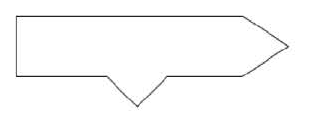 What does the symbol denote?
A. Action must be completed before continuing (sequential branching)
B. Initiate action while continuing existing flow path (concurrent step)
C. Execute if/when conditions specified occur (conditional step)
D. Wait for conditions before proceeding (wait step)
▶ Show Answer & Explanation
✓ B. Correct. Per OP-SA-108-101-2000 Figure 2, the symbol is a Concurrent Step symbol — enter designated procedure while continuing in existing flow path.
✗ A. This describes a Sequential Branching symbol, where the action must be completed before proceeding to the next step.
✗ C. This describes a Conditional Step symbol, where the action is performed only if/when specified conditions occur.
✗ D. This describes a Wait Step symbol, where the crew waits for conditions to be met before proceeding.
Ref: OP-SA-108-101-2000 (R12) | LO: NOS05CONDOP-15, Obj 5 | Source: New | Cognitive: Fundamental/Memory
Connections
- Related procedures: OP-SA-108-101-2000 — Emergency/Abnormal Operating Procedure Program
- Related exam: 2023 NRC Written Exam
Q24 — Containment Flooding / SW Not Isolated by Phase A/B
W E15 EK2.03 (3.3)
Given:
• Unit 1 LOCA
• Containment pressure peaked 20 psig now 13 psig lowering
• Successful cold leg recirc transfer
• Entered EOP-FRCE-2 for high containment water level
Which system is the source of water into containment that is NOT isolated by Phase A or B?
• Unit 1 LOCA
• Containment pressure peaked 20 psig now 13 psig lowering
• Successful cold leg recirc transfer
• Entered EOP-FRCE-2 for high containment water level
Which system is the source of water into containment that is NOT isolated by Phase A or B?
A. Fire Protection
B. Service Water
C. Component Cooling Water
D. Primary Water
▶ Show Answer & Explanation
✓ B. Correct. Service Water from CFCUs does NOT get isolated by Phase A or B signals. Therefore SW is the only source of water into containment following Phase A and B actuation that could contribute to containment flooding.
✗ A. Fire Protection is isolated on Phase A signal.
✗ C. CCW is isolated on Phase B signal (containment pressure exceeded 15 psig).
✗ D. Primary Water is isolated on Phase A signal.
Ref: 1-EOP-FRCE-2 (R41) | LO: NOS05FRCE00-08, Obj 1.2 | Source: Bank - Salem | Cognitive: Fundamental/Memory
Connections
- Related systems: Service Water, Containment
- Related procedures: EOP-FRCE-2 — Response to Containment Flooding
- Related exam: 2023 NRC Written Exam
Q25 — High Containment Radiation / CFCU Low Speed HEPA
W E16 EA1.05 (3.2)
Given:
• Unit 2 reactor trip from 100%
• STA reports valid CFST YELLOW path for Containment Environment (high radiation)
• CRS enters EOP-FRCE-3
What speed and filter alignment is required for CFCUs?
• Unit 2 reactor trip from 100%
• STA reports valid CFST YELLOW path for Containment Environment (high radiation)
• CRS enters EOP-FRCE-3
What speed and filter alignment is required for CFCUs?
A. High speed, roughing filters
B. High speed, HEPA filters
C. Low speed, HEPA filters
D. Low speed, roughing filters
▶ Show Answer & Explanation
✓ C. Correct. Per EOP-FRCE-3 step 2, place all CFCUs in LOW speed. In LOW speed, dampers realign flow through HEPA filters (bypassing roughing filters) to reduce radioactivity inside containment.
✗ A. High speed is normal operation with roughing filters. LOW speed is required for HEPA filtration to reduce containment radioactivity.
✗ B. CFCUs can run high speed but dampers only realign to route flow through HEPA filters when in low speed.
✗ D. LOW speed is the correct speed, but flow goes through HEPA filters not roughing filters. The damper realignment in low speed bypasses roughing filters.
Ref: 2-EOP-FRCE-3 (R41) | LO: NOS05FRCE00-08, Obj 3 | Source: New | Cognitive: Comprehension/Analysis
Connections
- Related systems: CFCUs
- Related procedures: EOP-FRCE-3 — Response to High Containment Radiation Levels
- Related exam: 2023 NRC Written Exam
Q26 — EOP-TRIP-4 Natural Circulation / RCP Restart Priority
W E09 EK3.06 (3.4)
Given:
• Unit 2 experienced a LOOP
• Crew is performing EOP-TRIP-4, Natural Circulation
• Power has been restored to 4KV Group Buses
How many RCPs are started and why?
• Unit 2 experienced a LOOP
• Crew is performing EOP-TRIP-4, Natural Circulation
• Power has been restored to 4KV Group Buses
How many RCPs are started and why?
A. One RCP; prevents two phase flow in the RCS.
B. Two RCPs; prevents two phase flow in the RCS.
C. Two RCPs; permits faster cooldown with less potential for upper head voiding.
D. One RCP; permits faster cooldown with less potential for upper head voiding.
▶ Show Answer & Explanation
✓ D. Correct. Per EOP-TRIP-4 bases Note N1-3: RCPs are started whenever possible. Forced convection permits faster cooldown with less potential for upper head voiding. RCP priority order: 23, 21+22 or 21+24, 21 (to provide normal PZR spray). Single pump operation is preferred in the loop providing best spray.
✗ A. Incorrect. "Prevents two phase flow" is the reason for stopping an RCP during a SBLOCA, not the reason for starting one during natural circulation cooldown. The correct reason is faster cooldown with less potential for upper head voiding.
✗ B. Incorrect. Two RCPs would only be started if 23 RCP is unavailable (to provide spray using 21+22 or 21+24). The "prevents two phase flow" reasoning is the basis for stopping RCPs during a SBLOCA, not for starting them during natural circulation.
✗ C. Incorrect. While the reason (faster cooldown, less head voiding) is correct, only one RCP is preferred. Two RCPs are only started if 23 is unavailable for spray. Note N1-1 allows two RCPs for better spray if 23 unavailable.
Ref: 2-EOP-TRIP-4 (R41) | Source: New | Cognitive: Fundamental/Memory
Connections
- Related systems: RCPs, Pressurizer & PRT
- Related procedures: EOP-TRIP-4 — Natural Circulation
- Related exam: 2023 NRC Written Exam
Q27 — AB.RCP-0001 / CCW Loss Time Limit and Bearing Temp
003 G2.1.7 (4.4)
Given:
• Salem Unit 2 is at 100% power
Then:
• OHA D-20, 21 RCP BRG CLG WTR FLO LO, is Alarming
• RO reports that all RCP motor bearing temperatures are rising
Which of the following completes the statement?
Per S2.OP-AB.RCP-0001, RCP Abnormality, the crew has a MAXIMUM of (1) minutes to restore CCW flow OR is required to trip the reactor and stop the RCP anytime RCP motor bearing temperatures exceeds (2).
• Salem Unit 2 is at 100% power
Then:
• OHA D-20, 21 RCP BRG CLG WTR FLO LO, is Alarming
• RO reports that all RCP motor bearing temperatures are rising
Which of the following completes the statement?
Per S2.OP-AB.RCP-0001, RCP Abnormality, the crew has a MAXIMUM of (1) minutes to restore CCW flow OR is required to trip the reactor and stop the RCP anytime RCP motor bearing temperatures exceeds (2).
A. 2 minutes; 175°F
B. 2 minutes; 165°F
C. 5 minutes; 165°F
D. 5 minutes; 175°F
▶ Show Answer & Explanation
✓ D. Correct. Per AB.RCP-0001 Attachment 1: 5 minutes to restore CCW or trip reactor and stop affected RCP. Anytime motor bearing temperature exceeds 175°F, trip reactor and stop affected RCP. Additional trip criteria: motor winding temp >302°F, seal water outlet >190°F, shaft vibration >20 mils, #1 seal leakoff <0.8 gpm or ≥6 gpm.
✗ A. Incorrect. 2 minutes is the time limit for loss of seal injection AND thermal barrier CCW concurrently, not for loss of CCW to motor bearings alone. 175°F is the correct motor bearing temperature limit.
✗ B. Incorrect. 2 minutes is the concurrent seal injection/thermal barrier CCW loss time limit, not the CCW loss time limit. 165°F is the ARP limit that directs transition to AB.RCP-0001, not the AB trip limit.
✗ C. Incorrect. 5 minutes is the correct CCW restoration time limit, but 165°F is the ARP limit directing entry into AB.RCP-0001. The AB.RCP-0001 trip limit for motor bearing temperature is 175°F.
Ref: S2.OP-AB.RCP-0001 (R28) | Source: Bank - Beaver Valley 2018 NRC RO29 | Cognitive: Comprehension/Analysis
Connections
- Related systems: RCPs, CCW
- Related procedures: AB.RCP-0001 — RCP Abnormality
- Related exam: 2023 NRC Written Exam
Q28 — CVCS Letdown HX Temp Detector Fails Low / Boron Release
004 A3.06 (3.6)
Given:
• Salem Unit 2 is at 100% power
• 2CC71, Letdown HX Temp Control Valve, is in Auto
Then:
• 2TE-130, temperature detector for 2CC71, fails LOW
Which of the following describes the impact of this failure?
1. Letdown temperature will (1) and the RCS T-avg temperature will (2).
• Salem Unit 2 is at 100% power
• 2CC71, Letdown HX Temp Control Valve, is in Auto
Then:
• 2TE-130, temperature detector for 2CC71, fails LOW
Which of the following describes the impact of this failure?
1. Letdown temperature will (1) and the RCS T-avg temperature will (2).
A. Letdown temperature rises; RCS Tavg lowers.
B. Letdown temperature rises; RCS Tavg rises.
C. Letdown temperature lowers; RCS Tavg rises.
D. Letdown temperature lowers; RCS Tavg lowers.
▶ Show Answer & Explanation
✓ A. Correct. 2TE-130 fails low, causing the controller to see a low temperature signal. 2CC71 goes closed (reduces CCW cooling flow through the letdown HX). With less cooling, letdown HX outlet temperature rises. Hotter letdown water flowing through the mixed bed demineralizers causes boron release into the RCS (boration effect), which lowers Tavg.
✗ B. Incorrect. Letdown temperature does rise (correct part), but higher temperature through the demineralizers releases boron into the RCS, which is a boration effect. Boration inserts negative reactivity, lowering Tavg, not raising it.
✗ C. Incorrect. 2CC71 goes closed (not open) when 2TE-130 fails low, so letdown temperature rises, not lowers. With boron release from higher demineralizer temperatures, Tavg would lower, not rise.
✗ D. Incorrect. 2CC71 goes closed when the temperature detector fails low, so letdown temperature rises, not lowers. The Tavg direction (lowers) is correct due to boration from demineralizer boron release.
Ref: INPO 191007 Demineralizers | Source: Bank - Salem | Cognitive: Comprehension/Analysis
Connections
- Related systems: CVCS
- Related exam: 2023 NRC Written Exam
Q29 — CVCS VCT Level Transmitter Fails High / Auto Swapover
004 K3.13 (3.8)
Given:
• Salem Unit 2 is at 100% power
• 21 Charging Pump is in service
• 2LT-112, VCT level, transmitter fails HIGH
Which of the following describes the operational impact to the CVCS system and the effect on the running charging pump, if any (assume no operator action taken)?
• Salem Unit 2 is at 100% power
• 21 Charging Pump is in service
• 2LT-112, VCT level, transmitter fails HIGH
Which of the following describes the operational impact to the CVCS system and the effect on the running charging pump, if any (assume no operator action taken)?
A. No automatic make-up, VCT level lowers, automatic swapover to RWST occurs.
B. No automatic make-up, VCT level lowers, no automatic swapover to RWST, charging pump damage.
C. Automatic make-up maintains VCT level.
D. Automatic make-up initiates but cannot maintain VCT level.
▶ Show Answer & Explanation
✓ B. Correct. LT-112 fails high, causing CV35 high level divert valve to open, which drains the VCT. Automatic make-up will not actuate because only LT-112 actuates automatic make-up, and it is failed high. Automatic swapover to RWST requires 2/2 VCT levels low-low (LT-112 AND LT-114); with LT-112 failed high, the 2/2 coincidence is not met. The charging pump loses suction as VCT empties and runs dry, resulting in pump damage.
✗ A. Incorrect. VCT level does lower and auto make-up will not actuate, but automatic swapover to RWST requires 2/2 VCT levels low-low (both LT-112 AND LT-114). With LT-112 failed high, the coincidence logic is not satisfied and no auto swapover occurs.
✗ C. Incorrect. Only LT-112 actuates automatic make-up. Since LT-112 is failed high, the controller sees a high VCT level and will not initiate make-up. VCT level will lower uncontrolled.
✗ D. Incorrect. Automatic make-up does not initiate at all. Only LT-112 actuates the auto make-up function, and it is failed high, so the controller sees no need for make-up.
Ref: NOS05CVCS00-18 | Source: New | Cognitive: Comprehension/Analysis
Connections
- Related systems: CVCS, ECCS
- Related exam: 2023 NRC Written Exam
Q30 — RHR Cooldown Rate Control / RH18 and RH20 Valves
005 A4.02 (3.9)
Given:
• Salem Unit 1 is in MODE 4 performing a shutdown.
• 11 RHR Pump is in service
• 11 RHR Heat Exchanger is in service
• 11RH18 and 12RH18, RHR HX Flow Cont. Valves, are being throttled
• 1RH20, RHR HX Bypass Valve, is being throttled
• The BOP operator has determined that the cooldown is approaching the maximum allowable Technical Specification limit
Which of the following describes the actions that the operator will take to LOWER the cooldown rate while maintaining a constant RHR flow rate?
• Salem Unit 1 is in MODE 4 performing a shutdown.
• 11 RHR Pump is in service
• 11 RHR Heat Exchanger is in service
• 11RH18 and 12RH18, RHR HX Flow Cont. Valves, are being throttled
• 1RH20, RHR HX Bypass Valve, is being throttled
• The BOP operator has determined that the cooldown is approaching the maximum allowable Technical Specification limit
Which of the following describes the actions that the operator will take to LOWER the cooldown rate while maintaining a constant RHR flow rate?
A. Lower RH18 demand; Raise RH20 demand.
B. Raise RH18 demand; Lower RH20 demand.
C. Lower RH18 demand; Lower RH20 demand.
D. Raise RH18 demand; Raise RH20 demand.
▶ Show Answer & Explanation
✓ A. Correct. Lower demand on RH18s closes them, reducing flow through the RHR heat exchanger. Raise demand on RH20 opens the bypass valve, routing more flow around the heat exchanger. Total RHR flow stays constant, but less flow passes through the heat exchanger, reducing the cooldown rate.
✗ B. Incorrect. Raising RH18 demand opens the HX flow path more, and lowering RH20 demand closes the bypass. This increases flow through the heat exchanger and raises the cooldown rate — the opposite of what is needed.
✗ C. Incorrect. Lowering both RH18 and RH20 demand closes both the HX flow path and the bypass path. This would lower cooldown rate but also lower total RHR flow, which is not desired.
✗ D. Incorrect. Raising both demands opens both paths. This may not significantly change the cooldown rate (flow split stays similar) and would increase total RHR flow rather than maintaining it constant.
Ref: NOS05RHR000-19 | Source: Modified - Salem 2020 NRC RO31 | Cognitive: Comprehension/Analysis
Connections
- Related systems: RHR
- Related exam: 2023 NRC Written Exam
Q31 — SBLOCA Break Location / Highest Peak Clad Temperature
006 K5.07 (3.1)
Given:
• A small break LOCA has occurred
Which RCS break location results in the highest peak clad temperature during a SBLOCA?
• A small break LOCA has occurred
Which RCS break location results in the highest peak clad temperature during a SBLOCA?
A. Cold leg
B. Hot leg
C. CRDM housing on reactor head
D. Pressurizer steam space
▶ Show Answer & Explanation
✓ A. Correct. A cold leg break results in the highest peak clad temperature during a SBLOCA. This is due to thermodynamics and the fact that ECCS pumps inject into the cold legs. With a cold leg break, injected ECCS water can be lost directly out the break before reaching the core, reducing the effectiveness of core cooling and resulting in the highest PCT.
✗ B. Incorrect. A hot leg break results in the highest loss of flow but does not produce the highest peak clad temperature. ECCS injection into cold legs is more effective at reaching the core with a hot leg break since the break is downstream of the core.
✗ C. Incorrect. A CRDM housing break on the reactor head is an analyzed SBLOCA scenario but does not produce the worst PCT. The break size is limited and flow paths still allow effective ECCS delivery to the core.
✗ D. Incorrect. A pressurizer steam space break is an analyzed SBLOCA scenario but does not produce the worst PCT. The steam space break depressurizes the PZR but ECCS can still effectively deliver coolant to the core.
Ref: NOS05ECCS00-18 | Source: Bank - Braidwood 2018 RO41 | Cognitive: Comprehension/Analysis
Connections
- Related systems: ECCS, RCS
- Related exam: 2023 NRC Written Exam
Q32 — PRT Level High / Drain Path via RCDT Pump
007 K1.06 (2.6)
Given:
• Salem Unit 2 is at 100% power
• Console Alarm PRT LEVEL HI-LO is LIT
• PRT level is 90%
Which of the following completes the statement?
PRT level will be lowered ...
• Salem Unit 2 is at 100% power
• Console Alarm PRT LEVEL HI-LO is LIT
• PRT level is 90%
Which of the following completes the statement?
PRT level will be lowered ...
A. Via RCDT Pump to Aux Building Sump
B. Via RCDT Pump to CVCS Hold-Up Tank
C. Gravity drain to CVCS Hold-Up Tank
D. Gravity drain to Aux Building Sump
▶ Show Answer & Explanation
✓ B. Correct. Per S2.OP-SO.PZR-0003: open 2PR14 to drain PRT to RCDT, which automatically opens 2WL12 and starts the RCDT pump (defeats low level cutoff). RCDT pumps discharge to: RWST, CVCS Hold-Up Tanks, or Waste Hold-Up Tanks.
✗ A. Incorrect. The PRT does drain via the RCDT pump, but the RCDT pump discharges to the RWST, CVCS Hold-Up Tanks, or Waste Hold-Up Tanks — not to the Aux Building Sump.
✗ C. Incorrect. The PRT does not gravity drain to the CVCS Hold-Up Tank. The drain path requires the RCDT pump to transfer the PRT contents.
✗ D. Incorrect. The PRT does not gravity drain, and the destination is not the Aux Building Sump. The RCDT pump is required, and it discharges to RWST, CVCS HUTs, or WHUTs.
Ref: S2.OP-SO.PZR-0003 (R17) | Source: New | Cognitive: Fundamental/Analysis
Connections
- Related systems: Pressurizer & PRT
- Related procedures: S2.OP-SO.PZR-0003 — PRT Operation
- Related exam: 2023 NRC Written Exam
Q33 — CCW System Response to LOCA + LOOP / SEC Mode 3
008 K5.10 (3.1)
Given:
• Salem Unit 2 experienced a LOCA and a Loss of Off-site Power
• The crew is implementing 2-EOP-TRIP-1, Reactor Trip or Safety Injection
Which of the following describes the operational impact on the Component Cooling Water System (CCW) and the reason why?
• Salem Unit 2 experienced a LOCA and a Loss of Off-site Power
• The crew is implementing 2-EOP-TRIP-1, Reactor Trip or Safety Injection
Which of the following describes the operational impact on the Component Cooling Water System (CCW) and the reason why?
A. CCW pumps remain running, both HXs available.
B. No CCW pumps running; SW to CCW HXs auto-isolated to prevent SW pump runout.
C. No CCW pumps running; SW to CCW HXs must be manually isolated.
D. All CCW pumps running; SW to CCW HXs isolated.
▶ Show Answer & Explanation
✓ B. Correct. SEC Mode 3 (SI + Blackout): all CCW pumps are tripped. SW to CCW HXs is auto-isolated to prevent SW pump runout with only 3 SW pumps available on emergency power. CCW pumps are not sequenced onto the EDGs due to loading concerns. CCW pumps are started later per EOP-APPX-1 when needed for cold leg recirculation.
✗ A. Incorrect. This describes SEC Mode 1 (SI only, no blackout). In a concurrent LOCA + LOOP (SEC Mode 3), CCW pumps are tripped and not sequenced onto EDGs.
✗ C. Incorrect. No CCW pumps running is correct, but SW to CCW HXs is auto-isolated in SEC Mode 3, not manually isolated. The auto-isolation prevents SW pump runout.
✗ D. Incorrect. This describes SEC Mode 2 (blackout only, no SI). In a concurrent LOCA + LOOP (SEC Mode 3), CCW pumps are tripped, not running.
Ref: NOS05CCW000-15 | Source: New | Cognitive: Comprehension/Analysis
Connections
- Related systems: CCW, Service Water, EDGs
- Related procedures: EOP-TRIP-1 — Reactor Trip or Safety Injection
- Related exam: 2023 NRC Written Exam
Q34 — MPC Fails Low / PZR Pressure Response
010 K4.03 (3.9)
Given:
• Salem Unit 2 is at 100% power
• Master Pressure Controller (MPC) is in AUTO
• PZR Pressure Channel I is selected for Control
• PZR Pressure Channel IV is selected for Alarm
Then:
• A malfunction with the MPC causes the output demand to fail LOW (0%)
Which of the following identifies the effect on RCS pressure and the expected system response, assuming no operator action?
RCS pressure will...
• Salem Unit 2 is at 100% power
• Master Pressure Controller (MPC) is in AUTO
• PZR Pressure Channel I is selected for Control
• PZR Pressure Channel IV is selected for Alarm
Then:
• A malfunction with the MPC causes the output demand to fail LOW (0%)
Which of the following identifies the effect on RCS pressure and the expected system response, assuming no operator action?
RCS pressure will...
A. RCS pressure lowers; no backup heaters energize.
B. RCS pressure lowers; both backup heater groups energize.
C. RCS pressure rises; no PORVs open.
D. RCS pressure rises; BOTH PORVs will open.
▶ Show Answer & Explanation
✓ D. Correct. MPC fails low (0%): spray valves close (MPC controls spray), both backup heater groups energize (0% demand energizes backup heaters). RCS pressure rises with heaters on and no spray. PZR sprays will not open since MPC controls them and MPC output is at 0%. PORVs open when pressure exceeds 2335 psig — PORVs are interlocked directly from PZR pressure channels, NOT from MPC. Both PORVs will open.
✗ A. Incorrect. MPC output at 0% energizes backup heaters (not de-energizes them) and closes spray valves. With heaters on and no spray, pressure rises, not lowers.
✗ B. Incorrect. Both backup heater groups do energize (correct part), but the result is pressure rising, not lowering. With heaters on and spray valves closed, RCS pressure increases.
✗ C. Incorrect. Pressure does rise (correct part), but PORVs WILL open. PORVs are NOT controlled by MPC; they are interlocked directly from PZR pressure channels and open independently when pressure exceeds 2335 psig.
Ref: NOS05PZRPL-12, S2.OP-AB.PZR-0001 (R20) | Source: New | Cognitive: Comprehension/Analysis
Connections
- Related systems: Pressurizer & PRT, RPS/SSPS
- Related procedures: AB.PZR-0001 — Pressurizer Pressure Control Malfunction
- Related exam: 2023 NRC Written Exam
Q35 — Reactor Trip Logic at 7% Power / Which Trip Active
012 A3.06 (4.1)
Given:
• Unit 2 at 7% reactor power
Which of the following conditions DIRECTLY causes a reactor trip?
• Unit 2 at 7% reactor power
Which of the following conditions DIRECTLY causes a reactor trip?
A. Three RCS FLOW LO bistables tripped on one loop.
B. Three PZR PRESS LO bistables tripped.
C. Two PZR PRESS HI bistables tripped.
D. One SG LO LEVEL bistable tripped on two SGs.
▶ Show Answer & Explanation
✓ C. Correct. PZR Pressure High trip: 2/4 channels exceeding 2385 psig causes a reactor trip. This trip has NO permissive — it is active in all conditions regardless of power level. At 7% power, this trip is fully active and will directly cause a reactor trip.
✗ A. Incorrect. The RCS Low Flow trip on a single loop (2/3 channels) is enabled above P-8 (36% power). The plant is at 7% power, which is below P-8, so this trip is blocked. The low flow trip on two loops is enabled above P-7 (10%), but the plant is also below P-7.
✗ B. Incorrect. The PZR Pressure Low trip is blocked below P-7 (10% power). The plant is at 7% power, which is below P-7, so this trip is blocked and will not directly cause a reactor trip.
✗ D. Incorrect. The SG Low Level trip requires 2/3 levels low on any 1 of 4 SGs. One level low on two SGs does not satisfy the coincidence logic (need 2/3 on the same SG), so this would not cause a trip.
Ref: Fluency List | Source: Bank - Point Beach 2017 RO1 | Cognitive: Comprehension/Analysis
Connections
- Related systems: RPS/SSPS
- Related exam: 2023 NRC Written Exam
Q36 — RCP Underfrequency Logic / 1/2 Taken Twice
012 K1.09 (3.8)
Given:
• Unit 2 at 18% power
• 500KV grid transient occurs
• H and E buses: 56.0 Hz / 4100V
• F and G buses: 59.7 Hz / 4200V
What is the plant response?
• Unit 2 at 18% power
• 500KV grid transient occurs
• H and E buses: 56.0 Hz / 4100V
• F and G buses: 59.7 Hz / 4200V
What is the plant response?
A. Trip breakers remain closed; ALL RCPs remain running.
B. Trip breakers remain closed; RCPs on H and E buses trip on individual RCP breaker underfrequency.
C. Trip breakers open on RCP underfrequency; ALL RCPs trip.
D. Trip breakers open on RCP underfrequency; RCPs on H and E buses trip on individual breaker underfrequency.
▶ Show Answer & Explanation
✓ A. Correct. RCP underfrequency trip logic is 1/2 on (H or E) AND 1/2 on (F or G) above P-7. Underfrequency exists on H and E buses (56.0 Hz) but NOT on F and G buses (59.7 Hz). Since the logic requires both bus groups to have underfrequency, the coincidence is NOT satisfied and no reactor trip occurs. Individual 4KV RCP breakers trip on undervoltage, NOT underfrequency. All buses have adequate voltage (4100V and 4200V), so no individual RCP breakers trip. All RCPs remain running.
✗ B. Incorrect. Trip breakers remaining closed is correct, but individual RCP breakers trip on undervoltage, NOT underfrequency. H and E buses have adequate voltage (4100V), so no individual RCP breakers trip.
✗ C. Incorrect. The underfrequency trip logic is not satisfied. The logic requires 1/2 on (H or E) AND 1/2 on (F or G). Only H and E have low frequency; F and G are normal. Trip breakers do not open.
✗ D. Incorrect. Underfrequency trip logic is not satisfied (needs both bus groups). Additionally, individual RCP breakers trip on undervoltage, not underfrequency. Neither condition is met.
Ref: Fluency List | Source: Bank - Salem | Cognitive: Fundamental/Memory
Connections
- Related systems: RPS/SSPS, 500KV, RCPs
- Related exam: 2023 NRC Written Exam
Q37 — LOCA + LOOP After SI/SEC Reset / EDG and Safeguards Response
013 A1.14 (3.8)
Given:
• Unit 1 LOCA in progress
• Crew is in EOP-LOCA-1
• SI has been reset, SECs have been reset
• All EDGs have been stopped from the Control Room
• A LOOP then occurs
What is the EDG and safeguards load response?
• Unit 1 LOCA in progress
• Crew is in EOP-LOCA-1
• SI has been reset, SECs have been reset
• All EDGs have been stopped from the Control Room
• A LOOP then occurs
What is the EDG and safeguards load response?
A. EDGs must be manually started; some safeguard loads must be manually started.
B. EDGs must be manually started; SECs sequence all safeguard loads.
C. EDGs auto-start; SECs sequence all safeguard loads.
D. EDGs auto-start; some safeguard loads must be manually started.
▶ Show Answer & Explanation
✓ D. Correct. After SI and SEC reset, a subsequent LOOP causes EDGs to auto-start on blackout signal (SEC Mode 2). SECs sequence for blackout only — only charging pumps are auto-started by the SEC in Mode 2. Other safeguard loads (SI pumps, RHR pumps, CFCUs) must be manually started since SI and SECs were reset prior to the LOOP.
✗ A. Incorrect. EDGs auto-start on the blackout signal regardless of whether they were previously stopped or SI/SECs were reset. The auto-start on loss of voltage is an independent function.
✗ B. Incorrect. EDGs auto-start on blackout (not manual start required). SECs sequence for Mode 2 (blackout only) since SI was previously reset — only charging pumps are auto-started, not all safeguard loads.
✗ C. Incorrect. EDGs do auto-start, but SECs do NOT sequence all safeguard loads. With SI previously reset, the SECs operate in Mode 2 (blackout only), which only auto-starts charging pumps. SI pumps, RHR pumps, and CFCUs require manual start.
Ref: NOS05SEC000-09 | Source: Bank - Comanche Peak 2020 RO20 | Cognitive: Comprehension/Analysis
Connections
- Related systems: EDGs, ECCS, SECs
- Related procedures: EOP-LOCA-1 — Loss of Reactor or Secondary Coolant
- Related exam: 2023 NRC Written Exam
Q38 — CFCU Response to Inadvertent SI / SEC Mode 1
022 A2.07 (4.0)
Given:
• Salem Unit 2 is at 100% power
• 21, 22, 23 and 24 CFCUs are running in HIGH speed with 25 CFCU in standby
• An inadvertent SI actuation occurs
Which of the following completes both statements?
1. Following SI actuation, all CFCUs will start in LOW speed (1).
2. To restore CFCUs to HIGH speed operation, (2) must be RESET.
• Salem Unit 2 is at 100% power
• 21, 22, 23 and 24 CFCUs are running in HIGH speed with 25 CFCU in standby
• An inadvertent SI actuation occurs
Which of the following completes both statements?
1. Following SI actuation, all CFCUs will start in LOW speed (1).
2. To restore CFCUs to HIGH speed operation, (2) must be RESET.
A. After 20 seconds; reset SI only.
B. After 20 seconds; reset SI and SECs.
C. Immediately; reset SI and SECs.
D. Immediately; reset SI only.
▶ Show Answer & Explanation
✓ B. Correct. SEC Mode 1 (SI only): running CFCUs are tripped, then all five start 20 seconds later in low speed. The 20-second time delay allows for motor coastdown before restart. To regain manual control for high speed operation: must reset BOTH trains of SI AND reset all SECs. EOP-TRIP-3 step 1 accomplishes this.
✗ A. Incorrect. The 20-second delay is correct, but resetting SI alone is not sufficient. Both SI trains AND all SECs must be reset to regain manual control of the CFCUs for high speed operation.
✗ C. Incorrect. CFCUs do not restart immediately. The 20-second time delay is required to allow motor coastdown before restarting in low speed. The SI and SEC reset requirement is correct.
✗ D. Incorrect. CFCUs do not restart immediately (20-second delay required for coastdown), and resetting SI only is not sufficient — all SECs must also be reset to regain manual control.
Ref: NOS05SEC000-09, 2-EOP-TRIP-3 (R41) | Source: Modified - Braidwood 2016 NRC RO20 | Cognitive: Comprehension/Analysis
Connections
- Related systems: CFCUs, RPS/SSPS
- Related procedures: EOP-TRIP-3 — SI Termination
- Related exam: 2023 NRC Written Exam
Q39 — CFCU Power Supplies / 4KV Vital Bus Loss
022 K2.01 (3.6)
Given:
• Salem Unit 2 experienced a reactor trip and safety injection actuation due to a LOCA
• 23 CFCU is CIT for maintenance
• 2B 4KV Vital Bus de-energized on Bus Differential protection
Which of the following identifies the status of the CFCUs?
• Salem Unit 2 experienced a reactor trip and safety injection actuation due to a LOCA
• 23 CFCU is CIT for maintenance
• 2B 4KV Vital Bus de-energized on Bus Differential protection
Which of the following identifies the status of the CFCUs?
A. 22 and 25
B. 22 and 24
C. 21 and 24
D. 21 and 25
▶ Show Answer & Explanation
✓ D. Correct. With 2B 4KV Vital Bus de-energized: 22 CFCU (B bus) and 24 CFCU (B bus) cannot run. With 23 CFCU CIT for maintenance: 23 cannot run. Only 21 CFCU (A bus) and 25 CFCU (C bus) remain available and running.
✗ A. Incorrect. 22 CFCU is powered from the B bus, which is de-energized. 22 cannot run. 25 (C bus) is correct.
✗ B. Incorrect. Both 22 and 24 CFCUs are powered from the B bus, which is de-energized. Neither can run.
✗ C. Incorrect. 24 CFCU is powered from the B bus, which is de-energized. 24 cannot run. 21 (A bus) is correct.
Ref: NOS05CONTMT-17 | Source: Bank - Salem | Cognitive: Fundamental/Memory
Connections
- Related systems: CFCUs, 500KV
- Related exam: 2023 NRC Written Exam
Q40 — Containment Spray Pump Sequencing / SEC Not Reset
026 K2.01 (3.9)
Given:
• Salem Unit 2 experienced a LOCA
• Containment pressure is 10 psig and slowly rising
• ALL available safeguards equipment have started with the exception that 2B SEC failed to actuate
• SECs have NOT been RESET
Based on the conditions above, which of the following completes the statement?
(1) containment spray pump(s) is/are still available from a Class 1E vital power source and (2) automatically start when containment pressure exceeds the containment pressure HI-HI setpoint.
• Salem Unit 2 experienced a LOCA
• Containment pressure is 10 psig and slowly rising
• ALL available safeguards equipment have started with the exception that 2B SEC failed to actuate
• SECs have NOT been RESET
Based on the conditions above, which of the following completes the statement?
(1) containment spray pump(s) is/are still available from a Class 1E vital power source and (2) automatically start when containment pressure exceeds the containment pressure HI-HI setpoint.
A. Only one CS pump available; WILL auto-start on Hi-Hi containment pressure.
B. Only one CS pump available; will NOT auto-start on Hi-Hi containment pressure.
C. BOTH CS pumps available; WILL auto-start on Hi-Hi containment pressure.
D. BOTH CS pumps available; will NOT auto-start on Hi-Hi containment pressure.
▶ Show Answer & Explanation
✓ C. Correct. Both CS pumps are powered from A and C 4KV vital buses. The 2B SEC failure does not affect CS pumps since neither is powered from the B bus. A and C SECs actuated in Mode 1. With the sequence complete and SECs NOT reset, the CS pump start contact is re-closed — CS pumps WILL auto-start when the Hi-Hi containment pressure signal is received.
✗ A. Incorrect. Both CS pumps are available, not just one. 21 CS pump is on the A bus (A SEC) and 22 CS pump is on the C bus (C SEC). The failed B SEC does not power either CS pump.
✗ B. Incorrect. Both CS pumps are available (not just one), and they will auto-start. With SECs not reset, the CS start contact remains active for auto-start on Hi-Hi containment pressure.
✗ D. Incorrect. Both CS pumps being available is correct, but they WILL auto-start. Since SECs have NOT been reset, the CS pump start contact remains re-closed after the initial sequence, allowing auto-start on Hi-Hi containment pressure.
Ref: NOS05SEC000-09 | Source: New | Cognitive: Comprehension/Analysis
Connections
- Related systems: Containment Spray, 500KV, RPS/SSPS
- Related exam: 2023 NRC Written Exam
Q41 — AFW TD Pump Response to Lowering SG Pressure
T2G1 039 K3.03 (3.3)
Given:
• Salem Unit 2 reactor tripped and actuation of Main Steam Line Isolation occurred due to a steamline break
• ONLY the 23 AFW Turbine-Driven feedpump is running supplying all SGs
• ALL SG pressures are 900 psig and lowering rapidly
Which of the following completes the statement concerning the effect on the AFW system (assuming no operator action)?
When SG pressures lowers to 700 psig, 23 AFW turbine speed will (1) and feedflow will (2).
• Salem Unit 2 reactor tripped and actuation of Main Steam Line Isolation occurred due to a steamline break
• ONLY the 23 AFW Turbine-Driven feedpump is running supplying all SGs
• ALL SG pressures are 900 psig and lowering rapidly
Which of the following completes the statement concerning the effect on the AFW system (assuming no operator action)?
When SG pressures lowers to 700 psig, 23 AFW turbine speed will (1) and feedflow will (2).
A. (1) lower (2) lower
B. (1) remain constant (2) rise
C. (1) remain constant (2) remain constant
D. (1) lower (2) rise
▶ Show Answer & Explanation
✓ B. Correct. 23 AFW Turbine Driven Pump is designed to operate with SG pressures at 100 psig. As SG pressures lower, the 23 AFW governor will throttle to maintain relative speed of the turbine constant. However, as SG pressure lowers, the D/P across the feedpump discharge and the SG will increase resulting in more AFW flow to the SGs.
✗ A. Incorrect. Plausible because the operator may believe that as SG pressure lowers so will the turbine speed and feedflow.
✗ C. Incorrect. Plausible because turbine speed will be maintain relatively constant and the operator may believe that feedflow will also remain constant. Incorrect in that feedflow will rise due to the lowering SG pressure.
✗ D. Incorrect. Plausible because feedflow will rise as SG pressure lowers.
Ref: NOS05AFW000-18 | Source: New | Cognitive: Comprehension/Analysis
K/A: 039 K3.03 — Knowledge of the effect that a loss or malfunction of the Main and Reheat Steam System will have on the following systems or system parameters: AFW system
K/A: 039 K3.03 — Knowledge of the effect that a loss or malfunction of the Main and Reheat Steam System will have on the following systems or system parameters: AFW system
Connections
- Related systems: AFW, Main Steam, Steam Generator & Blowdown
- Related procedures:
- Related exam: 2023 NRC Written Exam
Q42 — SG High Level Trip and FW Isolation
T2G1 059 G2.4.2 (4.5)
Given:
• Salem Unit 2 is at 100% power
• 21BF19, MFW Regulating Valve, fails fully OPEN
Which of the following completes the statement regarding how the plant will respond?
The reactor will trip and the crew will enter 2-EOP-TRIP-1, Reactor Trip or Safety Injection, when high level on SG NR levels reach (1) followed by a (2).
• Salem Unit 2 is at 100% power
• 21BF19, MFW Regulating Valve, fails fully OPEN
Which of the following completes the statement regarding how the plant will respond?
The reactor will trip and the crew will enter 2-EOP-TRIP-1, Reactor Trip or Safety Injection, when high level on SG NR levels reach (1) followed by a (2).
A. (1) 67% (2) Feedwater Isolation
B. (1) 67% (2) Feedwater Interlock ONLY
C. (1) 92% (2) Feedwater Isolation
D. (1) 92% (2) Feedwater Interlock ONLY
▶ Show Answer & Explanation
✓ A. Correct. Failed open BF19 will result in a Main Turbine Trip on high SG level followed by a reactor trip. The SG High Level setpoint is 2 out of 3 SG NR levels ≥ 67% on any one SG (P-14). P-14 will trip the main turbine that will cause an auto reactor trip and actuate a FW Isolation to close all BF13s, BF19s, BF40s, trip both SGFPs, and trips Main Turbine. FW interlock only closes the BF19s and BF40s.
✗ B. Incorrect. Plausible because a reactor trip will actuate a FW Interlock. Incorrect in that the SG high level (P-14) signal actuate a FW Isolation.
✗ C. Incorrect. Plausible because this is the reactor trip setpoint for PZR high level.
✗ D. Incorrect. Plausible because this is the reactor trip setpoint for PZR high level. Incorrect in that the P-14 setpoint is 67% and a FW Isolation occurs.
Ref: Drawing ESF-1 | Source: Bank — Salem | Cognitive: Fundamental/Memory
K/A: 059 G2.4.2 — Knowledge of system setpoints, interlocks, and automatic actions associated with emergency and abnormal operating procedure entry conditions
K/A: 059 G2.4.2 — Knowledge of system setpoints, interlocks, and automatic actions associated with emergency and abnormal operating procedure entry conditions
Connections
- Related systems: Feed & Condensate, Steam Generator & Blowdown, RPS/SSPS
- Related procedures: EOP-TRIP-1 — Reactor Trip or Safety Injection
- Related exam: 2023 NRC Written Exam
Q43 — AFW 2MS132 Instrument Air Supply Rupture
T2G1 061 A2.07 (4.0)
Given:
• Salem Unit 2 is at 100% power
• Instrument air supply line to 2MS132, 23 AFW Turbine Steam Inlet Valve, ruptures
Which of the following completes both statements?
1. What is the status of 23 AFW Pump?
2. What action should the operator take FIRST?
• Salem Unit 2 is at 100% power
• Instrument air supply line to 2MS132, 23 AFW Turbine Steam Inlet Valve, ruptures
Which of the following completes both statements?
1. What is the status of 23 AFW Pump?
2. What action should the operator take FIRST?
A. (1) Running (2) Reduce reactor power to prevent overpower condition per S2.OP-IO.ZZ-0004, Power Operation
B. (1) Running (2) Take manual control of the Main Feedwater Regulating valves to prevent SG overfill per S2.OP-AB.CA-0001, Loss of Control Air.
C. (1) NOT Running (2) Enter Tech Spec LCO 3.7.1.2, Auxiliary Feedwater System for INOPERABLE AFW Pump.
D. (1) NOT Running (2) Fail open the 2MS132 by using the handwheel on the valve actuator per S2.OP-AB.CA-0001, Loss of Control Air.
▶ Show Answer & Explanation
✓ A. Correct. Air supply line rupturing on the 2MS132 will cause the AFW steam inlet valve to fail open. This will result in 23 AFW running and injecting cold feedwater into the SGs. As a result, reactor power will increase above the 100% RTP and the operator should reduce reactor power per S2.OP-IO.ZZ-0004, Power Operation. Per S2.OP-IO.ZZ-0004, the maximum power level is 3459 MWt (100% RTP).
✗ B. Incorrect. Part 1 is correct. Part 2 is incorrect. Plausible because with 23 AFW running additional feedwater is being supplied to all the SGs. Incorrect in that with digital feedwater system in Automatic, the MFW Regulating Valves will automatically adjust demand to maintain SG NR levels within program band.
✗ C. Incorrect. Plausible because the operator may incorrectly recall how the valve fails on loss of air and believe the 2MS132 fails closed thereby preventing the start of 23 AFW pump. Entering TS LCO 3.7.1.2 is plausible because this LCO is applicable for the 23 AFW pump condition.
✗ D. Incorrect. Plausible because the operator may incorrectly recall how the valve fails on loss of air and believe the 2MS132 fails closed thereby preventing the start of 23 AFW pump. Failing open the 2MS132 is plausible because many AOVs can be locally operated.
Ref: NOS05AFW000-18, S2.OP-IO.ZZ-0004 (R88) | Source: Bank — Salem | Cognitive: Comprehension/Analysis
K/A: 061 A2.07 — Ability to (a) predict the impacts of the following on the Auxiliary Emergency Feedwater System and (b) based on those predictions, use procedures to correct, control, or mitigate the consequences of those abnormal operations: Air operated valve, solenoid-operated valve, or motor-operated valve
K/A: 061 A2.07 — Ability to (a) predict the impacts of the following on the Auxiliary Emergency Feedwater System and (b) based on those predictions, use procedures to correct, control, or mitigate the consequences of those abnormal operations: Air operated valve, solenoid-operated valve, or motor-operated valve
Connections
- Related systems: AFW, Main Steam
- Related procedures: S2.OP-IO.ZZ-0004 — Power Operation, AB.CA-0001 — Loss of Control Air
- Related exam: 2023 NRC Written Exam
Q44 — AFW 2DR6 Air Leak / Tank Overflow
T2G1 191001 K1.04 (3.2)
Given:
• Salem Unit 2 is at 100% power
Then:
• The Primary Equipment Operator reports a significant air leak on the air supply line at the connection to the 2DR6, AFW Tank Makeup, valve actuator
Which of the following describes the expected impact to the Auxiliary Feedwater System (assuming the leak is causing a reduction in air pressure to the actuator) and operator response, if any?
AFW storage tank level will ...
• Salem Unit 2 is at 100% power
Then:
• The Primary Equipment Operator reports a significant air leak on the air supply line at the connection to the 2DR6, AFW Tank Makeup, valve actuator
Which of the following describes the expected impact to the Auxiliary Feedwater System (assuming the leak is causing a reduction in air pressure to the actuator) and operator response, if any?
AFW storage tank level will ...
A. rise and overflow; local/manual control is NOT available.
B. rise and overflow; local/manual control is available.
C. remain the same; local/manual control is available.
D. remain the same; local/manual control is NOT available.
▶ Show Answer & Explanation
✓ B. Correct. The 2DR6 will fail to the open position on loss of air. This will result in the AFWST level rising and potentially overflowing the tank. Per S2.OP-AB.CA-0001, Attachment 2, the 2DR6 can be manually operated from the field to control tank level.
✗ A. Incorrect. Plausible because not all air operated valves can be manually operated in the field.
✗ C. Incorrect. Plausible because the operator may believe that the 2DR6 failing open would result in tank overflow, thus its failure position would be closed to prevent this (air to open actuator).
✗ D. Incorrect. Plausible because the operator may believe that the 2DR6 failing open would result in tank overflow, thus its failure position would be closed to prevent this (air to open actuator).
Ref: NOS05AFW000-18, S2.OP-AB.CA-0001 (R22) | Source: New | Cognitive: Comprehension/Analysis
K/A: 191001 K1.04 — The failed-valve positions for different operators (open, closed, and as-is positions spring loaded valves; hydraulic, pneumatically controlled valves; electric motor-driven valves)
K/A: 191001 K1.04 — The failed-valve positions for different operators (open, closed, and as-is positions spring loaded valves; hydraulic, pneumatically controlled valves; electric motor-driven valves)
Connections
- Related systems: AFW
- Related procedures: AB.CA-0001 — Loss of Control Air
- Related exam: 2023 NRC Written Exam
Q45 — Loss of 2A 460V Bus / Charging Pump
T2G1 062 A2.25 (3.3)
Given:
• Salem Unit 2 is at 100% power
• 23 Charging Pump is in service
• 22 PZR Backup Heaters are ON
• A Overcurrent fault on the 2A 460V Motor Control Center (MCC) causes the 4160V feeder breaker 2A4O to trip open, de-energizing the 2A 460V and 230V MCCs
Per S2.OP-AB.460-0001, Loss of 2A 460 V Bus, which of the following describes the effect on plant operations and the required action(s)?
• Salem Unit 2 is at 100% power
• 23 Charging Pump is in service
• 22 PZR Backup Heaters are ON
• A Overcurrent fault on the 2A 460V Motor Control Center (MCC) causes the 4160V feeder breaker 2A4O to trip open, de-energizing the 2A 460V and 230V MCCs
Per S2.OP-AB.460-0001, Loss of 2A 460 V Bus, which of the following describes the effect on plant operations and the required action(s)?
A. Loss of 2B1 125 VDC Battery Charger; place 2B2 125 VDC Battery Charger in service.
B. Loss of charging flow; start a centrifugal charging pump and restore PZR level.
C. Loss of all IRPI indications; transfer to emergency power source.
D. Loss of 22 PZR Backup Heaters; re-energize from emergency power bus.
▶ Show Answer & Explanation
✓ B. Correct. 23 charging pump is supplied from the 2A 460V bus. An overcurrent condition on the 2A 460V MCC/bus will cause the breakers associated on the 2A 460 and 230V MCCs to trip open on overcurrent and de-energize the 2A 460V bus. This will result in loss of 23 charging pump and letdown isolation when the 23 charging pump breaker opens. Per S2.OP-AB.460-0001, Loss of 2A 460/230V Vital Bus, the operator will start a centrifugal charging pump and then re-establish letdown.
✗ A. Incorrect. Plausible because the operator may incorrectly recall which 230V bus supplies the normal and backup battery chargers and believe that the 281 125VDC is supplied from 2A 230V bus. Incorrect in the 281 125VDC Battery Charger is supplied from the 2B 230V bus and the 282 125VDC battery charger is supplied from the 2A 230V bus.
✗ C. Incorrect. Plausible because the operator may incorrectly recall which 230V bus supplies the normal and emergency power to the IRPI indications and believe that the 2A 230V bus is the normal supply resulting in a loss of IRPI indications. Incorrect in that the normal power supply is from 2B 460V and the 2A 230V bus supplies the emergency power.
✗ D. Incorrect. Plausible because the operator may incorrectly recall which 460V bus supplies the normal and emergency power to the Pressurizer backup heaters and believe that the 2A 460V bus is the normal supply resulting in a loss of PZR backup heaters Group 22. Incorrect in that the normal power supply is from the EP 460V bus and the 2A 460V bus supplies the emergency backup.
Ref: 203061 (R39), 601390 (R25), S2.OP-AB.460-0001 (R9) | Source: New | Cognitive: Comprehension/Analysis
K/A: 062 A2.25 — Ability to (a) predict the impacts of the following on the AC Electrical Distribution System and (b) based on those predictions, use procedures to correct, control, or mitigate the consequences of those abnormal operations: Fault on a motor control center.
K/A: 062 A2.25 — Ability to (a) predict the impacts of the following on the AC Electrical Distribution System and (b) based on those predictions, use procedures to correct, control, or mitigate the consequences of those abnormal operations: Fault on a motor control center.
Connections
- Related systems: 500KV, CVCS, Pressurizer & PRT, DC Power
- Related procedures: AB.460-0001 — Loss of 2A 460V Bus
- Related exam: 2023 NRC Written Exam
Q46 — 125VDC Ground Detection
T2G1 063 K1.01 (2.6)
Given:
• Salem Unit 2 was at 100% power
• During control room log taking, the operator observes the 2A 125 VDC Bus ground ohmmeter reading 40K Ω (ohms)
Based on the above condition, which of the following completes both statements?
1. The reading indicates that a ground on the bus (1) detected.
2. If a ground is detected, S2.OP-SO.125-0004, 125VDC Ground Detection, will (2).
• Salem Unit 2 was at 100% power
• During control room log taking, the operator observes the 2A 125 VDC Bus ground ohmmeter reading 40K Ω (ohms)
Based on the above condition, which of the following completes both statements?
1. The reading indicates that a ground on the bus (1) detected.
2. If a ground is detected, S2.OP-SO.125-0004, 125VDC Ground Detection, will (2).
A. (1) is NOT (2) open all breakers in the panel, then reclose them one at a time, if no change to ground readings then continue
B. (1) is NOT (2) open one breaker at a time, evaluate ground readings, leave open if ground clears
C. (1) is (2) open one breaker at a time, evaluate ground readings, leave open if ground clears
D. (1) is (2) open all breakers in the panel, then reclose them one at a time, if no change to ground readings then continue
▶ Show Answer & Explanation
✓ C. Correct. Per S2.OP-SO.125-0004, a resistance reading of 50K ohms or less indicates a ground is detected. A resistance of greater than 50K ohms is normal indicating no grounds are present. Therefore, a ground reading of 0 ohms indicates a hard ground is present. Per S2.OP-SO.125-0004, breakers on the bus will be opened one at a time until the resistance indicates greater than 50K ohms.
✗ A. Incorrect. First part is incorrect. Plausible because the operator can incorrectly recall and confuse which resistance reading indicates a ground present and believe that the 0 ohms indicates no grounds. Incorrect in that resistance reading less than 50K ohms is a ground. Second part is incorrect. Plausible again if the operator confuses how to interpret resistance readings and believes a lower resistance is good.
✗ B. Incorrect. First part is incorrect. Plausible because the operator can incorrectly recall and confuse which resistance reading indicates a ground present and believe that the 0 ohms indicates no grounds. Incorrect in that resistance reading less than 50K ohms is a ground. Second part is correct.
✗ D. Incorrect. First part is correct. Second part is incorrect. Plausible because the operator can incorrectly recall and confuse which resistance reading indicates a ground present and believe that the 0 ohms indicates no grounds. Incorrect in that resistance reading less than 50K ohms is a ground.
Ref: NOS05DCELECT-11 | Source: New | Cognitive: Fundamental/Memory
K/A: 063 K1.01 — Knowledge of the physical connections and/or cause and effect relationships between the DC Electrical Distribution System and the following systems: Ground detection system.
K/A: 063 K1.01 — Knowledge of the physical connections and/or cause and effect relationships between the DC Electrical Distribution System and the following systems: Ground detection system.
Connections
- Related systems: DC Power
- Related procedures: S2.OP-SO.125-0004 — 125VDC Ground Detection
- Related exam: 2023 NRC Written Exam
Q47 — 125VDC Mechanical Interlock and Bus Transfer
T2G1 063 K4.01 (3.4)
Which of the following completes both statements concerning the 125 VDC Electrical Distribution System?
1. The 125 VDC Distribution System design (1) include a mechanical interlock when transferring from normal to the backup (emergency) bus.
2. Transferring 125 VDC distribution loads to the backup bus is permitted during (2).
1. The 125 VDC Distribution System design (1) include a mechanical interlock when transferring from normal to the backup (emergency) bus.
2. Transferring 125 VDC distribution loads to the backup bus is permitted during (2).
A. (1) does NOT (2) ALL Modes
B. (1) does NOT (2) Modes 5, 6, or defueled Only
C. (1) does (2) ALL Modes
D. (1) does (2) Modes 5, 6, or defueled Only
▶ Show Answer & Explanation
✓ D. Correct. The 125 VDC system does include a design feature that prevents paralleling the normal and backup busses. A mechanical interlock located in the distribution panel requires the normal supply breaker to be open and then the mechanical device is allowed to move allowing the closing of the backup or emergency power. Per procedure, transferring to the backup DC bus is only allowed during Modes 5, 6, or defueled.
✗ A. Incorrect. Part 1 is incorrect. Plausible because the operator may incorrectly recall that the DC busses do not have a mechanical interlock. Incorrect in that a mechanical interlock is part of the design. Part 2 is incorrect. Plausible because the operator may misinterpret the questions and believe that the DC bus can be transferred during any modes. Incorrect in that paralleling DC bus will make the DC busses Inoperable during Modes 1-4.
✗ B. Incorrect. Part 1 is incorrect. Plausible because the operator may incorrectly recall that the DC busses do not have a mechanical interlock. Incorrect in that a mechanical interlock is part of the design. Part 2 is correct.
✗ C. Incorrect. Part 1 is correct. Part 2 is incorrect. Plausible because the operator may misinterpret the questions and believe that the DC bus can be transferred during any modes. Incorrect in that paralleling DC bus will make the DC busses Inoperable during Modes 1-4.
Ref: NOS05DCELECT-11 | Source: Bank — Salem | Cognitive: Fundamental/Memory
K/A: 063 K4.01 — Knowledge of DC Electrical Distribution System design features and/or interlocks that provide for the following: Manual/automatic transfers of control.
K/A: 063 K4.01 — Knowledge of DC Electrical Distribution System design features and/or interlocks that provide for the following: Manual/automatic transfers of control.
Connections
- Related systems: DC Power
- Related procedures:
- Related exam: 2023 NRC Written Exam
Q48 — EDG Starting Air Compressor Power Supplies
T2G1 064 K2.01 (3.0)
What are the power supplies to the 2A EDG starting air compressors 21A and 21B?
A. 21A: 2A 230V Vital Bus / 21B: 2A 230V Vital Bus
B. 21A: 2A 230V Vital Bus / 21B: 2B 230V Vital Bus
C. 21A: 2A 460V Vital Bus / 21B: 2A 460V Vital Bus
D. 21A: 2A 460V Vital Bus / 21B: 2B 460V Vital Bus
▶ Show Answer & Explanation
✓ A. Correct. Each EDG two starting air compressors are supplied from its associated bus 230V vital bus. The 21A and 21B starting air compressors are both powered from 2A 230V Vital Bus.
✗ B. Incorrect. Plausible because the operator may believe that the 21B starting air compressor is powered from the other EDG 230V vital bus. Incorrect in that both starting air compressors are powered from the same 2A 230V vital power.
✗ C. Incorrect. Plausible because the operator may incorrectly recall and believe that the starting air compressors are powered from 2A 460V vital bus. Incorrect in that both starting air compressors are powered from the same 2A 230V vital power.
✗ D. Incorrect. Plausible because the operator may believe that the 21B starting air compressor is powered from the other EDG 460V vital bus. Incorrect in that both starting air compressors are powered from the same 2A 230V vital power.
Ref: NOS05EDG000-15 | Source: New | Cognitive: Fundamental/Memory
K/A: 064 K2.01 — Knowledge of electrical power supplies to the following Emergency Diesel Generator System: Starting air compressor
K/A: 064 K2.01 — Knowledge of electrical power supplies to the following Emergency Diesel Generator System: Starting air compressor
Connections
- Related systems: EDGs, 500KV
- Related procedures:
- Related exam: 2023 NRC Written Exam
Q49 — SGBD Radiation Monitor Check Source
T2G1 073 A4.02 (3.6)
Given:
• Salem Unit 1 is at 100% power
• The PO needs to perform a check source on the 1R19A, SGBD Radiation Monitor
Per S1.OP-ST.RM-0001, Radiation Monitors - Check Source, which of the following completes both statements?
1. When the operator pushes the check source pushbutton, the radiation monitor will respond by (1).
2. During the check source, actuation of interlocks (2) expected.
• Salem Unit 1 is at 100% power
• The PO needs to perform a check source on the 1R19A, SGBD Radiation Monitor
Per S1.OP-ST.RM-0001, Radiation Monitors - Check Source, which of the following completes both statements?
1. When the operator pushes the check source pushbutton, the radiation monitor will respond by (1).
2. During the check source, actuation of interlocks (2) expected.
A. (1) a rise in counts until the check source pushbutton is released (2) are
B. (1) a rise in counts until the check source pushbutton is released (2) are NOT
C. (1) a rise in counts then a return to original reading (2) are NOT
D. (1) a rise in counts then a return to original reading (2) are
▶ Show Answer & Explanation
✓ C. Correct. When a check source is performed on this radiation monitor, the counts will rise then return to its previous reading. During check source it is not expected for interlocks to actuate.
✗ A. Incorrect. Plausible because other radiation monitors do perform like this. Incorrect in that this radiation monitor check source the counts rise then fall and interlocks are not expected during check source.
✗ B. Incorrect. Plausible because other radiation monitors do perform like this. Incorrect in that this radiation monitor check source the counts rise then fall and interlocks are not expected during check source.
✗ D. Incorrect. Plausible because some other radiation monitors interlocks could occur during check source.
Ref: NOS05RMS000-20, S1.OP-ST.RM-0001 (R10) | Source: New | Cognitive: Fundamental/Memory
K/A: 073 A4.02 — Ability to manually operate and/or monitor the Process Radiation Monitor in the control room: RMS control panel.
K/A: 073 A4.02 — Ability to manually operate and/or monitor the Process Radiation Monitor in the control room: RMS control panel.
Connections
- Related systems: RPS/SSPS, Steam Generator & Blowdown
- Related procedures: S1.OP-ST.RM-0001 — Radiation Monitors Check Source, S2.OP-SO.RM-0001 — Radiation Monitoring System Operation
- Related exam: 2023 NRC Written Exam
Q50 — CFCU SW Flow in High vs Low Speed
T2G1 076 A1.03 (3.3)
Given:
• Salem Unit 1 is at 100% power
• Three (3) Service Water (SW) Pumps are in service
• Four (4) CFCUs are running in HIGH speed
• SW header pressures are 108 psig
Then:
• The PO is directed to place one running CFCU in LOW speed for surveillance testing
Which of the following completes the statement concerning the response on the Service Water System (assume three SW pumps remain running at all times)?
As compared to the SW header pressure while operating in HIGH speed, the SW header pressure will be (1) when operating in LOW speed and SW flow rate through the CFCU will be (2).
• Salem Unit 1 is at 100% power
• Three (3) Service Water (SW) Pumps are in service
• Four (4) CFCUs are running in HIGH speed
• SW header pressures are 108 psig
Then:
• The PO is directed to place one running CFCU in LOW speed for surveillance testing
Which of the following completes the statement concerning the response on the Service Water System (assume three SW pumps remain running at all times)?
As compared to the SW header pressure while operating in HIGH speed, the SW header pressure will be (1) when operating in LOW speed and SW flow rate through the CFCU will be (2).
A. (1) lower (2) the same
B. (1) lower (2) higher
C. (1) the same (2) the same
D. (1) the same (2) higher
▶ Show Answer & Explanation
✓ C. Correct. The SW flow rates through the CFCUs in High and Low speed are the same, therefore, the SW header pressure will also be the same when operating in High and Low speed.
✗ A. Incorrect. Plausible because the SW flow through the CFCUs is the same for high or low speed operation. Correct in that the SW header will be relatively the same.
✗ B. Incorrect. Plausible because prior operation of the CFCUs in low speed use to have a higher flow rate. Incorrect in that orifices have been installed to maintain constant flow rates in either speed.
✗ D. Incorrect. Plausible because prior operation of the CFCUs in low speed use to have a higher flow rate. Incorrect in that orifices have been installed to maintain constant flow rates in either speed.
Ref: NOS05CONTMT-17 | Source: New | Cognitive: Comprehension/Analysis
K/A: 076 A1.03 — Ability to predict and/or monitor changes in parameters associated with operation of the Service Water System: SWS header pressure
K/A: 076 A1.03 — Ability to predict and/or monitor changes in parameters associated with operation of the Service Water System: SWS header pressure
Connections
- Related systems: Service Water, CFCUs
- Related procedures:
- Related exam: 2023 NRC Written Exam
Q51 — SW122 Loss of Air / RHR Cooldown Rate
T2G1 076 K3.05 (3.6)
Given:
• Salem Unit 2 is in MODE 4
• 21 RHR Pump is in service providing shutdown cooling through 21 RHR HX
• RCS pressure is 300 psig
• 21RH18, RHR HX Flow Cont. Valve, and 2RH20, RHR HX Bypass Valve, are being throttled to maintain a RCS cooldown rate of 5°F per hour
Then:
• Instrument air supply line to the actuator of 21SW122, SW Inlet Control Valve, to CCW HX, severs
Assuming NO operator action, which of the following completes both statements?
1. RCS cooldown rate will (1).
2. The 21SW122 (2) be manually operated.
• Salem Unit 2 is in MODE 4
• 21 RHR Pump is in service providing shutdown cooling through 21 RHR HX
• RCS pressure is 300 psig
• 21RH18, RHR HX Flow Cont. Valve, and 2RH20, RHR HX Bypass Valve, are being throttled to maintain a RCS cooldown rate of 5°F per hour
Then:
• Instrument air supply line to the actuator of 21SW122, SW Inlet Control Valve, to CCW HX, severs
Assuming NO operator action, which of the following completes both statements?
1. RCS cooldown rate will (1).
2. The 21SW122 (2) be manually operated.
A. (1) rise (2) can NOT
B. (1) rise (2) can
C. (1) lower (2) can
D. (1) lower (2) can NOT
▶ Show Answer & Explanation
✓ B. Correct. 21SW122 fails open on loss of air (fails closed on loss of 125VDC power). When the 21SW122 opens, SW flow will rise through the CCW HX causing CCW temperature to lower and therefore the outlet temperature of 21 RHR HX to lower raising the cooldown rate. Per S2.OP-AB.CA-0001, the 21/22SW122 can be manually operated.
✗ A. Incorrect. Plausible because the operator may incorrectly recall if this valve can be manually operated from the field since not all AOVs can be manually operated in the field.
✗ C. Incorrect. Plausible because the question is asking about the cooldown rate and the operator may confuse the concept that a lower temperature means a higher cooldown rate.
✗ D. Incorrect. Plausible because the question is asking about the cooldown rate and the operator may confuse the concept that a lower temperature means a higher cooldown rate.
Ref: NOS05SW0NUC-13, S2.OP-AB.CA-0001 (R22) | Source: New | Cognitive: Comprehension/Analysis
K/A: 076 K3.05 — Knowledge of the effect that a loss or malfunction of the Service Water System will have on the following systems or system parameters: RHRS
K/A: 076 K3.05 — Knowledge of the effect that a loss or malfunction of the Service Water System will have on the following systems or system parameters: RHRS
Connections
- Related systems: Service Water, CCW, RHR
- Related procedures: AB.CA-0001 — Loss of Control Air
- Related exam: 2023 NRC Written Exam
Q52 — Phase A / CA330 Instrument Air to Containment
T2G1 078 A3.05 (3.3)
Given:
• Salem Unit 2 experienced a Safety Injection
• The crew enters 2-EOP-TRIP-1, Reactor Trip or Safety Injection
• Phase A signal failed to actuate on BOTH trains
Which of the following completes the statement concerning instrument air to containment?
1. 21 and 22 CA330s, Instrument Air Containment Isolation, valves are currently in the (1) position.
2. MINIMUM requirement per 2-EOP-TRIP-1 for isolating instrument air to containment requires (2) CA330(s) to be closed.
• Salem Unit 2 experienced a Safety Injection
• The crew enters 2-EOP-TRIP-1, Reactor Trip or Safety Injection
• Phase A signal failed to actuate on BOTH trains
Which of the following completes the statement concerning instrument air to containment?
1. 21 and 22 CA330s, Instrument Air Containment Isolation, valves are currently in the (1) position.
2. MINIMUM requirement per 2-EOP-TRIP-1 for isolating instrument air to containment requires (2) CA330(s) to be closed.
A. (1) closed (2) both
B. (1) closed (2) ONLY one
C. (1) open (2) ONLY one
D. (1) open (2) both
▶ Show Answer & Explanation
✓ D. Correct. CA330s are closed by a Phase A isolation signal. Although SI actuated, with both trains of Phase A not actuated, then the 21 and 22 CA330s will remain open. Both 21 and 22 CA330s are required to be closed to fully isolate air to containment. 21 CA330s supplies 2A control air header and 22CA330s supplies 2B control air header to containment. Each instrument air supply line to containment is isolated by its respective CA330 and a check valve. It is for this reason that both CA330s need to be closed to ensure a failure of one of the two components will still isolate a pathway from containment. Backup air receivers inside containment ensure that the PZR PORVs have sufficient air to allow the PZR PORV to stroke during steps in the EOP Network (Inadvertent SI, SGTR, etc.)
✗ A. Incorrect. Part 1 is incorrect. Plausible because the operator may believe that the CA330s close on an SI signal. Incorrect in that each CA330s will close on a Phase A signal only. Part 2 is correct. Plausible because the operator may believe that the CA330s are in series and need both to close.
✗ B. Incorrect. Part 1 is incorrect. Plausible because the operator may believe that the CA330s close on an SI signal. Incorrect in that each CA330s will close on a Phase A signal only. Part 2 is incorrect. Plausible because the operator may believe that the CA330s are in series and only need one of the two to isolate containment as a minimum.
✗ C. Incorrect. Part 1 is correct. Part 2 is incorrect. Plausible because the operator may believe that the CA330s are in series and only need one of the two to isolate containment as a minimum.
Ref: NOS05CONAIR-13 | Source: Modified Bank — Farley 2019 NRC RO14 | Cognitive: Fundamental/Memory
K/A: 078 A3.05 — Ability to monitor automatic features of the Instrument Air System, including: Isolation of instrument air to containment
K/A: 078 A3.05 — Ability to monitor automatic features of the Instrument Air System, including: Isolation of instrument air to containment
Connections
- Related systems: Containment, Pressurizer & PRT
- Related procedures: EOP-TRIP-1 — Reactor Trip or Safety Injection
- Related exam: 2023 NRC Written Exam
Q53 — Containment Vacuum Relief Isolation Signals
T2G1 103 K4.01 (3.2)
Which of the following automatically generated signals will isolate the Containment Vacuum Relief Unit from the containment atmosphere when in service?
1. Phase A
2. Safety Injection
3. Containment Vent Isolation
4. Containment Spray/Phase B
1. Phase A
2. Safety Injection
3. Containment Vent Isolation
4. Containment Spray/Phase B
A. 1 and 2 Only
B. 2 and 3 Only
C. 2, 3, and 4 Only
D. 1, 3, and 4 Only
▶ Show Answer & Explanation
✓ B. Correct. The Containment Vacuum Relief System filter unit uses only roughing filters. Since air is being drawn into containment there is no need to filter the air for radioactive contaminants. The dampers (VC5 and VC6) will automatically close on an automatic Safety Injection or CVI signal. The CVI signal will be actuated from a Safety Injection. CVI signal can also be generated manually using either (1) CS/Phase B keyswitches, or (2) Containment Vent Operate pushbutton on the safeguards console. Containment Atmosphere Radiation Monitors 2R11A, 2R12A, and 2R12B either one in alarm will cause a CVI.
✗ A. Incorrect. Plausible because Phase A signals do close penetrations through containment. Incorrect in that the Phase A signal does not actuate a CVI signal.
✗ C. Incorrect. Plausible because manually actuating CS/Phase B will actuate a CVI signal. Incorrect in that the stem is asking about automatically generated signals only.
✗ D. Incorrect. Plausible because Phase A and B do isolate containment penetrations. Incorrect in that these signals does not actuate a CVI.
Ref: NOS05CONTMT-17, 221057 (RPS logic) | Source: New | Cognitive: Fundamental/Memory
K/A: 103 K4.01 — Knowledge of Containment System design features and/or interlocks that provide for the following: Vacuum breaker protection
K/A: 103 K4.01 — Knowledge of Containment System design features and/or interlocks that provide for the following: Vacuum breaker protection
Connections
- Related systems: Containment, RPS/SSPS
- Related procedures:
- Related exam: 2023 NRC Written Exam
Q54 — Containment Internal Pressure TS 3.6.1.4
T2G1 103 K6.15 (3.1)
Given:
• Salem Unit 2 is at 100% power
Then:
• A steam leak is occurring inside containment
• Containment pressure is slowly rising
Based on the above condition, which of the following completes both statements in accordance with TS 3.6.1.4, Containment Systems - Internal Pressure?
1. If containment pressure exceeds a MINIMUM of (+) (1) psig, then containment DESIGN LIMITS could be exceeded during a Design Based Accident.
2. Containment internal pressure must be restored to within the limits within (2).
• Salem Unit 2 is at 100% power
Then:
• A steam leak is occurring inside containment
• Containment pressure is slowly rising
Based on the above condition, which of the following completes both statements in accordance with TS 3.6.1.4, Containment Systems - Internal Pressure?
1. If containment pressure exceeds a MINIMUM of (+) (1) psig, then containment DESIGN LIMITS could be exceeded during a Design Based Accident.
2. Containment internal pressure must be restored to within the limits within (2).
A. (1) 1.5 (2) 1 hour
B. (1) 1.5 (2) 15 minutes
C. (1) 0.3 (2) 15 minutes
D. (1) 0.3 (2) 1 hour
▶ Show Answer & Explanation
✓ D. Correct. Based on TS bases for TS 3.6.1.4, Internal Pressure must be maintained between -1.5 and +0.3 psig during Modes 1-4. Limitation on containment internal pressure ensure that (1) the containment structure is prevented from exceeding its design negative pressure differential with respect to the outside atmosphere of 3.5 psig, and (2) the containment peak pressure does not exceed the design pressure of 47 psig during the limiting pipe break condition. The pipe breaks considered are LOCA and steam line break. Containment Pressure must be restored within limits within 1 hour.
✗ A. Incorrect. Plausible because the operator may confuse this value with the TS value of (-) 1.5 psig.
✗ B. Incorrect. Plausible because the operator may confuse this value with the TS value of (-) 1.5 psig.
✗ C. Incorrect. Plausible because there are other TS LCO with less than one hour limits.
Ref: TS 3.6.1.4 and Bases | Source: New | Cognitive: Fundamental/Memory
K/A: 103 K6.15 — Knowledge of the effect of the following plant conditions, system malfunctions, or component malfunctions on the Containment System: MRSS
K/A: 103 K6.15 — Knowledge of the effect of the following plant conditions, system malfunctions, or component malfunctions on the Containment System: MRSS
Connections
- Related systems: Containment, Main Steam
- Related tech specs: TS 3/4.6 — Containment
- Related exam: 2023 NRC Written Exam
Q55 — Urgent Failure / Rod Control Gripper Coils
T2G2 001 K1.03 (3.7)
Given:
• Salem Unit 2 is performing a load reduction from 100% power
• Rod Control is in AUTO
Then:
• Console Alarm, URGENT FAILURE, is Alarming
• Rod motion has stopped
Which of the following completes both statements concerning the effect on the rod control system?
1. Rods (1) be inserted in MANUAL.
2. The rods are currently held in position by energizing the (2) gripper coils.
• Salem Unit 2 is performing a load reduction from 100% power
• Rod Control is in AUTO
Then:
• Console Alarm, URGENT FAILURE, is Alarming
• Rod motion has stopped
Which of the following completes both statements concerning the effect on the rod control system?
1. Rods (1) be inserted in MANUAL.
2. The rods are currently held in position by energizing the (2) gripper coils.
A. (1) can (2) stationary
B. (1) can (2) moveable
C. (1) can NOT (2) moveable
D. (1) can NOT (2) stationary
▶ Show Answer & Explanation
✓ D. Correct. Per console ARP S2.OP-AR.ZZ-0012, Urgent Failure alarm will prevent all rod motion in Manual or Automatic. In this condition the rods are held in position by the stationary gripper coil being energized at a reduced current. The moveable gripper coil is de-energized at this time.
✗ A. Incorrect. Part 1 is incorrect. Plausible because the operator could believe that even with an Urgent Failure present, the operator will always be able to insert rods. Incorrect in that all rod motion is inhibited in Manual and Automatic. Part 2 is correct.
✗ B. Incorrect. Part 1 is incorrect. Plausible because the operator could believe that even with an Urgent Failure present, the operator will always be able to insert rods. Incorrect in that all rod motion is inhibited in Manual and Automatic. Part 2 is incorrect. Plausible because the moveable gripper coil is used to hold the rods in position until the lift coil is energized/de-energized to withdraw or insert rods. Incorrect in that the stationary coil is energized at a reduced current to hold rods in position.
✗ C. Incorrect. Part 1 is correct. Part 2 is incorrect. Plausible because the moveable gripper coil is used to hold the rods in position until the lift coil is energized/de-energized to withdraw or insert rods. Incorrect in that the stationary coil is energized at a reduced current to hold rods in position.
Ref: NOS05RODS00-14, S2.OP-AR.ZZ-0012 (R40) | Source: Modified Bank — Diablo Canyon 2019 NRC RO29 | Cognitive: Fundamental/Memory
K/A: 001 K1.03 — Knowledge of the physical connections and/or cause and effect relationships between the Control Rod Drive System and the following systems: CRDM
K/A: 001 K1.03 — Knowledge of the physical connections and/or cause and effect relationships between the Control Rod Drive System and the following systems: CRDM
Connections
- Related systems: RPS/SSPS, Rx Vessel & Internals
- Related procedures: S2.OP-AR.ZZ-0012 — Console Alarm Response
- Related exam: 2023 NRC Written Exam
Q56 — Rod Position Indication / Group Demand Step Counter
T2G2 014A2.11 (3.0)
Given:
- Salem Unit 2 is at 100% power
- Control Bank D rods are at 200 steps
Then:
- The Group Demand Step Counter on 2CC2 console for Control Bank D Group 1 rods fails (blank screen)
In accordance with S2.OP-DL.ZZ-0003, Control Room Logs, which of the following completes both statements?
1. The Plant Computer displays the rod demand step position for Group(s) (1).
2. Based on the above condition, the Plant Computer (2) be used to satisfy the Tech Spec requirements for the failed console group demand step counter.
- Salem Unit 2 is at 100% power
- Control Bank D rods are at 200 steps
Then:
- The Group Demand Step Counter on 2CC2 console for Control Bank D Group 1 rods fails (blank screen)
In accordance with S2.OP-DL.ZZ-0003, Control Room Logs, which of the following completes both statements?
1. The Plant Computer displays the rod demand step position for Group(s) (1).
2. Based on the above condition, the Plant Computer (2) be used to satisfy the Tech Spec requirements for the failed console group demand step counter.
A. (1) 1 Only (2) can
B. (1) 1 and 2 (2) can NOT
C. (1) 1 and 2 (2) can
D. (1) 1 Only (2) can NOT
▶ Show Answer & Explanation
✓ A. Correct. Only the Group 1 Demand Steps input into the Plant Computer. Per S2.OP-DL.ZZ-0003 for Control Rod Counter channel checks, either the Group Demand Counter or Plant Computer will satisfy the surveillance for Group 1 only. Only the Group 1 Demand Steps input into the Plant Computer. TS 3.1.3.2.1.b, bases states in part, "...either the control console group 1 demand step counter or the plant computer 'bank step' display is sufficient to comply with this specification for group 1 rod position."
✗ B. Part 1 is incorrect. Plausible because the operator may believe that both groups are also displayed on the plant computer. Part 2 is incorrect. Plausible because the operator may believe that the Plant Computer cannot satisfy the surveillance requirement. Incorrect in that per S2.OP-DL.ZZ-0003, the Plant Computer Group Demand for Group 1 only will satisfy the surveillance and also that only group 1 demand is displayed on the plant computer.
✗ C. Part 1 is incorrect. Plausible because the operator may believe that both groups are also displayed on the plant computer. Part 2 is correct.
✗ D. Part 1 is incorrect. Plausible because the operator may believe that the failed step counter will generate E-24. Incorrect in that E-24 does not use input directly from the console step counters. Part 2 is incorrect. Plausible because the operator may believe that the Plant Computer cannot satisfy the surveillance requirement. Incorrect in that per S2.OP-DL.ZZ-0003, the Plant Computer Group Demand for Group 1 only will satisfy the surveillance.
Ref: S2.OP-DL.ZZ-0003 (R126), TS 3.1.3.2.1 bases | LO: NOS05RODS00-14, Objective 6 — Describe the function of the following components and how their normal and abnormal operations affects the Rod Control and Position Indication Systems: Rod Insertion Limit Comparator | Source: New | Cognitive: Comprehension/Analysis
Connections
- Related systems: RPS/SSPS
- Related procedures: S2.OP-DL.ZZ-0003 — Control Room Logs
- Related tech specs: TS 3/4.1.3 — Movable Control Assemblies
- Related exam: 2023 NRC Written Exam
Q57 — In-Core Temperature Monitoring / CET Reference Junction
T2G2 017 K6.01 (3.2)
Given:
- Salem Unit 2 is at 100% power
Then:
- The ventilation system that supplies cool air to the room that the Reference Junction Panel is located for the In-Core Temperature Monitoring System is lost
- Room temperature have risen by 15 degrees F
Which of the following describes the impact on the In-Core Monitoring instrumentation and what is its design limit?
- Salem Unit 2 is at 100% power
Then:
- The ventilation system that supplies cool air to the room that the Reference Junction Panel is located for the In-Core Temperature Monitoring System is lost
- Room temperature have risen by 15 degrees F
Which of the following describes the impact on the In-Core Monitoring instrumentation and what is its design limit?
A. CET readings will indicate higher than actual; up to 3300 degrees F.
B. CET readings will indicate higher than actual; up to 2300 degrees F.
C. NO effect on CET readings as they are temperature compensated; up to 2300 degrees F.
D. NO effect on CET readings as they are temperature compensated; up to 3300 degrees F.
▶ Show Answer & Explanation
✓ C. Correct. The reference junction box is located outside of containment. Ambient temperature changes in the room will affect the reference junction box, however the system uses a temperature compensator to adjust for the changes in temperatures where the reference junction box is located. A rise in ambient room temperature will raise temperature, but the temperature compensating circuit will adjust for these reference junction box temperature changes. In-Core system design upper range is 2300 degrees F.
✗ A. Plausible because higher temperatures in the room where the reference junction box is located will cause the in temperature indicated to rise. Incorrect in that the system has a temperature compensator circuit such that the reference junction box temperature changes are adjusted to the true thermocouple reading. In-core system has a design range to 2300 degrees F.
✗ B. Plausible because higher temperatures in the room where the reference junction box is located will cause the in temperature indicated to rise. Incorrect in that the system has a temperature compensator circuit such that the reference junction box temperature changes are adjusted to the true thermocouple reading. In-core system has a design range to 2300 degrees F.
✗ D. In-Core system design upper range is 2300 degrees F.
Ref: INPO Sensors and Detectors (R3) | LO: NOS0SINCORE-09, Objective 7 — Describe how the following components affect the Core Exit Thermocouple System during Normal and Abnormal conditions: Reference Junction Boxes | Source: Bank — Indian Point 2 2021 NRC ROSS | Cognitive: Comprehension/Analysis
Connections
- Related systems: RPS/SSPS
- Related exam: 2023 NRC Written Exam
Q58 — Hydrogen Recombiner System / EOP-LOCA-1
T2G2 028 K3.02 (2.9)
Which of the following completes both statements concerning operation of the Hydrogen Recombiner System during a Design Bases Accident (assume hydrogen concentration is within the range that allows operation of the hydrogen recombiner system)?
1. The maximum number of hydrogen recombiners that can be placed in service is (1).
2. What is the concern if hydrogen recombiner system cannot be placed in service when required?
1. The maximum number of hydrogen recombiners that can be placed in service is (1).
2. What is the concern if hydrogen recombiner system cannot be placed in service when required?
A. (1) 1 (2) Gas vapor binding of ECCS pumps resulting in loss of core cooling.
B. (1) 1 (2) Explosive atmosphere resulting in containment failure.
C. (1) 2 (2) Explosive atmosphere resulting in containment failure.
D. (1) 2 (2) Gas vapor binding of ECCS pumps resulting in loss of core cooling.
▶ Show Answer & Explanation
✓ B. Correct. Per 2-EOP-LOCA-1 step 17, only one Hydrogen Recombiner is allowed to be placed in service when the Hydrogen concentration is between > 0.5% and < 4%. The bases for running a Hydrogen Recombiner is to reduce the hydrogen concentration to prevent the formation of a flammable mixture that could ignite and cause an explosion and pressure excursion that could challenge containment integrity.
✗ A. Plausible because gas intrusion into the ECCS system can adversely affect the operation of ECCS pumps.
✗ C. Plausible because the operator may believe that both hydrogen combiners can be operated to maximize the reduction of hydrogen when hydrogen concentration is at the upper end (4%). Incorrect in that operation of both hydrogen recombiners is not permitted.
✗ D. Plausible because gas intrusion into the ECCS system can adversely affect the operation of ECCS pumps. Plausible because the operator may believe that both hydrogen combiners can be operated to maximize the reduction of hydrogen when hydrogen concentration is at the upper end (4%). Incorrect in that operation of both hydrogen recombiners is not permitted.
Ref: 2-EOP-LOCA-1 (R41) | LO: NOS0SLOCA01-07, Objective 6.j — Describe the plant response to actions taken in the following EOP step sequence(s): Containment Hydrogen Concentration | Source: Bank — Salem | Cognitive: Comprehension/Analysis
Connections
- Related systems: Containment
- Related procedures: EOP-LOCA-1 — Loss of Reactor or Secondary Coolant
- Related exam: 2023 NRC Written Exam
Q59 — SFP Heat Exchanger Tube Rupture
T2G2 033 K6.11 (3.4)
Given:
- Salem Unit 1 is in MODE 5
- Spent Fuel Pool level is 128' 5"
- Spent Fuel Pool boron concentration is 2300 ppm
Then:
- A tube inside the in-service Spent Fuel Pool Heat Exchanger ruptures
Which of the following completes both statements?
1. Level in the Spent Fuel Pool will (1).
2. The Spent Fuel Pool boron concentration will require adjustments from a (2) water source.
- Salem Unit 1 is in MODE 5
- Spent Fuel Pool level is 128' 5"
- Spent Fuel Pool boron concentration is 2300 ppm
Then:
- A tube inside the in-service Spent Fuel Pool Heat Exchanger ruptures
Which of the following completes both statements?
1. Level in the Spent Fuel Pool will (1).
2. The Spent Fuel Pool boron concentration will require adjustments from a (2) water source.
A. (1) rise (2) non-borated
B. (1) rise (2) borated
C. (1) lower (2) borated
D. (1) lower (2) non-borated
▶ Show Answer & Explanation
✓ B. Correct. Per S2.OP-AB.CC-0001, a leak in the SFP HX will result in the out leakage of CCW into the SFP system resulting in the CCW Surge Tank level lowering and the SFP level rising. The non-borated CCW water will reduce the boron concentration of the SFP. If boron concentration lowers below TS then the crew will need to add borated water into the SFP to raise the boron concentration. Note: SFP low and high level alarms 128' 2" and 129' 2".
✗ A. Plausible because the SFP level will rise. Incorrect in that CCW is a non-borated water source and will reduce the boron concentration.
✗ C. Plausible because the operator may incorrectly recall that the SFP HX will leak into the CCW system. Incorrect per S1.OP-AB.CC-0001, SFP HX will be out leakage from CCW.
✗ D. Plausible because the operator may incorrectly recall that the SFP HX will leak into the CCW system. Incorrect per S1.OP-AB.CC-0001, SFP HX will be out leakage from CCW and that the boron concentration will reduce requiring addition from a borated source.
Ref: S1.OP-IO.ZZ-0010 (R30), TS 3.9.11 | LO: NOS05SFP000-12, Objective 5.e — Describe the function of the following components and how their abnormal operation affects the Spent Fuel Pool Cooling System: Spent Fuel Pool Heat Exchanger | Source: Bank — Turkey Point 2016 NRC RO61 | Cognitive: Comprehension/Analysis
Connections
- Related systems: CCW
- Related procedures: AB.CC-0001 — Loss of Component Cooling Water
- Related exam: 2023 NRC Written Exam
Q60 — CW Waterbox Tube Leak / Condensate Alarms
T2G2 056 G2.4.46 (4.2)
Given:
- Salem Unit 2 is at 100% power
Then:
- A tube in one of the Circulating Water (CW) waterboxes completely severs
Which of the following control room console alarms would confirm a gross tube leak in a CW waterbox?
1) Dissolved Oxygen Hi
2) Hydrazine Lo
3) Condensate Pump Disch Sodium Hi
4) Hotwell Outlet Conductivity Hi
- Salem Unit 2 is at 100% power
Then:
- A tube in one of the Circulating Water (CW) waterboxes completely severs
Which of the following control room console alarms would confirm a gross tube leak in a CW waterbox?
1) Dissolved Oxygen Hi
2) Hydrazine Lo
3) Condensate Pump Disch Sodium Hi
4) Hotwell Outlet Conductivity Hi
A. 1 and 3 Only
B. 2 and 4 Only
C. 1, 3, and 4 Only
D. 2, 3, and 4 Only
▶ Show Answer & Explanation
✓ C. Correct. Based on a severed tube in a waterbox, these alarms would confirm a tube leak in a CW waterbox.
✗ A. Plausible because these two alarms would confirm a waterbox tube leak. Incorrect in that the answer is incomplete and missing Hotwell Outlet Conductivity Hi.
✗ B. Plausible because Dissolved Oxygen alarm would be expected and Hydrazine Lo alarm is an alarm for the feedwater system. Incorrect in that it's not expected for river water into the condensate system to impact the concentration of Hydrazine.
✗ D. Plausible because these alarms would confirm a tube leak. Incorrect in that it's not expected for river water into the condensate system to impact the concentration of Hydrazine.
Ref: S2.OP-AB.CHEM-0001 (R30) | LO: NOS05CONTMT-17, Objective 3.g | Source: New | Cognitive: Comprehension/Analysis
Connections
- Related systems: Feed & Condensate
- Related procedures: AB.CHEM-0001 — Secondary Chemistry Abnormality
- Related exam: 2023 NRC Written Exam
Q61 — Liquid Radwaste Release / CW Circulators
T2G2 068 K5.07 (2.6)
Given:
- Salem Unit 1 is at 100% power and Unit 2 is in MODE 5.
- Release of 11 CVCS Monitor Tank is in progress.
- The release path is through 11 CC Heat Exchanger and Unit 2 CW system
- 22A and 22B Circulators are the only circulators in service
Then:
- 22A Circulator trips
Based on the above condition, which one of the following describes the impact to the liquid release in progress?
1) The release (1) automatically isolate upon the loss of the circulator.
2) The release (2).
- Salem Unit 1 is at 100% power and Unit 2 is in MODE 5.
- Release of 11 CVCS Monitor Tank is in progress.
- The release path is through 11 CC Heat Exchanger and Unit 2 CW system
- 22A and 22B Circulators are the only circulators in service
Then:
- 22A Circulator trips
Based on the above condition, which one of the following describes the impact to the liquid release in progress?
1) The release (1) automatically isolate upon the loss of the circulator.
2) The release (2).
A. (1) will NOT (2) may continue
B. (1) will NOT (2) may NOT continue
C. (1) will (2) may NOT recommence
D. (1) will (2) may recommence
▶ Show Answer & Explanation
✓ A. Correct. Per S1.OP-SO.WL-0001 only one circulator is required to be in service to allow the release to continue. The 1R18 does not isolate or close the 1WL51 on loss of flow.
✗ B. Plausible because the operator may believe that you need both circulators in service to continue the discharge.
✗ C. Plausible because the operator may believe that the 1R18 radiation monitor will trip the 1WL51 closed when loss of flow is detected or may believe the operator may believe that you need both circulators in service to continue the discharge.
✗ D. Plausible because the operator may believe that the 1R18 radiation monitor will trip the 1WL51 closed when loss of flow is detected.
Ref: S1.OP-SO.WL-0001 (R29) | LO: NOS05WASLIQ-11, Objective 12 — Discuss the procedural requirements associated with the Radioactive Liquid Waste System, including an explanation of major precaution and limitations in the Radioactive Liquid Waste System procedures | Source: New | Cognitive: Comprehension/Analysis
Connections
- Related systems: Waste Gas
- Related procedures: S1.OP-SO.WL-0001 — Release of Radioactive Liquid Waste
- Related exam: 2023 NRC Written Exam
Q62 — Area Radiation Monitoring / CAV / 1R1A
T2G2 072 A4.02 (3.4)
Given:
- Salem Units 1 and 2 are at 100% power
Then:
- 1R1A, Control Room Area, Radiation Monitor is in Alarm
Which of the following actions is required?
Note: CAV = Control Room Area Ventilation
AP = Accident Pressurized
- Salem Units 1 and 2 are at 100% power
Then:
- 1R1A, Control Room Area, Radiation Monitor is in Alarm
Which of the following actions is required?
Note: CAV = Control Room Area Ventilation
AP = Accident Pressurized
A. Verify automatic actuation of ONLY Unit 1 CAV in AP Mode.
B. Verify automatic actuation of ONLY Unit 2 CAV in AP Mode.
C. Manually press AP pushbutton at 1RP2 panel to actuate BOTH units CAV in AP Mode.
D. Manually press AP pushbutton at 2RP2 panel to actuate BOTH units CAV in AP Mode.
▶ Show Answer & Explanation
✓ C. Correct. Per the ARP for 1R1A radiation monitor in alarm, the control room crew will be required to place the Control Room Ventilation (CAV) System into Accident Pressurized (AP) Mode. Since the area radiation monitor is alarm sensing radiation on Salem Unit 1 side, the crew will actuate CAV in AP Mode from Unit 1 which will actuate both units CAV into AP Mode and open the emergency intake dampers on the unaffected unit, in this case unit 2.
✗ A. Plausible because the operator may confuse the 1R1A with the 1R1B radiation monitors and believe that it will actuate CAV in AP Mode only on the affected unit. Incorrect in that 1R1A area radiation monitors will not actuate CAV in AP Mode.
✗ B. Plausible because the operator may confuse the 1R1A with the 1R1B radiation monitors and believe that it will actuate CAV in AP Mode only on the affected unit. Incorrect in that 1R1A area radiation monitors will not actuate CAV in AP Mode.
✗ D. Plausible because the operator may confuse which unit to actuate CAV in AP Mode to align the emergency intake dampers on the unaffected unit, in this case unit 2.
Ref: S2.OP-AB.RAD-0001 (R30), S2.OP-SO.CAV-0001 (R43) | LO: NOS05REFUEL-13 | Source: New | Cognitive: Comprehension/Analysis
Connections
- Related systems: RPS/SSPS
- Related procedures: AB.RAD-0001 — Radiation Monitor Abnormality, S1.OP-SO.CAV-0001 — Control Room Ventilation Operation
- Related exam: 2023 NRC Written Exam
Q63 — Fire Protection / 2FP147 Containment Isolation
T2G2 086 A1.06 (3.0)
Given:
- Salem Unit 2 is at 100% power
- OHA A-7, FIRE PROT FIRE, is alarming
- Fire alarm zones on 2RP5 Panel indicates a fire detected inside Panel 335 in containment
Which of the following completes the following statement concerning the operation of the 2FP147, Fire Protection Containment Isolation Valve?
1. Based on a valid fire detected inside containment, the 2FP147 will (1) .
2. On a Phase A signal, the 2FP147 (2) automatically close.
- Salem Unit 2 is at 100% power
- OHA A-7, FIRE PROT FIRE, is alarming
- Fire alarm zones on 2RP5 Panel indicates a fire detected inside Panel 335 in containment
Which of the following completes the following statement concerning the operation of the 2FP147, Fire Protection Containment Isolation Valve?
1. Based on a valid fire detected inside containment, the 2FP147 will (1) .
2. On a Phase A signal, the 2FP147 (2) automatically close.
A. (1) automatically open (2) will NOT
B. (1) automatically open (2) will
C. (1) need to be manually opened from the 2RP5 panel (2) will
D. (1) need to be manually opened from the 2RP5 panel (2) will NOT
▶ Show Answer & Explanation
✓ C. Correct. The 2FP147 requires to be manually opened at the 2RP5 panel when a valid fire is detected inside containment. The 2FP147 will close on a Phase A signal.
✗ A. Plausible because fire protection systems will actuate if the fire detector sensor is triggered. Incorrect in that even though the fire zone fire water header is triggered, the 2FP147 still needs to be manually opened from the control room.
✗ B. Plausible because fire protection systems will actuate if the fire detector sensor is triggered. Incorrect in that even though the fire zone fire water header is triggered, the 2FP147 still needs to be manually opened from the control room.
✗ D. Plausible because the operator may believe that fire water inside containment is the priority and will not auto isolate.
Ref: NOS05FIRPRO-12 | LO: NOS05FIRPRO-12, Objective 13. Given plant conditions, relate the Fire Protection System with the following: Containment and Containment Press Relief | Source: Modified - Salem 2019 NRC RO75 | Cognitive: Fundamental/Memory
Connections
- Related systems: Containment
- Related procedures: AB.FIRE-0001 — Control Room Fire Response
- Related exam: 2023 NRC Written Exam
Q64 — SGFP Trip / Turbine Runback / DEHC / 2CN47
T3 G2.1.19 (3.9)
Given:
- Salem Unit 2 is at 100% power
- All systems are in normal alignment and in Auto
Then:
- 21 SGFP trips
Which of the following indications is the expected response?
1. The DEHC will automatically runback the turbine at (1) per minute.
2. 2CN47, 23/24/25 Heater String Bypass valve, (2) immediately open when the feedpump trips.
- Salem Unit 2 is at 100% power
- All systems are in normal alignment and in Auto
Then:
- 21 SGFP trips
Which of the following indications is the expected response?
1. The DEHC will automatically runback the turbine at (1) per minute.
2. 2CN47, 23/24/25 Heater String Bypass valve, (2) immediately open when the feedpump trips.
A. (1) 15% (2) will NOT
B. (1) 15% (2) will
C. (1) 200% (2) will
D. (1) 200% (2) will NOT
▶ Show Answer & Explanation
✓ C. Correct. A SGFP will automatically initiate a turbine runback at 200% per minute to 66% power. When a SGFP trips the 2CN47 will open and the polisher will be bypassed.
✗ A. Plausible because this is the ramp rate when manually initiating a turbine runback at the DEHC panel. Plausible because on a condensate pump trip, the 2CN47 will only open if SGFP suction pressure lowers to less than 320 psig. Incorrect in that the 2CN47 will open following a SGFP trip regardless of suction pressure.
✗ B. Plausible because this is the ramp rate when manually initiating a turbine runback at the DEHC panel.
✗ D. Plausible because on a condensate pump trip, the 2CN47 will only open if SGFP suction pressure lowers to less than 320 psig. Incorrect in that the 2CN47 will open following a SGFP trip regardless of suction pressure.
Ref: S2.OP-AB.CN-0001 (R32) | LO: NOS05ABCN01-07, Objective 1.d. Describe the operation of the following system as applied to AB.CN-0001: SGFP Trip | Source: Bank - Salem | Cognitive: Fundamental/Memory
Connections
- Related systems: Feed & Condensate, Main Turbine
- Related procedures: AB.CN-0001 — Condensate System Abnormality
- Related exam: 2023 NRC Written Exam
Q65 — SI / SSPS Train Disagreement Indication
T3 G2.1.31 (4.6)
Given:
- Salem Unit 1 experienced a valid demand for a reactor trip and Safety Injection (SI)
- The RO suspects that only one Train of SI actuated
Which of the following indications would corroborate that one train of SI failed to actuate?
The "SI & FW ISOL" Red lamp on 2RP4 panel will be (1) and the "SI RESET" Green bezel light on the failed Train of Safeguards on 2CC1 console will be (2) .
- Salem Unit 1 experienced a valid demand for a reactor trip and Safety Injection (SI)
- The RO suspects that only one Train of SI actuated
Which of the following indications would corroborate that one train of SI failed to actuate?
The "SI & FW ISOL" Red lamp on 2RP4 panel will be (1) and the "SI RESET" Green bezel light on the failed Train of Safeguards on 2CC1 console will be (2) .
A. (1) Flashing (2) LIT
B. (1) Flashing (2) Extinguished
C. (1) LIT (2) Extinguished
D. (1) LIT (2) LIT
▶ Show Answer & Explanation
✓ A. Correct. The "SI & FW ISOL" Red lamp on 2RP4 would be flashing indicating SSPS train disagreement and that one Train of SI has failed to actuate. Also, the "SI RESET" Green light on the train that failed to actuate will be LIT.
✗ B. Plausible because the "SI & FW ISOL" Red lamp on 2RP4 would be flashing indicating SSPS train disagreement and that one Train of SI has failed to actuate. The SI RESET light would be extinguished but for the Train that did actuate.
✗ C. Plausible because "SI & FW ISOL" Red lamp on 2RP4 would be LIT solid if both trains of SI did actuate and the SI RESET light would also be extinguished for the train that SI actuated on.
✗ D. Plausible because "SI & FW ISOL" Red lamp on 2RP4 would be LIT solid if both trains of SI did actuate and the SI RESET light would be LIT for the train that SI did not actuated on.
Ref: NOS05RXPROT-15, 218489 | LO: NOS05RXPROT-15, Objectives 19a & b. Identify and describe the Control Room controls, indications, and alarms associated with the Reactor Protection System | Source: New | Cognitive: Fundamental/Memory
Connections
- Related systems: RPS/SSPS, ECCS
- Related exam: 2023 NRC Written Exam
Q66 — Stator Water Cooling / Unit 1 vs Unit 2 Differences
T3 G2.2.3 (3.8)
Which of the following completes the statement concerning Salem Unit 1 vs. Unit 2 Stator Water Cooling System design?
Salem Unit (1) is the ONLY unit that has an automatic Turbine Runback feature when the following stator water system condition(s) exist; (2) .
Salem Unit (1) is the ONLY unit that has an automatic Turbine Runback feature when the following stator water system condition(s) exist; (2) .
A. (1) 1 (2) low flow, low pressure, or high temperature
B. (1) 2 (2) low flow, low pressure, or high temperature
C. (1) 2 (2) low flow Only
D. (1) 1 (2) low flow Only
▶ Show Answer & Explanation
✓ B. Correct. Salem Unit 2 is the only unit that has an automatic turbine runback when any of the following conditions exist; low flow, low pressure, and high temperature.
✗ A. Part 1 is incorrect. Plausible because the operator may confuse which unit has this design feature. Part 2 is correct.
✗ C. Part 1 is correct. Part 2 is incorrect. Plausible because this condition is used on both units, but unit 2 uses it for the turbine runback whereas unit 1 uses it for a turbine trip feature only.
✗ D. Part 1 is incorrect. Plausible because the operator may confuse which unit has this design feature. Part 2 is incorrect. Plausible because this condition is used on both units, but unit 2 uses it for the turbine runback whereas unit 1 uses it for a turbine trip feature only.
Ref: NOS05SWCU02-09 | LO: NOS05SWCU02-09, Objective 11. Identify the differences between Unit 1 and Unit 2 Stator Cooling Water System components, parameters, and operation | Source: New | Cognitive: Fundamental/Memory
Connections
- Related systems: Main Turbine
- Related exam: 2023 NRC Written Exam
Q67 — Independent Verification / Throttled Valve Position
T3 G2.2.14 (3.9)
Given:
- A valve lineup is being performed on a system that requires Independent Verification
- The valve lineup contains a valve that is required to be throttled open two turns
- Permission has been granted to move the valve as required to verify its position
What are the actions necessary to verify the position of this throttled open valve?
- A valve lineup is being performed on a system that requires Independent Verification
- The valve lineup contains a valve that is required to be throttled open two turns
- Permission has been granted to move the valve as required to verify its position
What are the actions necessary to verify the position of this throttled open valve?
A. One operator will go out ALONE and fully close the valve, then reopen it two full turns. Then, the second operator will go out ALONE and verify the valve is properly positioned by visual observation of the valve stem.
B. One operator will go out ALONE and fully open the valve, then close the valve the same number turns. Then, the second operator will go out ALONE and verify the valve is properly positioned by visual observation of the valve stem.
C. One operator will go out ACCOMPANIED by a second operator. One of the operators will fully close the valve, then reopen it two full turns while the second operator observe the actions.
D. One operator will go out ACCOMPANIED by a second operator. One of the operators will fully open the valve, then close the valve the same number of turns while the second operator observe the actions
▶ Show Answer & Explanation
✓ C. Correct. Per OP-AA-108-101-1001 and OP-AA-1008-101-1002, when a throttled valve position requires verification, then the valve is fully closed, then reopened to the required number of turns. The independent verification is performed by a second operator by either; independently counting the number of turns, verification of process variable, or verification of valve position for valves with incremental indicators against the tagout footnote or procedure.
✗ A. Plausible because typical independent verification of valve positions is performed after the first operator performs the valve manipulation and the second operator goes out alone to independently verify its position.
✗ B. Plausible because typical independent verification of valve positions is performed after the first operator performs the valve manipulation and the second operator goes out alone to independently verify its position.
✗ D. Plausible because the operator may confuse the direction of how the throttled valve must be positioned prior to returning to its throttled position. Fully closed vs. fully open.
Ref: OP-AA-108-101-1001 (R2), OP-AA-101-1002 (R11) | LO: NOS05CONDOP-14, Objective 5. Describe requirements for the following Control Room or Field Activities in accordance with applicable Conduct of Operations Manual Administrative Procedures: Shift Relief and Turnover | Source: Bank - Millstone U2 NRC RO69 | Cognitive: Fundamental/Memory
Connections
- Related procedures: OP-AA-108-101-1001 — Equipment Lineup Verification, OP-AA-108-101-1002 — Independent/Concurrent Verification
- Related exam: 2023 NRC Written Exam
Q68 — Liquid Radwaste / ODCM / 2FR1064 Flow Recorder
T3 G2.3.11 (3.8)
Given:
- Salem Unit 2 is at 100% power
- Release of 21 CVCS Monitor Tank is in progress per S2.OP-SO.WL-0001, Release of Radioactive Liquid Waste from 21 CVCS Monitor Tank
Then:
- 2FR1064, Radwaste Overboard Discharge Flow Recorder, fails low
Which of the following completes both statements?
1. Based on the above condition, the 2WL51, Overboard Valve, (1) automatically close.
2. Per the ODCM with 2FR1064 Flow recorder inoperable, the release (2) .
- Salem Unit 2 is at 100% power
- Release of 21 CVCS Monitor Tank is in progress per S2.OP-SO.WL-0001, Release of Radioactive Liquid Waste from 21 CVCS Monitor Tank
Then:
- 2FR1064, Radwaste Overboard Discharge Flow Recorder, fails low
Which of the following completes both statements?
1. Based on the above condition, the 2WL51, Overboard Valve, (1) automatically close.
2. Per the ODCM with 2FR1064 Flow recorder inoperable, the release (2) .
A. (1) will (2) may recommence if effluent flows are estimated once per 4 hours.
B. (1) will NOT (2) may NOT recommence unless 2FR1064 is OPERABLE
C. (1) will (2) may NOT recommence unless 2FR1064 is OPERABLE
D. (1) will NOT (2) may recommence if effluent flows are estimated once per 4 hours.
▶ Show Answer & Explanation
✓ D. Correct. Loss of discharge flow is not a design feature associated with the 2R18 process radiation monitor. Some process radiation monitors do have a feature that when programmed will isolate the process on low of flow. Per ODCM bases for liquid effluent (3.3.8), the controls and monitoring are determined to ensure that the 10 CFR 20 limits are not exceeded. Per Action 29 of the ODCM for an inoperable liquid radwaste effluent line monitor, the release may continue provided effluent flow is estimated once per 4 hours.
✗ A. Plausible because the operator may believe that a low flow condition will automatically close the 2WL51. Incorrect in that loss of flow is not an enabled design feature with the radiation monitor.
✗ B. Plausible because the operator may believe that the procedure requires both 2R18 and 2FR1064 operable in order to recommence the release and satisfy the requirements of the ODCM.
✗ C. Plausible because the operator may believe that a low flow condition will automatically close the 2WL51. Plausible because the operator may believe that the procedure requires both 2R18 and 2FR1064 operable in order to recommence the release and satisfy the requirements of the ODCM.
Ref: ODCM (R29), S2.OP-SO.WL-0001 (R32) | LO: NOS05CONDOP-14, Objective 5. Describe requirements for the following Control Room or Field Activities in accordance with applicable Conduct of Operations Manual Administrative Procedures | Source: Bank - Salem | Cognitive: Fundamental/Memory
Connections
- Related systems: Waste Gas
- Related procedures: S2.OP-SO.WL-0001 — Release of Radioactive Liquid Waste
- Related exam: 2023 NRC Written Exam
Q69 — Emergency Plan / Primary Communicator / Notification Timing
T3 G2.4.29 (3.1)
Given:
- You are the Primary Communicator
Then:
- A station event has just been classified as a Site Area Emergency
Which of the following describes the time requirement for State and Local notifications?
- You are the Primary Communicator
Then:
- A station event has just been classified as a Site Area Emergency
Which of the following describes the time requirement for State and Local notifications?
A. 30 minutes from the initiation of the event.
B. 15 minutes from the completion of the initial contact message form.
C. 15 minutes from the time the communicator acknowledges the briefing from the Shift Manager.
D. 15 minutes from the classification of the event.
▶ Show Answer & Explanation
✓ D. Correct. The 15 minute notification time to the States and Local agencies starts when the Shift Manager classifies or declares the emergency classification for the event.
✗ A. Plausible because the operator may believe that the notification time includes the 15 minutes to classify and 15 minutes for the notification to the States. Incorrect in that the classification time can be less than 15 minutes, therefore 30 minutes for notifications is not always correct.
✗ B. Plausible because the operator as the primary communicator usually waits until the ICMF is completed by the Shift Manager and is read to the communicator before notifying the States. Incorrect in that the notification time of 15 minutes starts when the Shift Manager declares the emergency classification.
✗ C. Plausible because the operator as the primary communicator usually waits until the ICMF is completed by the Shift Manager and is read to the communicator before notifying the States. Incorrect in that the notification time of 15 minutes starts when the Shift Manager declares the emergency classification.
Ref: EP-SA-325-F6 (R16) | LO: None | Source: Bank - Beaver Valley 2017 RO75 | Cognitive: Fundamental/Memory
Connections
- Related procedures: EP-SA-325 — Emergency Plan Implementing Procedures
- Related exam: 2023 NRC Written Exam
Q70 — Xenon-135 / Reactor Theory Following Trip
T4 192006 K1.07 (3.4)
Given:
- Salem Unit 1 has been operating at 100% power for the past six months
Then:
- The reactor trips
- Shortly afterwards, a reactor startup is performed
- Twelve (12) hours after the trip, the startup has been paused with reactor power at 5%
Which of the following completes both statements?
1. Xenon-135 concentration will be (1) .
2. To maintain reactor power and T-avg stable over the next hour, the operator must add (2) reactivity.
- Salem Unit 1 has been operating at 100% power for the past six months
Then:
- The reactor trips
- Shortly afterwards, a reactor startup is performed
- Twelve (12) hours after the trip, the startup has been paused with reactor power at 5%
Which of the following completes both statements?
1. Xenon-135 concentration will be (1) .
2. To maintain reactor power and T-avg stable over the next hour, the operator must add (2) reactivity.
A. (1) rising (2) negative
B. (1) lowering (2) negative
C. (1) lowering (2) positive
D. (1) rising (2) positive
▶ Show Answer & Explanation
✓ B. Correct. Directly following a reactor trip, the neutron flux is reduced essentially to zero. Therefore, Xe-135 is no longer produced directly from fission, but is no longer removed by burnup. The only remaining production mechanism is beta-decay of the iodine-135; the only removal mechanism for xenon-135 is beta-decay. Because the decay rate of iodine-135 is faster than the decay rate of xenon-135, the concentration builds to a peak (about -4700 pcm if tripped at 100% power). The time to peak is slightly less than the square root of the power from the trip (8-9 hours from 100%). Following the peak, the Xe-135 concentration will decrease at a rate controlled by the decay of Xe-135. Therefore, an additional twelve (12) hours after the power change, Xe-135 concentration will be decreasing due to the decay of I-135 and Xe-135. Additionally, returning to 5% power will result in a small amount of the burnout term removing Xe-135. A reduction in Xe-135 inserts positive reactivity (Xe-135 is a fission product poison). Therefore, to maintain stable reactor coolant temperature, the operator must insert negative reactivity because xenon-135 concentration is decreasing.
✗ A. Part 1 is correct. Part 2 is incorrect. Plausible if the operator confuses the concept on how the fission product poison (xenon-135) effects reactivity and believes that a higher xenon concentration will require negative reactivity. Incorrect in that after 12 hours xenon has already peaked and xenon concentration will be decreasing adding positive reactivity, and therefore, require adding negative reactivity.
✗ C. Part 1 is incorrect. Part 2 is correct. Plausible if the operator confuses the concept on how the fission product poison (xenon-135) effects reactivity and believes that a lower xenon concentration will require adding positive reactivity. Incorrect in that after 12 hours xenon has already peaked and xenon concentration will be decreasing adding positive reactivity, and therefore, require adding negative reactivity.
✗ D. Part 1 is incorrect. Part 2 is incorrect. Plausible if the operator confuses the concept on how the fission product poison (xenon-135) effects reactivity and believes that a higher xenon concentration will require positive reactivity. Incorrect in that after 12 hours xenon has already peaked and xenon concentration will be decreasing adding positive reactivity, and therefore, require adding negative reactivity.
Ref: INPO GFES Fission Product Poisons (R3) | LO: NOS05POISON-02. INPO GFES Fission Product Poisons Rev. 3, ELO 1.4 Xenon Terms | Source: Bank - NRC GFES Bank P3563 | Cognitive: Fundamental/Memory
Connections
- Related concepts: Rx Vessel & Internals
- Related exam: 2023 NRC Written Exam
Q71 — Natural Circulation Boron Mixing and Reactivity
T4 192007 K1.05 (3.2)
Given:
- Salem Unit 2 was operating at 100% power when a Loss of All Offsite Power occurs.
- Due to plant complications, the Shift Manager has directed the crew to cooldown the RCS to Cold Shutdown per 2-EOP-TRIP-4, Natural Circulation Cooldown.
- The crew is borating the RCS for the RCS cooldown to Cold Shutdown.
Which of the following completes both statements?
1. As compared to adding boron to the RCS during forced circulation, adding boron during natural circulation requires (1) time to achieve complete mixing in the RCS.
2. Once the RCS boron mixing is complete, a 1 ppm increase in RCS boron concentration during natural circulation will cause a/an (2) change in reactivity that it would during forced circulation operation.
- Salem Unit 2 was operating at 100% power when a Loss of All Offsite Power occurs.
- Due to plant complications, the Shift Manager has directed the crew to cooldown the RCS to Cold Shutdown per 2-EOP-TRIP-4, Natural Circulation Cooldown.
- The crew is borating the RCS for the RCS cooldown to Cold Shutdown.
Which of the following completes both statements?
1. As compared to adding boron to the RCS during forced circulation, adding boron during natural circulation requires (1) time to achieve complete mixing in the RCS.
2. Once the RCS boron mixing is complete, a 1 ppm increase in RCS boron concentration during natural circulation will cause a/an (2) change in reactivity that it would during forced circulation operation.
A. (1) less (2) smaller
B. (1) less (2) equal
C. (1) more (2) smaller
D. (1) more (2) equal
▶ Show Answer & Explanation
✓ D. Correct. Due to loss of offsite power, no RCPs will be running resulting in a significantly lower RCS flowrate (NC conditions). Therefore, more time will be required to achieve complete mixing in the RCS for a given boron concentration change. Once the RCS mixing is complete, a 1 ppm increase (or decrease) in RCS boron concentration during NC operation will cause the same change in core reactivity that it would during forced circulation operation.
✗ A. Part 1 is incorrect. Plausible if the operator misreads the question and therefore believes the question is asking about time to mix when forced circulation. Part 2 is incorrect. Plausible if the operator believes that reactivity effects will be smaller due to the lower RCS flowrates. Incorrect in that the change in reactivity will be the same when the boron is thoroughly mixed.
✗ B. Part 1 is incorrect. Part 2 is correct. Plausible if the operator misreads the question and therefore believes the question is asking about time to mix when forced circulation.
✗ C. Part 1 is correct. Part 2 is incorrect. Plausible if the operator believes that reactivity effects will be smaller due to the lower RCS flowrates. Incorrect in that the change in reactivity will be the same when the boron is thoroughly mixed.
Ref: INPO GFES Fuel Depletion and Burnable Poisons (R3) | LO: NOS05POISON-02, ELO 1.6 Boron and Natural Circulation | Source: Bank - NRC GFES Reactor Theory P3364 | Cognitive: Fundamental/Memory
Connections
- Related systems: RCS, CVCS
- Related EOPs: EOP-TRIP-4 — Natural Circulation
- Related exam: 2023 NRC Written Exam
Q72 — Subcritical SR Counts and SUR After Rod Withdrawal
T4 192008 K1.03 (4.0)
Given:
- Salem Unit 1 is performing a reactor startup with the reactor slightly subcritical.
- 2N31 and 2N32 Source Range count rates are stable.
Then:
- The RO performs a short control rod withdrawal.
Which of the following describes the response on the Source Range (SR) counts and startup rate after the rod withdrawal has stopped (assume the reactor remains subcritical)?
- Salem Unit 1 is performing a reactor startup with the reactor slightly subcritical.
- 2N31 and 2N32 Source Range count rates are stable.
Then:
- The RO performs a short control rod withdrawal.
Which of the following describes the response on the Source Range (SR) counts and startup rate after the rod withdrawal has stopped (assume the reactor remains subcritical)?
A. SR counts will slowly increase then gradually increase and stabilize at a higher value; startup rate will rapidly increase then gradually decrease to a slightly positive value.
B. SR counts will rapidly increase then stabilize at a higher value; startup rate will rapidly increase then gradually decrease and stabilize at zero.
C. SR counts will rapidly increase then gradually decrease and stabilize at the previous value; startup rate will rapidly increase then gradually decrease and stabilize at zero.
D. SR counts will rapidly increase then stabilize at a higher value; startup rate will not change until criticality is achieved.
▶ Show Answer & Explanation
✓ B. Correct. The reactor will have a stable count rate in the SR while subcritical (keff < 1.0). When the operator stops rod motion in a subcritical reactor, the source range count rate will achieve a new higher equilibrium level due to the insertion of positive reactivity (keff increases, but still not critical). With each rod pull positive reactivity is inserted and the startup rate will increase then decay to zero indicating subcritical multiplication has reached equilibrium.
✗ A. First part is incorrect. Plausible because the operator may believe that the SR counts will continue to increase sometime after the rod pull has stopped. Incorrect in that this describes the SR count rate when the reactor is near critical conditions. Second part is incorrect. Plausible because the operator may believe that a stable positive SUR is necessary to achieve a higher equilibrium SR count rate. Incorrect in that in subcritical multiplication, SUR will initially rise then decay to zero with a new stable SR count rate.
✗ C. Plausible because the operator may believe that if the SUR is not constant, then the SR count rate will not achieve a higher value.
✗ D. Plausible if the operator believes that the SR startup rate will not change until the reactor is critical.
Ref: INPO Reactor Operational Physics (R3) | LO: NOS05RXOPER-02, ELO 1.2 Reactor Startup Nuclear Instrumentation Response | Source: New | Cognitive: Fundamental/Memory
Connections
- Related systems: RPS/SSPS, Rx Vessel & Internals
- Related exam: 2023 NRC Written Exam
Q73 — Steam Tables Subcooling and SG Pressure
T4 193003 K1.24 (3.1)
Given:
- Salem Unit 2 is shutdown.
- RCS pressure is 1805 psig and stable.
- Core decay heat is being removed via the Steam Generators (SGs) using the MS10s, Atmospheric Dump Valves
What is the HIGHEST pressure in the SGs to obtain a MINIMUM 100 degrees F subcooling margin in the reactor coolant leaving the SGs (assume the reactor coolant leaves the SGs at the SG saturation temperature)?
- Salem Unit 2 is shutdown.
- RCS pressure is 1805 psig and stable.
- Core decay heat is being removed via the Steam Generators (SGs) using the MS10s, Atmospheric Dump Valves
What is the HIGHEST pressure in the SGs to obtain a MINIMUM 100 degrees F subcooling margin in the reactor coolant leaving the SGs (assume the reactor coolant leaves the SGs at the SG saturation temperature)?
A. 790 psig
B. 805 psig
C. 820 psig
D. 835 psig
▶ Show Answer & Explanation
✓ B. Correct. At 1805 psig or 1820 psia the RCS saturation temperature is 623 degrees F. Therefore, to obtain a 100 degrees F subcooling margin in the RCS loop cold legs, temperature must be 100 degrees F lower than 623 degrees F (which is equal to 523 degrees F). Because a negligible temperature difference exist across the steam generator tubes, steam generator temperature must also be approximately 523 degrees F. Because core heat is being removed by the SGs, the SGs are a saturated system. Therefore, to determine correct SG pressure to obtain 100 degrees F subcooling margin, one must determine the saturation pressure at 523 degrees F, which is approximately 820 psia (which is equal to approximately 805 psig).
✗ A. Plausible if the operator incorrectly calculates the required subcooling temperature or incorrectly reads the Steam Table value.
✗ C. Plausible if the operator fails to convert 820 psia to psig.
✗ D. Plausible if the operator incorrectly calculates the required subcooling temperature or incorrectly reads the Steam Table value.
Ref: ASME Steam Tables | LO: NOS05STEAM0-02 | Source: Modified Bank - INPO GFES Bank P575 | Cognitive: Comprehension/Analysis
Connections
- Related systems: Steam Generator & Blowdown, RCS, Main Steam
- Related exam: 2023 NRC Written Exam
Q74 — Condensate Depression Effects on Efficiency and Cavitation
T4 193004 K1.11 (2.5)
Given:
- Salem Unit 2 is operating at 80% power.
- All Circulators are in service.
Which of the following completes the statement?
If condensate depression decreases from 5 degrees F to 2 degrees F, the steam cycle thermal efficiency will (1) and the condensate pumps will operate (2) cavitation.
- Salem Unit 2 is operating at 80% power.
- All Circulators are in service.
Which of the following completes the statement?
If condensate depression decreases from 5 degrees F to 2 degrees F, the steam cycle thermal efficiency will (1) and the condensate pumps will operate (2) cavitation.
A. (1) lower (2) closer to
B. (1) lower (2) farther from
C. (1) rise (2) closer to
D. (1) rise (2) farther from
▶ Show Answer & Explanation
✓ C. Correct. Changing the condensate depression from 5 degrees F to 2 degrees F will decrease the condensate depression. If condensate depression decreases, then the condensate will be closer to saturation temperature. This produces less NPSH at the suction of the condensate pump, raising the probability of cavitation. However, because the condensate is now at a higher temperature, the steam generators must add less sensible heat to the feedwater to reach saturated conditions, increasing plant efficiency.
✗ A. First part is incorrect. Plausible because the operator may believe with a lower condensate depression, the feedwater temperature will lower causing a rise in reactor power, and therefore, increase in plant efficiency. Second part is correct.
✗ B. First part is incorrect. Plausible because the operator may believe with a lower condensate depression, the feedwater temperature will lower causing a rise in reactor power, and therefore, increase in plant efficiency. Second part is incorrect. Plausible because the operator may incorrectly recall how a lower condensate depression will affect suction pressure at the condensate pump and the likelihood of pump cavitation. Incorrect in that a lower condensate depression will increase the likelihood of pump cavitation.
✗ D. First Part is correct. Second Part is incorrect. Plausible because the operator may incorrectly recall how a lower condensate depression will affect suction pressure at the condensate pump and the likelihood of pump cavitation. Incorrect in that a lower condensate depression will increase the likelihood of pump cavitation.
Ref: INPO GFES Thermodynamic Process (R3) | LO: NOS05THRMPR-03, ELO 2.2 Condenser Design and Characteristics | Source: Bank - INPO GFES P2576 | Cognitive: Comprehension/Analysis
Connections
- Related systems: Feed & Condensate, Main Turbine
- Related exam: 2023 NRC Written Exam
Q75 — Axial Peaking Factor and Boron Dilution
T4 193009 K1.07 (3.3)
Given:
- Salem Unit 1 is operating at 80% power, middle of life of the fuel cycle.
- All control rods are withdrawn except D bank is at 190 steps and in manual control.
- Core axial power distribution is peaked below the core midplane.
Which of the following will INCREASE the core maximum axial peaking factor? (Assume no operator action is taken unless stated and that main turbine load and core xenon distribution do not change unless stated)
- Salem Unit 1 is operating at 80% power, middle of life of the fuel cycle.
- All control rods are withdrawn except D bank is at 190 steps and in manual control.
- Core axial power distribution is peaked below the core midplane.
Which of the following will INCREASE the core maximum axial peaking factor? (Assume no operator action is taken unless stated and that main turbine load and core xenon distribution do not change unless stated)
A. Turbine load/reactor power is reduced by 10 percent.
B. The control bank D is withdrawn 4 steps.
C. Reactor coolant system boron concentration is reduced by 15 ppm.
D. A fully withdrawn control rod located at the edge of the core drops to the bottom of the core.
▶ Show Answer & Explanation
✓ C. Correct. Reducing boron concentration (diluting) by 15 ppm will insert positive reactivity in the core, resulting on both heat balance (calorimetric) reactor power and average coolant temperature increasing. Also, diluting raises hot leg temperature, making the water in the upper regions of the core less dense (less neutron moderation), thereby shifting the flux to the already flux-dense portion below midplane. Another way to think about this is that the water is colder in the bottom of the core resulting in a greater change in the atoms per cubic centimeter being removed in the bottom of the core. This again adds positive reactivity in the bottom of the core and will shift the flux downward.
✗ A. Plausible because the operator may believe that the load reduction will lower hot leg temperatures causing the flux in this portion to increase and resulting in an increase in the axial peaking factor. Incorrect in that the lower hot leg temperature will result in a higher density causing the neutron flux to shift higher in the core due to the increased neutron moderation in these regions (delta-T gets smaller as power is reduced). This will reduce the axial peaking factor as the flux in the lower portions of the core lowers relative to the average core flux.
✗ B. Plausible because the operator may believe that withdrawing control rods 4 steps will increase the hot leg temperature resulting in a higher flux in this portion and higher peaking factors. Incorrect in that withdrawing one bank of control rods 4 steps will cause the flux to be depressed less (with no change in average flux). This results in a decrease in axial peaking factor.
✗ D. Plausible because the operator may believe that one control rod dropped in the core will increase the flux in that portion of the core adjacent to the dropped rod resulting in a higher axial peaking factor. Incorrect in that one control rod inserting will affect radial flux peaking, but will have no effect on axial flux peaking because the overall axial flux profile does not shift significantly since it is an axially uniform poison.
Ref: INPO GFES Core Thermal Limits (R3) | LO: NOS05CORTHR-02, ELO 1.3 Reactor Operation Effects on Peaking Factors | Source: Bank - INPO GFES P7650 | Cognitive: Comprehension/Analysis
Connections
- Related systems: Rx Vessel & Internals, CVCS
- Related exam: 2023 NRC Written Exam
Q76 — PZR Vapor Space Leak ECCS Status and Procedure Transition
T1G1 APE 8 AA2.15 (3.9)
Given:
- Salem Unit 2 experienced an automatic reactor trip and Safety Injection due to lowering RCS pressure
- The crew suspects a PZR vapor space leak
Then:
- The crew is implementing 2-EOP-LOCA-1, Loss of Reactor or Secondary Coolant
- Subcooling is 10 degrees F
- RCS pressure is 1450 psig and stable
- PZR level is 30% and rising
Based on the above conditions, which of the following completes both statements?
1. Which ECCS Pump(s) is/are injecting?
2. Per 2-EOP-LOCA-1, what procedure will the CRS direct NEXT?
- Salem Unit 2 experienced an automatic reactor trip and Safety Injection due to lowering RCS pressure
- The crew suspects a PZR vapor space leak
Then:
- The crew is implementing 2-EOP-LOCA-1, Loss of Reactor or Secondary Coolant
- Subcooling is 10 degrees F
- RCS pressure is 1450 psig and stable
- PZR level is 30% and rising
Based on the above conditions, which of the following completes both statements?
1. Which ECCS Pump(s) is/are injecting?
2. Per 2-EOP-LOCA-1, what procedure will the CRS direct NEXT?
A. (1) Charging and SI (2) 2-EOP-LOCA-2, Post LOCA Cooldown and Depressurization
B. (1) Charging ONLY (2) 2-EOP-TRIP-3, SI Termination
C. (1) Charging and SI (2) 2-EOP-TRIP-3, SI Termination
D. (1) Charging ONLY (2) 2-EOP-LOCA-2, Post LOCA Cooldown and Depressurization
▶ Show Answer & Explanation
✓ C. Correct. Basically the conditions in the stem describes a small break LOCA and the conditions will meet SI Termination criteria in EOP-LOCA-1 and the SRO will transition to EOP-TRIP-3 (SI Termination). In EOP-TRIP-3, the crew will reduce ECCS injection flow, which with the unisolable PZR vapor space leak (SBLOCA), RCS pressure will lower when ECCS injection flow is reduced. EOP-TRIP-3 will then transition the crew to EOP-LOCA-2. RCS pressure at 1450 psig, will be above the shutoff head for the SI and Charging Pumps and will both be injection flow into the RCS.
✗ A. First part is correct. Second part is incorrect. Plausible because you would ultimately end up on 2-EOP-LOCA-2. Incorrect in that it would not be the next procedure path to transition to.
✗ B. First part is incorrect. Plausible if the operator incorrectly recalls the shutoff head for an SI pump. Second part is correct.
✗ D. First part is incorrect. Second part is incorrect.
Ref: 2-EOP-LOCA-1 (R42), 2-EOP-LOCA-2 (R41), 2-EOP-TRIP-3 (R41) | LO: NOS05LOCA01-07, Objective 3 | Source: Modified Bank - Callaway 2021 NRC SRO76 | Cognitive: Comprehension/Analysis
Connections
- Related systems: Pressurizer & PRT, ECCS
- Related EOPs: EOP-LOCA-1 — Loss of Reactor or Secondary Coolant, EOP-LOCA-2 — Post LOCA Cooldown and Depressurization, EOP-TRIP-3 — SI Termination
- Related exam: 2023 NRC Written Exam
Q77 — LOCA Containment Spray vs FRP Purple Path Priority
T1G1 EPE 11 G2.4.14 (4.5)
Given:
- A LOCA is in progress on Salem Unit 2.
- The crew is implementing 2-EOP-LOCA-1, Loss of Reactor or Secondary Coolant, and is currently at Step 7.4 for assessing conditions for stopping containment spray pumps.
- Containment pressure is 23 psig.
Then:
- A valid PURPLE path exists on Thermal Shock
- Containment pressure is below 13 psig.
In accordance with OP-SA-108-101-2002, EOP Users Guide, which of the following is required and why?
Note: FRP = Functional Restoration Procedure(s)
- A LOCA is in progress on Salem Unit 2.
- The crew is implementing 2-EOP-LOCA-1, Loss of Reactor or Secondary Coolant, and is currently at Step 7.4 for assessing conditions for stopping containment spray pumps.
- Containment pressure is 23 psig.
Then:
- A valid PURPLE path exists on Thermal Shock
- Containment pressure is below 13 psig.
In accordance with OP-SA-108-101-2002, EOP Users Guide, which of the following is required and why?
Note: FRP = Functional Restoration Procedure(s)
A. Step 7.4 may be performed if the CRS determines there is no conflict with implementing the FRP.
B. Immediately perform Step 7.4; a Note step in EOP-LOCA-1 specifically states NO FRPs are to be implemented during performance of EOP-LOCA-1.
C. Immediately perform Step 7.4; Step 7.4 is a continuous action step and still in effect.
D. DO NOT perform Step 7.4; transition to FRP for PURPLE path.
▶ Show Answer & Explanation
✓ D. Correct. Per OP-SA-108-101-2002 step 2.16.2, a continuous action step should not be performed when a Red or Purple path FRP is in progress. Therefore, even though conditions of LOCA-1 step 7.4 are met, the crew should not stop CS pumps.
✗ A. Plausible because the operator may believe that if a conflict arises between actions of an EOP and FRP that the CRS will always have the option to determine the best path to take, for example "Thinking Compliance".
✗ B. Plausible because EOP-LOCA-3 has a Note (N1-1) that does state to NOT implement FRPs while performing actions to establish cold leg recirculation.
✗ C. Plausible because step 7.4 is a continuous action step and would be performed when conditions are met. Incorrect in that continuous actions are not performed when transitions are made to a Red or Purple path FRP.
Ref: OP-SA-108-101-2002 (R0), 2-EOP-CFST-1 (R41) | LO: NOS05TRP001-09, Objective 10 | Source: Bank - Salem | Cognitive: Fundamental/Memory
Connections
- Related systems: Containment Spray, Containment
- Related EOPs: EOP-LOCA-1 — Loss of Reactor or Secondary Coolant
- Related procedures: OP-SA-108-101-2000 — Emergency/Abnormal Operating Procedure Program
- Related exam: 2023 NRC Written Exam
Q78 — RCP Vibration Abnormal Procedure Actions
T1G1 APE 15 AA2.16 (3.5)
Given:
- Salem Unit 2 is operating at 30% power
- OHA D-36, RCP VIB HI, is LIT
- 21 RCP parameters are:
- Motor flange vibration is 3 mils and steady
- Shaft vibration is 16 mils and steady
- Engineering has determined the vibrations are valid
- The crew enters S2.OP-AB.RCP-0001, RCP Abnormality
What action will the CRS direct?
Note: TS 3.4.1.1, Reactor Coolant Loops and Coolant Circulation
2-EOP-TRIP-1, Reactor Trip or Safety Injection
- Salem Unit 2 is operating at 30% power
- OHA D-36, RCP VIB HI, is LIT
- 21 RCP parameters are:
- Motor flange vibration is 3 mils and steady
- Shaft vibration is 16 mils and steady
- Engineering has determined the vibrations are valid
- The crew enters S2.OP-AB.RCP-0001, RCP Abnormality
What action will the CRS direct?
Note: TS 3.4.1.1, Reactor Coolant Loops and Coolant Circulation
2-EOP-TRIP-1, Reactor Trip or Safety Injection
A. Trip the reactor and stop 21 RCP per Attachment 2, Stopping RCPs, of S2.OP-AB.RCP-0001.
B. Preparations for a controlled Unit shutdown to remove 21 RCP from service.
C. Stop 21 RCP within 1 hour per TS 3.4.1.1 and place the Unit in MODE 3 within 6 hours.
D. Trip the reactor and stop 21 RCP per OHA D-36 Alarm Response Procedure and enter 2-EOP-TRIP-1.
▶ Show Answer & Explanation
✓ B. Correct. The RCP vibration levels are below the requirements in Attachment 1 of AB.RCP-1 that require stopping the affected RCP per Attachment 2. The OHA ARP for D-36 directs entry into S2.OP-AB.RCP-0001. Per S2.OP-AB.RCP-0001 Step 3.10 allows the CRS/SM to determine if a Unit shutdown is required.
✗ A. Plausible because motor and flange vibrations are parameters on Attachment 1 of S2.OP-AB.RCP-0001 that may require stopping RCPs per Attachment 2. Incorrect in that the Attachment 1 RCP vibration levels have not been exceeded as of yet.
✗ C. Plausible if the applicant believes that since RCP trip criteria has not been reached per Attachment 1 of S2.OP-AB.RCP-0001, then take the action of TS 3.4.1.1 for a loss of an RCP. Incorrect in that the TS action is to place the unit in MODE 3 within one hour on a loss of RCS flow.
✗ D. Plausible if the applicant believes that the ARP will direct stopping and tripping the reactor which it does not, only directs entry into S2.OP-AB.RCP-0001.
Ref: S2.OP-AB.RCP-0001 (R28), TS 3.4.1.1 | LO: NOS05ABRCP0-08, Objective 4b | Source: New | Cognitive: Comprehension/Analysis
Connections
- Related system: RCPs
- Related procedure: AB.RCP-0001
- Related exam: 2023 NRC Written Exam
Q79 — Loss of RHR Breaker Reclosure Policy
T1G1 APE 25 G2.1.1 (4.2)
Given:
- Salem Unit 2 is in MODE 5
- 21 RHR Pump is in shutdown cooling
- 22 RHR Pump is in standby
Then:
- 21 RHR Pump trips
- The crew enters S2.OP-AB.RHR-0001, Loss of RHR
- Attempt to start 22 RHR Pump results in the breaker tripping free
- STA reports Time to Core Boiling is less than 15 minutes
- Field operator reports no protective relay flags are present and no obvious reason for the 4KV breaker for 22 RHR Pump to trip free, and an acrid smell is observed near the 21 RHR 4KV breaker cubicle
In accordance with OP-SA-108-106-1001, Equipment Control and Large Motor Starting Criteria, complete the following statement concerning breaker re-closure for 22 RHR Pump?
Based on the above conditions, the (1) can authorize one attempt at reclosing the breaker without an investigation ONLY during (2).
- Salem Unit 2 is in MODE 5
- 21 RHR Pump is in shutdown cooling
- 22 RHR Pump is in standby
Then:
- 21 RHR Pump trips
- The crew enters S2.OP-AB.RHR-0001, Loss of RHR
- Attempt to start 22 RHR Pump results in the breaker tripping free
- STA reports Time to Core Boiling is less than 15 minutes
- Field operator reports no protective relay flags are present and no obvious reason for the 4KV breaker for 22 RHR Pump to trip free, and an acrid smell is observed near the 21 RHR 4KV breaker cubicle
In accordance with OP-SA-108-106-1001, Equipment Control and Large Motor Starting Criteria, complete the following statement concerning breaker re-closure for 22 RHR Pump?
Based on the above conditions, the (1) can authorize one attempt at reclosing the breaker without an investigation ONLY during (2).
A. (1) Shift Manager (2) emergency conditions
B. (1) Plant Manager (2) emergency conditions
C. (1) Shift Manager (2) emergency conditions AND with Shift Technical Advisor concurrence
D. (1) Plant Manager (2) emergency conditions AND with Shift Technical Advisor concurrence
▶ Show Answer & Explanation
✓ A. Correct. Per OP-SA-108-106-1001 step 4.2.2, if an emergency condition exists, as determined by the SM/CRS, and a breaker fails to close, one attempt at reclosure may be made without conducting an investigation, if that piece of equipment is essential for maintaining plant stability.
✗ B. Plausible because the conditions in the stem are severe and the SRO may believe that the Plant Manager level of management is required to accept responsibility if the RHR motor is damaged.
✗ C. Plausible because the SRO may think that before reclosing the breaker to an important safety equipment that the on-shift Shift Technical Advisor should be involved in the decision process.
✗ D. Plausible because the SRO may think that before reclosing the breaker to an important safety equipment that the on-shift Shift Technical Advisor should be involved in the decision process.
Ref: OP-SA-108-106-1001 (R1) | LO: NOS05CONDOP-15, Objective 5 | Source: New | Cognitive: Comprehension/Analysis
Connections
- Related systems: RHR
- Related procedures: AB.RHR-0001 — Loss of RHR, OP-SA-108-106-1001 — Equipment Control and Large Motor Starting Criteria
- Related exam: 2023 NRC Written Exam
Q80 — ATWS EOP-FRSM-1 Turbine Trip Verification
T1G1 EPE 29 EA2.09 (4.1)
Given:
- Salem Unit 2 reactor failed to automatically trip following a valid RPS trip signal
- All attempts to trip the reactor from the main control room have been unsuccessful
- The crew enters 2-EOP-FRSM-1, Response to Nuclear Power Generation, and all immediate actions are complete
In accordance with 2-EOP-FRSM-1, which of the following completes both statements?
1. Which of the following describes how the turbine trip status is checked?
2. What subsequent action will the CRS direct if the turbine trip status check is NOT met following immediate actions of 2-EOP-FRSM-1?
- Salem Unit 2 reactor failed to automatically trip following a valid RPS trip signal
- All attempts to trip the reactor from the main control room have been unsuccessful
- The crew enters 2-EOP-FRSM-1, Response to Nuclear Power Generation, and all immediate actions are complete
In accordance with 2-EOP-FRSM-1, which of the following completes both statements?
1. Which of the following describes how the turbine trip status is checked?
2. What subsequent action will the CRS direct if the turbine trip status check is NOT met following immediate actions of 2-EOP-FRSM-1?
A. (1) ALL turbine stop valve closed bi-stables LIT on 2RP4. (2) Dispatch an operator to locally trip the turbine at the front standard.
B. (1) ALL turbine stop valve closed bi-stables LIT on 2RP4. (2) Direct the control room operator to stop all EHC pumps.
C. (1) 2 out 3 Auto Stop Oil low pressure bi-stables LIT on 2RP4. (2) Direct the control room operator to stop all EHC pumps.
D. (1) 2 out 3 Auto Stop Oil low pressure bi-stables LIT on 2RP4. (2) Dispatch an operator to locally trip the turbine at the front standard.
▶ Show Answer & Explanation
✓ A. Correct. Per 2-EOP-FRSM-1 Step 6, the turbine is tripped when all stop valves are closed. This can be verified by observing the bi-stables on 2RP4. If the turbine fails to trip at Step 6, then the CRS will dispatch an operator to the turbine deck to locally trip the turbine at the front standard.
✗ B. First part is correct. Second part is incorrect. Plausible because stopping EHC pumps is possible from the control room. Incorrect in that FRSM-1 step 6 directs locally tripping the turbine at the front standard.
✗ C. First part is incorrect. Plausible because 2 out of 3 ASO bi-stables tripped is a demand for a turbine trip. Incorrect in that ASO indications is not a direct indication of a turbine trip. Second part is incorrect. Plausible because stopping EHC pumps is possible from the control room. Incorrect in that FRSM-1 step 6 directs locally tripping the turbine at the front standard.
✗ D. First part is incorrect. Plausible because 2 out of 3 ASO bi-stables tripped is a demand for a turbine trip. Incorrect in that ASO indications is not a direct indication of a turbine trip. Second part is correct.
Ref: 2-EOP-FRSM-1 (R43) | LO: NOS05FRSM00-05, Objective 4.iii | Source: New | Cognitive: Comprehension/Analysis
Connections
- Related systems: Main Turbine, Rx Vessel & Internals
- Related EOPs: EOP-FRSM-1 — Response to Nuclear Power Generation
- Related exam: 2023 NRC Written Exam
Q81 — SG Tube Leak Action Levels
T1G1 APE 037 G2.1.25 (4.2)
Given:
• Salem Unit 2 is at 100% power
• The crew is performing S2.OP-AB.SG-0001, Steam Generator Tube Leak, due to a confirmed tube leak on one SG
• Chemistry is performing hourly trends of primary to secondary leak rates
Chemistry leak rates are as follows:
Based on the above trends, what is the HIGHEST action that the CRS should direct in accordance with S2.OP-AB.SG-0001?
[REFERENCE PROVIDED]
• Salem Unit 2 is at 100% power
• The crew is performing S2.OP-AB.SG-0001, Steam Generator Tube Leak, due to a confirmed tube leak on one SG
• Chemistry is performing hourly trends of primary to secondary leak rates
Chemistry leak rates are as follows:
| Time | SG Leak Rate (gpd) |
| 0200 | 40 |
| 0300 | 60 |
| 0400 | 90 |
| 0500 | 125 |
Based on the above trends, what is the HIGHEST action that the CRS should direct in accordance with S2.OP-AB.SG-0001?
[REFERENCE PROVIDED]
A. Be in MODE 3 in less than or equal to 24 hours.
B. Be in MODE 3 within 6 hours.
C. Reduce power to less than or equal to 50% within 1 hour AND be in MODE 3 in the following 2 hours.
D. Trip the reactor and actuate Safety Injection.
▶ Show Answer & Explanation
✓ C. Correct. Per S2.OP-AB.SG-0001 Attachment 1 step 1.B (Action Level 3) with leak rate at greater than or equal to 75 gpd and a rate of change greater than or equal to 30 gpd/hr, then reduce power less than or equal to 50% in 1 hour and place the unit in MODE 3 in the following 2 hours.
✗ A. Plausible because this is an action per Attachment 1 for Action Level 1.
✗ B. Plausible because this is an action per Attachment 1 for Action Level 3 if leakrate is >= 150 gpd.
✗ D. Plausible because this is an action directed in Attachment 1.
Ref: S2.OP-AB.SG-0001 (R34) | LO: NOS05ABSGTL-06, Obj 3 — Given a set of initial plant conditions: Describe the plant response to actions taken in the abnormal procedure | Source: New | Cognitive: Comprehension/Analysis
Connections
- Related systems: Steam Generator & Blowdown
- Related procedures: AB.SG-0001 — Steam Generator Tube Leak
- Related exam: 2023 NRC Written Exam
Q82 — IR NIS P-6 Permissive / TS Bases
T1G2 APE 33 AA2.01 (3.4)
Given:
• Salem Unit 2 is performing a reactor startup
• A valid P-6 permissive light is now LIT on 2RP4
When the P-6 permissive was LIT, the RO observed the following:
• 2N35, Intermediate Range, NIS channel indicates 1E-5% power
• 2N36, Intermediate Range, NIS channel indicates 1E-8% power
Which of the following completes both statements?
1. The (1) Intermediate Range (IR) NIS channel is not indicating as expected and is INOPERABLE.
2. Per TS 3.3.1.1 Instrumentation Bases, why is the 24 hour action time allowed when one IR NIS channel is INOPERABLE?
• Salem Unit 2 is performing a reactor startup
• A valid P-6 permissive light is now LIT on 2RP4
When the P-6 permissive was LIT, the RO observed the following:
• 2N35, Intermediate Range, NIS channel indicates 1E-5% power
• 2N36, Intermediate Range, NIS channel indicates 1E-8% power
Which of the following completes both statements?
1. The (1) Intermediate Range (IR) NIS channel is not indicating as expected and is INOPERABLE.
2. Per TS 3.3.1.1 Instrumentation Bases, why is the 24 hour action time allowed when one IR NIS channel is INOPERABLE?
A. (1) 2N35 — (2) Takes into account the low probability of failure of the operable IR channel during this period.
B. (1) 2N35 — (2) Takes into account the low probability of reactivity events during this period.
C. (1) 2N36 — (2) Takes into account the low probability of reactivity events during this period.
D. (1) 2N36 — (2) Takes into account the low probability of failure of the operable IR channel during this period.
▶ Show Answer & Explanation
✓ D. Correct. When P-6 is LIT, the IR NIS would indicate 1E-5% power. Therefore, 2N36 IR channel is not indicating for the expected overlap between the SR channels. Per TS 3.3.1.1 bases, the IR NIS channel high flux trip ensures that protection is provided against an uncontrolled RCCA bank rod withdrawal accident from a subcritical condition during startup. The trip function provides redundant protection to the Power Range High Flux - Low Setpoint trip function. The 24 hour action times for one inoperable IR channel allow for a slow and controlled adjustment above P-10 or below P-6 and take into account the redundant capability afforded by the operable IR channel and its low probability of failure during this period.
✗ A. Part 1 is incorrect. Plausible because the operator can incorrectly recall the point where the SR and IR overlap when P-6 is present. Part 2 is correct.
✗ B. Part 1 is incorrect. Plausible because the operator can incorrectly recall the point where the SR and IR overlap when P-6 is present. Part 2 is incorrect. Plausible because the IR channel does provide redundant trip function to the PR NIS low setting trip, but this is not the bases for the 24 hour action limit.
✗ C. Part 1 is correct. Part 2 is incorrect. Plausible because the IR channel does provide redundant trip function to the PR NIS low setting trip, but this is not the bases for the 24 hour action limit.
Ref: TS 3.3.1.1 bases | LO: NOS05ABNIS1-04, Obj 2 — Describe, in general terms, the actions taken in S2.OP-AB.NIS-0001(Q) and their Bases | Source: New | Cognitive: Comprehension/Analysis
Connections
- Related systems: RPS/SSPS
- Related tech specs: TS 3/4.3 — Instrumentation
- Related procedures: AB.NIS-0001 — Nuclear Instrumentation System Malfunction
- Related exam: 2023 NRC Written Exam
Q83 — Control Room Evacuation / EOPs and SG Pressure
T1G2 APE 68 G2.4.20 (4.3)
Given:
• BOTH Salem Control Rooms have been evacuated due to toxic gas
Per S2.OP-AB.CR-0001, Control Room Evacuation, which of the following completes both statements?
1. EOPs (1) applicable during Control Room Evacuation.
2. The "Caution" statement in Attachment 3 alerts the CRS to monitor SG pressures at the Hot Shutdown Panel to avoid (2).
• BOTH Salem Control Rooms have been evacuated due to toxic gas
Per S2.OP-AB.CR-0001, Control Room Evacuation, which of the following completes both statements?
1. EOPs (1) applicable during Control Room Evacuation.
2. The "Caution" statement in Attachment 3 alerts the CRS to monitor SG pressures at the Hot Shutdown Panel to avoid (2).
A. (1) are NOT — (2) exceeding Tech Spec RCS cooldown rate of 100 degrees F per hour
B. (1) are NOT — (2) Safety Injection on steam line differential pressure
C. (1) are — (2) exceeding Tech Spec RCS cooldown rate of 100 degrees F per hour
D. (1) are — (2) Safety Injection on steam line differential pressure
▶ Show Answer & Explanation
✓ B. Correct. Per the Note in section 2.0 Immediate Actions in S2.OP-AB.CR-0001, EOPs are NOT applicable during Control Room Evacuation. EOPs should be used for information only or as directed by the TSC while performing this procedure. The CRS will monitor SG pressures at the Hot Shutdown Panel IAW Attachment 3 step 5.0. A Caution statement in step 5.0 cautions the CRS that a steam line differential pressure SI may occur if DP exceeds 100 psi differential pressure.
✗ A. Plausible because the SRO may believe that TS limit of 100 degrees F per hour still applies in this procedure. Incorrect in that the RCS cooldown limit is 25 degrees F per hour IAW Attachment 3 step 24.0.
✗ C. Plausible because EOP-TRIP-1 is the typical procedure to enter following a reactor trip. Plausible because the SRO may believe that TS limit of 100 degrees F per hour still applies in this procedure. Incorrect in that the RCS cooldown limit is 25 degrees F per hour IAW Attachment 3 step 24.0.
✗ D. Plausible because EOP-TRIP-1 is the typical procedure to enter following a reactor trip.
Ref: S2.OP-AB.CR-0001 (R24) | LO: NOS05ABCR01-06, Obj 2 — Describe, in general terms, the actions taken in S1/S2.OP-AB.CR-0001 and the bases for the actions | Source: New | Cognitive: Comprehension/Analysis
Connections
- Related systems: Steam Generator & Blowdown, RPS/SSPS
- Related procedures: AB.CR-0001 — Control Room Evacuation, EOP-TRIP-1
- Related exam: 2023 NRC Written Exam
Q84 — EOP-FRCC-1 SG Depressurization / RCP Start
T1G2 EPE 74 EA2.12 (3.8)
Given:
• Salem Unit 2 is performing 2-EOP-FRCC-1, Response to Inadequate Core Cooling
• All steam generators are intact and at approximately 1040 psig
• MSIVs are open
• The crew is preparing to depressurize the steam generators in order to inject accumulators
• Containment Pressure is 5 psig
Which of the following completes both statements?
1. The operators will depressurize the steam generators using steam dumps at a (1).
2. Following SG depressurization, the SG NR levels are as follows:
Per 2-EOP-FRCC-1, step 18, RCP Start for Temporary Core Cooling, what is the MAXIMUM number of RCPs that the CRS will direct to be started (assume CETs remain above 1200 F)?
• Salem Unit 2 is performing 2-EOP-FRCC-1, Response to Inadequate Core Cooling
• All steam generators are intact and at approximately 1040 psig
• MSIVs are open
• The crew is preparing to depressurize the steam generators in order to inject accumulators
• Containment Pressure is 5 psig
Which of the following completes both statements?
1. The operators will depressurize the steam generators using steam dumps at a (1).
2. Following SG depressurization, the SG NR levels are as follows:
| 21 SG | 22 SG | 23 SG | 24 SG |
| 7% | 12% | 16% | 10% |
Per 2-EOP-FRCC-1, step 18, RCP Start for Temporary Core Cooling, what is the MAXIMUM number of RCPs that the CRS will direct to be started (assume CETs remain above 1200 F)?
A. (1) maximum rate while attempting to avoid a Main Steam Isolation — (2) One
B. (1) maximum rate while attempting to avoid a Main Steam Isolation — (2) Three
C. (1) rate not to exceed 100 degrees F per hour — (2) Three
D. (1) rate not to exceed 100 degrees F per hour — (2) One
▶ Show Answer & Explanation
✓ A. Correct. Part 1 is correct. Part 2 is correct. Per 2-EOP-FRCC-1 step 11, the crew will depressurize the intact SGs by using the steam dumps or MS10s at a maximum rate. At step 18 with CETs above 1200 degrees F, then the crew will determine how many RCPs can be started to reduce CETs. With containment at adverse conditions, the required NR level to start RCPs will be 15%, therefore, after performing step 18, only one RCP meets the requirements in step 18 to be started.
✗ B. Plausible because if use normal containment conditions, the required NR level is 9% and then three RCPs would be started.
✗ C. Part 1 is incorrect. Plausible because this RCS cooldown rate is used on other EOPs to avoid violating tech spec limits. Part 2 is incorrect. Plausible because if use normal containment conditions, the required NR level is 9% and then three RCPs would be started.
✗ D. Part 1 is incorrect. Plausible because this RCS cooldown rate is used on other EOPs to avoid violating tech spec limits. Part 2 is correct.
Ref: 2-EOP-FRCC-1 (R41) | LO: NOS05FRCC00-06, Obj 2.a — Describe the EOP mitigation strategy for the following: Response to Inadequate Core Cooling | Source: Modified Bank - Diablo Canyon 2019 NRC SRO84 | Cognitive: Comprehension/Analysis
Connections
- Related systems: Steam Generator & Blowdown, RCPs, Containment
- Related procedures: EOP-FRCC-1 — Response to Inadequate Core Cooling
- Related concepts: Containment
- Related exam: 2023 NRC Written Exam
Q85 — SG Overpressure / Security Event (Redacted)
T1G2 W E13 G2.4.28 (4.1)
This question has been redacted due to security-related information.
The question stem, answer choices, and detailed justifications are not available in the public exam package.
Answer: A
The question stem, answer choices, and detailed justifications are not available in the public exam package.
Answer: A
▶ Show Answer & Explanation
✓ A. Correct. Redacted due to security-related information.
✗ B. Redacted.
✗ C. Redacted.
✗ D. Redacted.
Ref: 2-EOP-FRHS-2 (R41) | LO: NOS05ABCR04-03, Obj 1 — Describe, in general terms, the actions taken and the bases for the actions | Source: New | Cognitive: Comprehension/Analysis
Connections
- Related systems: Steam Generator & Blowdown
- Related procedures: EOP-FRHS-2 — Response to Steam Generator Overpressure
- Related exam: 2023 NRC Written Exam
Q86 — RCP Seal Failure / Standpipe Level
T2G1 003 A2.01 (4.0)
Given:
• Salem Unit 2 is at 100% power
Then:
• Console Alarm, STANDPIPE LEVEL-LO, is now LIT
• The RO reports the following for 21 RCP:
- Seal Leak-off recorder indicates 1.5 gpm and steady
- Seal Injection Flow indicates 8.5 gpm
Which of the following completes both statements?
1. Which RCP seal failed?
2. What action(s) will the CRS direct the crew?
Note: ARP = Alarm Response Procedure
S2.OP-AB.RCP-0001, Reactor Coolant Pump Abnormality
• Salem Unit 2 is at 100% power
Then:
• Console Alarm, STANDPIPE LEVEL-LO, is now LIT
• The RO reports the following for 21 RCP:
- Seal Leak-off recorder indicates 1.5 gpm and steady
- Seal Injection Flow indicates 8.5 gpm
Which of the following completes both statements?
1. Which RCP seal failed?
2. What action(s) will the CRS direct the crew?
Note: ARP = Alarm Response Procedure
S2.OP-AB.RCP-0001, Reactor Coolant Pump Abnormality
A. 1) #3 seal — 2) Perform an orderly shutdown and stop 21 RCP within 8 hours per S2.OP-AB.RCP-0001.
B. 1) #3 seal — 2) Make-up to the standpipe per the ARP; power operation may continue.
C. 1) #2 seal — 2) Make-up to the standpipe per the ARP; power operation may continue.
D. 1) #2 seal — 2) Perform an orderly shutdown and stop 21 RCP within 8 hours per S2.OP-AB.RCP-0001.
▶ Show Answer & Explanation
✓ B. Correct. The conditions in the stem describes a #3 seal leak. Standpipe level low is a primary indicator that the #3 seal is leaking only since the #1 seal leakoff flow is steady at 1.5 gpm which is normal conditions for an intact #2 seal. The crew will take action per the console ARP and perform a makeup to clear the low standpipe level alarm and initiate S2.OP-ST.RC-0008 for RCS leak rate. The CRS could enter S2.OP-AB.RCP-0001 based on the console alarm, but the AB will not provide any direction for a leaking #3 seal.
✗ A. Part 1 is correct. Part 2 is incorrect. Plausible because this is an action in S2.OP-AB.RCP-0001 for a leaking or degraded #2 seal.
✗ C. Part 1 is incorrect. Plausible because the operator may confuse the standpipe level indications in the stem as signs of a #2 seal leak. Part 2 is correct.
✗ D. Part 1 is incorrect. Plausible because the operator may confuse the standpipe level indications in the stem as signs of a #2 seal leak. Part 2 is incorrect. Plausible because this is an action in S2.OP-AB.RCP-0001 for a leaking or degraded #2 seal.
Ref: S2.OP-AB.RCP-0001 (R28) | LO: NOS05ABRCPUMP-18, Obj 17.b — Given appropriate control room reference material, evaluate and determine the effect on the Reactor Coolant Pump: Degraded Reactor Coolant Pump seals and seal water | Source: Modified Bank - Diablo Canyon 2019 NRC SRO86 | Cognitive: Comprehension/Analysis
Connections
- Related systems: RCPs
- Related procedures: AB.RCP-0001 — RCP Abnormality
- Related exam: 2023 NRC Written Exam
Q87 — EOP-TRIP-4 Loss of PZR Level / SI Actuation
T2G1 006 A2.12 (4.5)
Given:
• A Loss of Offsite Power has occurred on Salem Unit 2
• The crew is performing actions in 2-EOP-TRIP-4, Natural Circulation Cooldown
• 21 Charging Pump is running
• RCS cooldown to establish required subcooling is in progress
• Low PZR Pressure SI signal is BLOCKED
• RCS temperature is 537 degrees F
Then:
• RCS pressure is 1183 psig and lowering
• 2CV55, Charging Flow Control Valve, is fully open
• 2CV71, Seal Injection Backpressure Valve, is fully open
• Pressurizer level is 10% and lowering
Which of the following describes the correct action(s) for these conditions per 2-EOP-TRIP-4?
• A Loss of Offsite Power has occurred on Salem Unit 2
• The crew is performing actions in 2-EOP-TRIP-4, Natural Circulation Cooldown
• 21 Charging Pump is running
• RCS cooldown to establish required subcooling is in progress
• Low PZR Pressure SI signal is BLOCKED
• RCS temperature is 537 degrees F
Then:
• RCS pressure is 1183 psig and lowering
• 2CV55, Charging Flow Control Valve, is fully open
• 2CV71, Seal Injection Backpressure Valve, is fully open
• Pressurizer level is 10% and lowering
Which of the following describes the correct action(s) for these conditions per 2-EOP-TRIP-4?
A. Stop the RCS cooldown and wait until PZR level and subcooling are restored.
B. Align the Charging Pump suction to the RWST, open the BIT isolation valves, and transition to 2-EOP-LOCA-1, Loss of Reactor or Secondary Coolant.
C. Operate Pressurizer heaters as necessary to maintain saturated conditions in the pressurizer per 2-EOP-TRIP-4.
D. Actuate Safety Injection and return to 2-EOP-TRIP-1, Reactor Trip or Safety Injection.
▶ Show Answer & Explanation
✓ D. Correct. Per the foldout page (CAS) of 2-EOP-TRIP-4, if subcooling is 0 degrees F or PZR level can NOT be maintained greater than 4%, then Actuate SI and go to 2-EOP-TRIP-1. In this case subcooling is greater than 0 degrees F, but PZR level is lowering and cannot be maintained based on the 2CV55 and 2CV71 fully open. Letdown is isolated.
✗ A. Plausible because operator may believe that the reason for the PZR level lowering is due to excessive cooldown of the RCS.
✗ B. Plausible because this is similar to CAS step 6.1 in EOP-TRIP-4. Incorrect in that TRIP-4 does not direct entry into EOP-LOCA-1.
✗ C. Plausible because this is similar to CAS step 3 in EOP-TRIP-4. Incorrect in that PZR heaters will not energize with level less than 17%.
Ref: 2-EOP-TRIP-4 (R41) | LO: NOS05TRP004-08, Obj 4 — Determine the basis for each step, caution, note or continuous action step relative to a NATURAL CIRCULATION COOLDOWN | Source: Bank - DC Cook 2008 NRC SRO86 | Cognitive: Comprehension/Analysis
Connections
- Related systems: Pressurizer & PRT, ECCS, CVCS
- Related procedures: EOP-TRIP-4 — Natural Circulation, EOP-TRIP-1
- Related exam: 2023 NRC Written Exam
Q88 — Grid Disturbance / Solar Magnetic Disturbance
T2G1 062 G2.1.6 (4.8)
Given:
• Salem Unit 2 is at 100% power
Then:
• The Electric System Operator (ESO) reports a Solar Magnetic Disturbance (SMD) of greater than K-5 intensity
• Salem control room has confirmed an Excess MVAR condition
The CRS will direct the crew to ...
• Salem Unit 2 is at 100% power
Then:
• The Electric System Operator (ESO) reports a Solar Magnetic Disturbance (SMD) of greater than K-5 intensity
• Salem control room has confirmed an Excess MVAR condition
The CRS will direct the crew to ...
A. trip the reactor and perform 2-EOP-TRIP-1, Reactor Trip or Safety Injection, and S2.OP-AB.GRID-0001, Abnormal Grid, concurrently.
B. trip the reactor and perform 2-EOP-TRIP-1, Reactor Trip or Safety Injection, Only.
C. initiate load reduction per S2.OP-AB.GRID-0001 Abnormal Grid, and S2.OP-AB.LOAD-0001, Rapid Load Reduction.
D. initiate load reduction per S2.OP-AB.GRID-0001 Abnormal Grid, Only.
▶ Show Answer & Explanation
✓ C. Correct. Per S2.OP-AB.GRID-0001, conditions for SMD are met in step 1.3, the CRS will direct the crew perform Attachment 2, Solar Magnetic Disturbance, and initiate a load reduction to less than or equal to 77.6% (942 MWe) at 15% per min using S2.OP-AB.LOAD-0001, Rapid Load Reduction.
✗ A. Plausible because tripping the reactor and going to 2-EOP-TRIP-1 is directed per Attachment 1 if frequency is less than or equal to 57.55 Hz. Incorrect in that performing S2.OP-AB.GRID-0001 is not required to be performed concurrently with 2-EOP-TRIP-1.
✗ B. Plausible because the SRO may believe that the grid conditions in the stem require the generator to be immediately isolated from the grid for asset protection and therefore an immediate reactor trip is required.
✗ D. Plausible because S2.OP-AB.GRID-0001 does direct initiating a load reduction to 77.6%. Incorrect in that S2.OP-AB.GRID-0001 Attachment 2 also directs initiating the rapid load reduction per S2.OP-AB.LOAD-0001.
Ref: S2.OP-AB.GRID-0001 (R23) | LO: NOS05ABGRID-13, Obj 2 — Describe, in general terms, the actions taken in S2.OP-AB.GRID-0001(Q) and the bases for the actions | Source: New | Cognitive: Comprehension/Analysis
Connections
- Related systems: 500KV, Main Turbine
- Related procedures: AB.GRID-0001 — Grid Disturbance, AB.LOAD-0001 — Rapid Load Reduction, EOP-TRIP-1
- Related exam: 2023 NRC Written Exam
Q89 — EDG Common Mode Failure / Surveillance Scheduling
T2G1 064 G2.1.9 (4.5)
Given:
• Both Salem Units are at 100% power.
• Severe Thunderstorms are expected to arrive onsite in 6 hours
When:
• During the monthly surveillance test on the 1A EDG, the diesel failed to start due to a failed component
• This same component is also installed in all of the other five EDGs
• The CRS enters TS 3.8.1.1 and is making preparations for performing surveillance tests on all of the five EDGs to comply with Tech Spec for common mode failure
Then:
• The Shift Manager instructs the CRSs to schedule the surveillance runs in the most expeditious manner that does NOT violate station procedures and/or commitments
In order to expeditiously complete the EDG surveillance runs prior to the arrival of the severe weather, how should the Shift Manager direct the crews on running the EDGs?
• Both Salem Units are at 100% power.
• Severe Thunderstorms are expected to arrive onsite in 6 hours
When:
• During the monthly surveillance test on the 1A EDG, the diesel failed to start due to a failed component
• This same component is also installed in all of the other five EDGs
• The CRS enters TS 3.8.1.1 and is making preparations for performing surveillance tests on all of the five EDGs to comply with Tech Spec for common mode failure
Then:
• The Shift Manager instructs the CRSs to schedule the surveillance runs in the most expeditious manner that does NOT violate station procedures and/or commitments
In order to expeditiously complete the EDG surveillance runs prior to the arrival of the severe weather, how should the Shift Manager direct the crews on running the EDGs?
A. ONE EDG at a time on both units (i.e., 1B and 2B simultaneously).
B. ONE EDG at a time (i.e., all 5 EDGs in series).
C. ALL EDGs at the same time on one unit (i.e., 1B and 1C simultaneously, then 2A, 2B, and 2C simultaneously).
D. ALL EDGs at the same time on both units simultaneously.
▶ Show Answer & Explanation
✓ A. Correct. Per S2.OP-ST.DG-0001/2/3 P&L 2.1.6, only one DG per Unit may be synchronized to the grid at a time. This prohibition minimizes any potential common failure resulting from undetected interdependence among diesel generator units (Reg Guide 1.108, Section C.2.b). Therefore, the most expeditious manner to complete the surveillance runs is to perform one EDG at a time simultaneously on each unit (i.e. 1B and 2B simultaneously).
✗ B. Plausible because this method would not violate station procedures or commitments, but would not be the most expeditious method.
✗ C. Plausible because the SRO may not recall the station procedure P&L or commitment on running EDGs and believe that you can run multiple EDGs on a unit.
✗ D. Plausible because the SRO may not recall the station procedure P&L or commitment on running EDGs and believe that you can run multiple EDGs on a unit.
Ref: S2.OP-ST.DG-0001 (R57) | LO: NOS05EDG000-15, Obj 12 — Discuss the procedural requirements associated with the Emergency Diesel Generator, including an explanation of major precaution and limitations in the Emergency Diesel Generator procedures | Source: Bank - Braidwood 2020 NRC SRO89 | Cognitive: Comprehension/Analysis
Connections
- Related systems: EDGs
- Related tech specs: TS 3/4.8 — Electrical
- Related procedures: S2.OP-ST.DG-0001 — Emergency Diesel Generator Surveillance Test
- Related exam: 2023 NRC Written Exam
Q90 — Containment Pressure Relief / R12A Failure ODCM
T2G1 073 A2.01 (3.1)
Given:
• Salem Unit 2 is at 100% power
• A Containment Pressure Relief is in progress
Then:
• 2R12A, Containment Atmosphere Radiation Monitor, fails due to a power supply failure
• The Containment Pressure Relief is stopped
Based on the above condition, which of the following is ONLY required per the ODCM to recommence the containment pressure relief (assume all other Radiation Monitors are OPERABLE)?
[REFERENCE PROVIDED]
Per the ODCM requirements, the Containment Pressure Relief ...
• Salem Unit 2 is at 100% power
• A Containment Pressure Relief is in progress
Then:
• 2R12A, Containment Atmosphere Radiation Monitor, fails due to a power supply failure
• The Containment Pressure Relief is stopped
Based on the above condition, which of the following is ONLY required per the ODCM to recommence the containment pressure relief (assume all other Radiation Monitors are OPERABLE)?
[REFERENCE PROVIDED]
Per the ODCM requirements, the Containment Pressure Relief ...
A. may recommence without any compensatory actions.
B. may recommence provided two independent samples of containment are analyzed and two release rate calculations are independently verified.
C. may recommence provided grab samples are taken at least once per 8 hours and analyzed for principal gaseous emitters.
D. may NOT recommence until 2R12A radiation monitor is restored to OPERABLE status.
▶ Show Answer & Explanation
✓ A. Correct. Per Table 3.3-13 (Item 3.a) in 3.3.9 of Salem's ODCM, either 2R12A OR 2R41A & D channels is required. Since 2R41 channels are operable (assumption in stem) then ODCM 3.3.9 is MET and no additional action is required to recommence the containment pressure relief.
✗ B. Plausible because this would be the required action (Action 37) if both 2R12A and 2R41A & D channels are INOPERABLE.
✗ C. Plausible because this would be the required action (Action 33) if the SRO incorrectly selects Item 4.a as the affected ODCM instrument. Incorrect in that this is for the Plant Vent Radiation Monitor (R41).
✗ D. Plausible because this is a required action (Action 34) for a containment purge. Incorrect in that this is for a containment pressure relief.
Ref: Salem ODCM 3.3.9 (R29) | LO: NOS05TECHSPEC-12, Obj 14 — Describe the general component and parameter categories that are addressed by Technical Specification Sections 3/4.1 through 3/4.12 | Source: Modified Bank - DC Cook 2018 NRC SRO90 | Cognitive: Comprehension/Analysis
Connections
- Related systems: Containment, Waste Gas
- Related exam: 2023 NRC Written Exam
Q91 — RCP Seal Injection Flow / TS 3.5.4
T2G2 002 G2.2.37 (4.6)
Given:
- Salem Unit 2 is at 100% power
- 21 Charging Pump is in service
- Surveillance test S2.OP-ST.RC-0007, Seal Injection Flow, was just completed.
The following test data was recorded:
- Charging Header pressure = 2450 psig
- 2CV55 fully open
- 21 RCP seal injection flow = 10 gpm
- 22 RCP seal injection flow = 10.5 gpm
- 23 RCP seal injection flow = 9.8 gpm
- 24 RCP seal injection flow = 10.2 gpm
Based on the surveillance test data, what action is required?
[REFERENCE PROVIDED]
- Salem Unit 2 is at 100% power
- 21 Charging Pump is in service
- Surveillance test S2.OP-ST.RC-0007, Seal Injection Flow, was just completed.
The following test data was recorded:
- Charging Header pressure = 2450 psig
- 2CV55 fully open
- 21 RCP seal injection flow = 10 gpm
- 22 RCP seal injection flow = 10.5 gpm
- 23 RCP seal injection flow = 9.8 gpm
- 24 RCP seal injection flow = 10.2 gpm
Based on the surveillance test data, what action is required?
[REFERENCE PROVIDED]
A. Restore the inoperable Charging Pump to Operable status within 72 hours per TS 3.5.2 ECCS Subsystems Tavg > 350 °F.
B. No action is required, the surveillance test is satisfactory.
C. Adjust manual seal injection throttle valves to within the limit within 4 hours as required by TS 3.5.4, Seal Injection Flow.
D. No TS action is required unless the seal injection flows can NOT be adjusted to within the limits within 4 hours.
▶ Show Answer & Explanation
✓ C. Correct. The surveillance data for total RCP seal injection flows is Unsat due to exceeding the Tech Spec 3.5.4 limit of ≤ 40 gpm. Tech Spec 3.5.4 is not met and the required action is to make adjustments to restore seal injection flows to within limits within 4 hours.
✗ A. Plausible because the SRO may incorrectly determine that the unsat seal injection flows is a result of a degraded Charging Pump and therefore declare 21 Charging Pump Inoperable and enter TS 3.5.2 Action a.
✗ B. Plausible if the SRO misinterprets the surveillance data and thinks the test data results meet the Tech Spec surveillance requirements for total seal flows.
✗ D. Plausible if the SRO misinterprets the note in Tech Spec 3.5.4 about TS 4.0.4 exemption is allowed for up to 4 hours.
Ref: TS 3.5.4 and bases | LO: NOS05TECHSPEC-12, Objective 14. Describe the general component and parameter categories that are addressed by Technical Specification Sections 3/4.1 through 3/4.12 | Source: New | Cognitive: Comprehension/Analysis
Connections
- Related systems: RCPs, CVCS, ECCS
- Related tech specs: TS 3.5.4
- Related exam: 2023 NRC Written Exam
Q92 — PZR Pressure Channel Failure / NRC Reportability
T2G2 016 A2.01 (3.4)
Given:
- Salem Unit 2 is at 100% power
- PZR Pressure Channel I failed and has been removed from service per S2.OP-SO.RPS-0003, Placing Pressurizer Channel in Tripped Condition
Then:
- PZR Pressure Channel III fails LOW
Based on the conditions above, which of the following correctly identifies the MOST limiting time requirement for reportability to the NRC?
[REFERENCE PROVIDED]
- Salem Unit 2 is at 100% power
- PZR Pressure Channel I failed and has been removed from service per S2.OP-SO.RPS-0003, Placing Pressurizer Channel in Tripped Condition
Then:
- PZR Pressure Channel III fails LOW
Based on the conditions above, which of the following correctly identifies the MOST limiting time requirement for reportability to the NRC?
[REFERENCE PROVIDED]
A. 4 hour report under RAL# 11.3.1
B. 4 hour report under RAL# 11.3.2
C. 8 hour report under RAL# 11.3.3
D. 60 day report under RAL# 11.3.4
▶ Show Answer & Explanation
✓ B. Correct. Following the second PZR pressure failing low, a Safety Injection and Rx Trip will occur on low PZR pressure. Since the RCS pressure was not actually low to meet SI actuation, the SI is NOT valid and NOT reportable. However, actuation of RPS is still reportable under RAL 11.3.2 as a 4 hour report based on actuation of the RPS system only, but SI is NOT. Although RPS is a system listed in Technical Bases 11.3.3, it is not reported under this RAL since it will be reported under RAL 11.3.2.
✗ A. Plausible because the SRO may believe that this was a valid SI actuation and reportable under RAL 11.3.1 as 4 hour report.
✗ C. Plausible because the SRO may incorrectly interpret that with the SI actuating ECCS, that this is reportable under RAL 11.3.3 as 8 hour report.
✗ D. Plausible because the SRO may believe that the RPS and SI actuations are both INVALID, and since it's a system listed in Technical Bases 11.3.3, then only a 60 day report under RAL 11.3.4 is required.
Ref: Salem RAL 11.3 (R4) | LO: NOS05SENSOR-03 | Source: New | Cognitive: Comprehension/Analysis
Connections
- Related systems: Pressurizer & PRT, RPS/SSPS, ECCS
- Related procedures: AB.RC-0002
- Related admin: EP-SA-325 — Emergency Plan Implementing Procedures
- Related exam: 2023 NRC Written Exam
Q93 — CW Bus Loss / Circulator Trip
T2G2 075 A2.02 (3.4)
Given:
- Salem Unit 2 is at 100% power
- 21A CW Pump is C/T for waterbox cleaning
Then:
- The 4KV Infeed breaker to the 24 CW bus fails opens
What action will the CRS direct the crew?
- Salem Unit 2 is at 100% power
- 21A CW Pump is C/T for waterbox cleaning
Then:
- The 4KV Infeed breaker to the 24 CW bus fails opens
What action will the CRS direct the crew?
A. Power operation at 100% may continue since the 24 CW Bus will auto transfer to the 23 CW Bus.
B. Initiate a load reduction to less than 49% power and trip the main turbine per S2.OP-AB.TRB-0001, Turbine Trip Below P-9.
C. Initiate a load reduction to less than or equal to 83% power per S2.OP-AB.CW-0001, Circulating Water Malfunction.
D. Trip the reactor and enter 2-EOP-TRIP-1, Reactor Trip or Safety Injection, per S2.OP-AB.CW-0001, Circulating Water Malfunction.
▶ Show Answer & Explanation
✓ D. Correct. When the infeed breaker (24CW9AD) fails open, the 24 CW bus will de-energize, when the bus voltage is < 70% the bus will transfer automatically to the 23 CW bus. However, all the 'B' Circulator (21B, 22B, and 23B) breakers will trip open on undervoltage and must be manually started following the bus transfer. The traveling screen power will be supplied from the 23 CW bus providing power to the 'A' Circulators. Per S2.OP-AB.CW-0001 Attachment 1, with 4 or more circulators out of service with power greater than or equal to P-10 (10%), then trip the reactor and enter 2-EOP-TRIP-1.
✗ A. Plausible because the SRO may believe that the CW Bus Auto Transfer scheme will transfer the 24 CW bus to 23 CW bus without losing power to the 'B' Circulators and therefore, no impact to the current power level.
✗ B. Plausible because the SRO may believe that removing the main turbine from service is allowed using S2.OP-AB.TRB-0001.
✗ C. Plausible because a loss of both 21A and 22A circulators requires a load reduction to less than or equal to 83% power.
Ref: S2.OP-AB.CW-0001 (R41) | LO: NOS05ABCW01-13, Objective 4. Describe, in general terms, the actions taken in S2.OP-AB.CW-0001 and the bases for the actions in accordance with the Technical Bases Document. | Source: New | Cognitive: Comprehension/Analysis
Connections
- Related systems: 500KV
- Related procedures: AB.CW-0001
- Related EOPs: EOP-TRIP-1
- Related exam: 2023 NRC Written Exam
Q94 — Shift Complement / Unexpected Absence
T3 G2.1.5 (3.9)
Given:
- Salem Unit 2 is at 100% power
- The crew is at minimum shift complement
Then:
- A shift change is in progress
- An on-duty Unit 2 Reactor Operator reports that his relief is unable to report to work
- There are NO available qualified licensed ROs on-site
In accordance with OP-AA-101-111, Roles and Responsibilities of On-Shift Personnel, which of the following completes both statements?
1. The on-duty Unit 2 RO shift position (1) be unmanned upon shift change.
2. The shift complement may be one less than the minimum requirements for a period not to exceed (2) .
- Salem Unit 2 is at 100% power
- The crew is at minimum shift complement
Then:
- A shift change is in progress
- An on-duty Unit 2 Reactor Operator reports that his relief is unable to report to work
- There are NO available qualified licensed ROs on-site
In accordance with OP-AA-101-111, Roles and Responsibilities of On-Shift Personnel, which of the following completes both statements?
1. The on-duty Unit 2 RO shift position (1) be unmanned upon shift change.
2. The shift complement may be one less than the minimum requirements for a period not to exceed (2) .
A. (1) can (2) 2 hours
B. (1) can (2) 1 hour
C. (1) can NOT (2) 1 hour
D. (1) can NOT (2) 2 hours
▶ Show Answer & Explanation
✓ D. Correct. Per OP-AA-101-111, Attachment 2 Note 1, the Salem Shift complement may be one less than the minimum requirements for a period not to exceed 2 hours to accommodate the unexpected absence of on duty shift members provided that immediate action is taken to restore the Shift Complement to within the minimum requirements. Also, this provision does not permit any shift position to be unmanned upon shift change due to an oncoming shift member being late or absent. The preferred action is to hold the off-going shift personnel until a relief is available.
✗ A. Plausible because the SRO may misinterpret the requirements in OP-AA-101-111 and believe that since 2 hours is allowed to fill the unexpected absence that the on duty RO can leave at the end of the shift.
✗ B. Plausible because the SRO may misinterpret the requirements in OP-AA-101-111 and believe that since 2 hours is allowed to fill the unexpected absence that the on duty RO can leave at the end of the shift.
✗ C. Plausible because 1 hour requirements are used in Tech Specs and the SRO may believe that this 1 hour action is warranted.
Ref: OP-AA-101-111 (R11), TS 6.2.2 | LO: NOS05CONDOP-14, Objective 5.g. Describe requirements for the following Control Room or Field Activities in accordance with applicable Conduct of Operations Manual Administrative Procedures: Shift Relief and Turnovers | Source: New | Cognitive: Fundamental/Memory
Connections
- Related admin: OP-AA-101-111
- Related exam: 2023 NRC Written Exam
Q95 — FHB BLDG AIR D/P LO / Fuel Handling
T3 G2.1.35 (3.9)
Given:
- Salem Unit 2 is in MODE 6
- Conditions are established per S2.OP-IO.ZZ-0010, Spent Fuel Movements, to support fuel handling operations in the Fuel Handling Building (FHB)
- Movement of irradiated fuel in the FHB is in progress
Then:
- FHB console alarm, BLDG AIR D/P LO, is Alarming
- No operator action has been taken
Based on the above condition and per S2.OP-AR.ZZ-0011, 2CC1 Console Alarm, which of the following completes both statements?
1) What is the NEXT required action?
2) If the BLDG AIR D/P LO alarm is INVALID and will NOT clear, then the local indicator (2) be used to continuously monitor FHB D/P.
- Salem Unit 2 is in MODE 6
- Conditions are established per S2.OP-IO.ZZ-0010, Spent Fuel Movements, to support fuel handling operations in the Fuel Handling Building (FHB)
- Movement of irradiated fuel in the FHB is in progress
Then:
- FHB console alarm, BLDG AIR D/P LO, is Alarming
- No operator action has been taken
Based on the above condition and per S2.OP-AR.ZZ-0011, 2CC1 Console Alarm, which of the following completes both statements?
1) What is the NEXT required action?
2) If the BLDG AIR D/P LO alarm is INVALID and will NOT clear, then the local indicator (2) be used to continuously monitor FHB D/P.
A. (1) Validate the alarm using the local indicator. (2) may NOT
B. (1) Suspend movement of irradiated fuel assemblies. (2) may
C. (1) Suspend movement of irradiated fuel assemblies. (2) may NOT
D. (1) Validate the alarm using the local indicator. (2) may
▶ Show Answer & Explanation
✓ B. Correct. Per S2.OP-AR.ZZ-0011 for BLDG AIR D/P LO, if movement of irradiated fuel assemblies are in progress, then suspend movement of irradiated fuel assemblies in the FHB. The next action is to validate the alarm by checking the local indicator. If the alarm is considered invalid, then compensatory actions are required. Per S2.OP-IO.ZZ-0010, if the BLDG AIR D/P LO is not clear, then the local indicator may be used to continuously monitor FHB D/P.
✗ A. Plausible because validating the console alarm is an action performed. Incorrect in that the first action is to suspend fuel moves in the FHB and then validate the alarm.
✗ C. Plausible because the SRO may believe that without the console alarm operable, then fuel moves inside the FHB cannot continue until the alarm function is restored. Incorrect in that procedures allow the use of the local indicator so long as it's continuously monitored.
✗ D. Plausible because validating the console alarm is an action performed. Incorrect in that the first action is to suspend fuel moves in the FHB and then validate the alarm.
Ref: S2.OP-IO.ZZ-0010 (R38), S2.OP-AR.ZZ-0011 (R64) | LO: NOS05IOP010-05, Objective 7. Evaluate the actions required by TSs or TRM during performance of S1/S2.OP-IO.ZZ-0010, Spent Fuel Pool Manipulations if any of the following limits are exceeded: FHB DP greater than -0.125 (less negative). | Source: New | Cognitive: Comprehension/Analysis
Connections
- Related systems: Containment
- Related procedures: S2.OP-AR.ZZ-0011 — Alarm Response (2CC1), S2.OP-IO.ZZ-0010 — Spent Fuel Pool Manipulations
- Related exam: 2023 NRC Written Exam
Q96 — Online Work Management / SM Responsibilities
T3 G2.2.19 (3.4)
Per WC-AA-101, On-Line Work Management Process, which of the following choices are responsibilities of the Shift Manager in support of online maintenance?
1. Ensures site FLEX capability is maintained.
2. Ensures risk is reassessed when an emergent condition results in a plant configuration not previously assessed.
3. Ensures Protected Equipment barriers are applied per OP-AA-108-116, Protected Equipment Program.
4. Manages special or complex projects during on-line implementation.
1. Ensures site FLEX capability is maintained.
2. Ensures risk is reassessed when an emergent condition results in a plant configuration not previously assessed.
3. Ensures Protected Equipment barriers are applied per OP-AA-108-116, Protected Equipment Program.
4. Manages special or complex projects during on-line implementation.
A. 1, 2, 3, and 4
B. 1, 2, and 3 Only
C. 2 and 3 Only
D. 1 and 4 Only
▶ Show Answer & Explanation
✓ B. Correct. Per WC-AA-101, step 3.6, the Shift Manager responsibilities include the following: 3.6.1 Ensures shift operations reassesses risk if an emergent condition results in a plant configuration that has not been previously assessed, 3.6.2 Ensures shift operations apply Protected Equipment barriers IAW OP-AA-108-116, 3.6.3 Ensures fire in a(4) Risk Management Actions are implemented as applicable IAW the appropriate site specific procedure, 3.6.4 Ensures the site FLEX capability is maintained.
✗ A. Plausible because the SRO may believe that the SM has this responsibility based on the complex project. Incorrect in that per WC-AA-101, the responsibility belongs to the Online Maintenance Project Coordinator.
✗ C. Plausible because these are responsibilities of the SM. Incorrect in that choice 1 is also a responsibility of the SM.
✗ D. Plausible because choice 1 is a responsibility of the SM. Incorrect in that per WC-AA-101, the responsibility belongs to the Online Maintenance Project Coordinator.
Ref: WC-AA-101 (R30) | LO: NOS05WORK00-07, Objective 4. Describe the conditions under which the SM/CRS permission must be obtained prior to starting work, in accordance with WC-AA-10, Work Management Process Description, and WC-AA-101, On-Line Work Management Process. | Source: Modified - Byron 2017 NRC SRO96 | Cognitive: Fundamental/Memory
Connections
- Related procedures: WC-AA-101 — On-Line Work Management Process
- Related exam: 2023 NRC Written Exam
Q97 — RCS Leak / CVCS 2CV6 / TS 3.4.7.2
T3 G2.2.44 (4.4)
Given:
- Salem Unit 2 is at 100% power
At Time 0500:
- The crew enters S2.OP-AB.RC-0001, RCS Leak, for a suspected RCS leak
At Time 0505:
- The estimated leak rate is 12 gpm
- The leak is identified from the 2CV6, Letdown Relief Valve
At Time 0516:
- Letdown is isolated and the leakage has stopped
Which of the following completes both statements?
1. At time 0505, what is the status of TS 3.4.7.2, Operational Leakage?
2. At time 0516, the CRS __ required to make an Emergency Declaration.
[REFERENCE PROVIDED]
- Salem Unit 2 is at 100% power
At Time 0500:
- The crew enters S2.OP-AB.RC-0001, RCS Leak, for a suspected RCS leak
At Time 0505:
- The estimated leak rate is 12 gpm
- The leak is identified from the 2CV6, Letdown Relief Valve
At Time 0516:
- Letdown is isolated and the leakage has stopped
Which of the following completes both statements?
1. At time 0505, what is the status of TS 3.4.7.2, Operational Leakage?
2. At time 0516, the CRS __ required to make an Emergency Declaration.
[REFERENCE PROVIDED]
A. (1) NOT Met (2) is NOT
B. (1) NOT Met (2) is
C. (1) Met (2) is
D. (1) Met (2) is NOT
▶ Show Answer & Explanation
✓ D. Correct. Per the bases of S2.OP-AB.RC-0001, a RCS leak on the CVCS system that can be isolated does not require entry into TS 3.4.7.2 or requires an Emergency Notification (UE EAL SU5.1).
✗ A. Part 1 is incorrect. Plausible because the SRO may believe that the CVCS system is part of the RCS system. Incorrect in that the CVCS system is considered an auxiliary system and not part of the RCS system. Part 2 is correct.
✗ B. Part 1 is incorrect. Plausible because the SRO may believe that the CVCS system is part of the RCS system. Incorrect in that the CVCS system is considered an auxiliary system and not part of the RCS system. Part 2 is incorrect. Plausible because the SRO may incorrectly determine that the RCS leakage exceeded the criteria EAL SU5.1.
✗ C. Part 1 is incorrect. Plausible because the SRO may believe that the CVCS system is part of the RCS system. Incorrect in that the CVCS system is considered an auxiliary system and not part of the RCS system. Part 2 is incorrect. Plausible because the SRO may incorrectly determine that the RCS leakage exceeded the criteria EAL SU5.1.
Ref: S2.OP-AB.RC-0001 (R18), EP-SA-325-218 (RO) | LO: NOS05ABRC01-04, Objective 2. Describe, in general terms, the actions taken in S1/S2.OP-AB.RC-0001 and the bases for the actions in accordance with the Technical Bases Document | Source: New | Cognitive: Comprehension/Analysis
Connections
- Related systems: CVCS, RCS
- Related procedures: AB.RC-0001
- Related tech specs: TS 3.4.7.2
- Related admin: EP-SA-325 — Emergency Plan Implementing Procedures
- Related exam: 2023 NRC Written Exam
Q98 — CVCS Monitor Tank Release / 2R18 Inoperable
T3 G2.3.6 (3.8)
Given:
- Salem Unit 2 is at 100% power
- A release of 21 CVCS Monitor Tank needs to be performed
- 2R18, Radioactive Liquid Effluent Monitor, was declared inoperable 3 days ago
Which of the following completes both statements?
1. Before performing the liquid radioactive waste release, the (1) authorizes the discharge.
2. Based on the above condition, the ODCM requires that __(2)__
Note: ODCM = Offsite Dose Calculation Manual
- Salem Unit 2 is at 100% power
- A release of 21 CVCS Monitor Tank needs to be performed
- 2R18, Radioactive Liquid Effluent Monitor, was declared inoperable 3 days ago
Which of the following completes both statements?
1. Before performing the liquid radioactive waste release, the (1) authorizes the discharge.
2. Based on the above condition, the ODCM requires that __(2)__
Note: ODCM = Offsite Dose Calculation Manual
A. (1) Shift Manager/Control Room Supervisor (2) at least two independent samples of the monitor tank are analyzed prior to the release
B. (1) Shift Manager/Control Room Supervisor (2) continuous surveys of the discharge piping are performed during the release
C. (1) Radiation Protection Manager (2) continuous surveys of the discharge piping are performed during the release
D. (1) Radiation Protection Manager (2) at least two independent samples of the monitor tank are analyzed prior to the release
▶ Show Answer & Explanation
✓ A. Correct. Per the ODCM 3.3.8 Radioactive Liquid Effluent Monitoring Instrumentation, with 2R18 inoperable action 26 applies which requires at least two independent samples are analyzed and at least two technically qualified members of the Facility Staff independently verify the release rate calculations and discharge line valving. Per S2.OP-SO.WL-0001, step 2.5 the SM/CRS authorizes the release.
✗ B. Part 1 is correct. Part 2 is incorrect. Plausible because surveys of piping are performed but for different reason. Incorrect in that the ODCM requires two independent samples analyzed prior to the release which is verified by Chemistry.
✗ C. Part 1 is incorrect. Plausible because the SRO may confuse the responsibility of a radioactive liquid release with a Rad Pro function. Part 2 is incorrect. Plausible because surveys of piping are performed but for different reason. Incorrect in that the ODCM requires two independent samples analyzed prior to the release which is verified by Chemistry.
✗ D. Part 1 is incorrect. Plausible because the SRO may confuse the responsibility of a radioactive liquid release with a Rad Pro function. Part 2 is correct.
Ref: S2.OP-SO.WL-0001 (R32), ODCM 3.3.8 (R29) | LO: NOS05TECHSPEC-12, Objective 14. Describe the general component and parameter categories that are addressed by Technical Specification Sections 3/4.1 through 3/4.12 | Source: Bank - Salem | Cognitive: Fundamental/Memory
Connections
- Related systems: CVCS, Waste Gas
- Related exam: 2023 NRC Written Exam
Q99 — Containment Radiation CFST / FRCE-3
T3 G2.4.2 (4.6)
Given:
- The STA is monitoring Critical Safety Function Status trees
Which of the following completes the statement?
If Containment Radiation Monitors (1) exceeds 2 R/HR, the CRS (2) 2-EOP-FRCE-3, Response to High Containment Radiation Level.
- The STA is monitoring Critical Safety Function Status trees
Which of the following completes the statement?
If Containment Radiation Monitors (1) exceeds 2 R/HR, the CRS (2) 2-EOP-FRCE-3, Response to High Containment Radiation Level.
A. (1) R10A/B (2) must GO TO
B. (1) R44A/B (2) must GO TO
C. (1) R44A/B (2) may elect to GO TO
D. (1) R10A/B (2) may elect to GO TO
▶ Show Answer & Explanation
✓ C. Correct. Per 2-EOP-CFST-1, for containment environment, the R44A and R44B radiation monitors are used to determine whether entry into 2-EOP-FRCE-3 is required if radiation levels are above 2R/HR. FRCE-3 is a yellow path procedure, not RO knowledge, and the SRO must apply the rules of usage for FRPs to determine how the procedure is performed. Yellow path procedures are optional.
✗ A. Part 1 and 2 are incorrect.
✗ B. Part 1 is correct. Part 2 is incorrect. Plausible because if the SRO believes a Red or Purple path exists, then entry into the FRP is required. Incorrect in that a yellow path exists and entry is optional.
✗ D. Part 1 is incorrect. Plausible because the R10A/B radiation monitors are located inside containment. Incorrect in that the R44A/B are the high range radiation monitors used in the CFSTs. Part 2 is correct.
Ref: 2-EOP-CFST-1 (R41), OP-SA-108-101-2002 (RO) | LO: NOS05TRP001-09, Objective 10, Given EOP-CFST-1 and a set of plant conditions, determine whether Functional Restoration Procedures (FRPs) should be implemented and/or terminated, in accordance with OP-SA-108-101-2002 and EOP-CFST-1. | Source: Bank - Diablo Canyon 2018 NRC SRO85 | Cognitive: Fundamental/Memory
Connections
- Related systems: Containment
- Related EOPs: EOP-FRCE-3
- Related admin: OP-SA-108-101-2000
- Related exam: 2023 NRC Written Exam
Q100 — Fire Pumps Inoperable / Hope Creek Cross-Tie
T3 G2.4.25 (3.7)
Redacted Due to Security-Related Information
Given:
- A truck accident has rendered BOTH Salem Fire Pumps INOPERABLE
- The crew is implementing S2.OP-AB.FP-0001, Fire Protection System Malfunction
In accordance with S2.OP-AB.FP-0001, which of the following completes both statements?
1. What action will the CRS direct?
2. If the action cannot be established within 24 hours, then the unit must be in ____ within the next 6 hours?
Given:
- A truck accident has rendered BOTH Salem Fire Pumps INOPERABLE
- The crew is implementing S2.OP-AB.FP-0001, Fire Protection System Malfunction
In accordance with S2.OP-AB.FP-0001, which of the following completes both statements?
1. What action will the CRS direct?
2. If the action cannot be established within 24 hours, then the unit must be in ____ within the next 6 hours?
A. (1) Open the backup supply cross-tie valves from Hope Creek. (2) HOT STANDBY
B. (1) Open the backup supply cross-tie valves from Hope Creek. (2) HOT SHUTDOWN
C. (1) Redacted Due to Security-Related Information (2) Redacted Due to Security-Related Information
D. (1) Redacted Due to Security-Related Information (2) HOT STANDBY
▶ Show Answer & Explanation
✓ A. Correct. Per S2.OP-AB.FIRE-0002, step 3.4 if at least one fire pump and one fire pump water supply is NOT available, then step 3.5 will direct opening the backup fire suppression water supply cross-tie valves from Hope Creek. If this cannot be established within 24 hours (step 3.6) then a unit shutdown is required and Hot Standby within the next 6 hours, Hot Shutdown within the following 6 hours, and Cold Shutdown within the subsequent 24 hours.
✗ B. Part 1 is correct. Part 2 is incorrect. Plausible because Hot Shutdown is a required MODE, but in the next 6 hours after reaching Hot Standby in 6 hours.
✗ C. Part 1 is incorrect. Plausible but not directed by procedure. Part 2 is incorrect. Plausible because Hot Shutdown is a required MODE, but in the next 6 hours after reaching Hot Standby in 6 hours.
✗ D. Part 1 is incorrect. Plausible but not directed by procedure. Part 2 is correct.
Ref: S2.OP-AB.FIRE-0002 (R2) | LO: NOS05ABFP01-06, Objective 2. Describe, in general terms, the actions taken in S2.OP-AB.FP-0001 and the bases for the actions. | Source: Bank - Salem | Cognitive: Fundamental/Memory
Connections
- Related procedures: AB.FP-0001
- Related exam: 2023 NRC Written Exam